



Ausbrella is an Australian-made outdoor umbrella range from Awnet, designed for spaces where a lightweight garden parasol may not meet the brief. Its main appeal is a combination of reinforced construction, substantial shade and manufacturer-published wind ratings.
For a resort terrace, outdoor dining area or poolside setting, choosing an Ausbrella starts with three practical questions: which model suits the location, how will it be mounted, and where will its shade fall? This guide explains the differences without treating a headline wind rating as a promise for every installation.
What Is Ausbrella?
Ausbrella is a range of large folding market umbrellas, rather than a handheld rain umbrella. Awnet identifies founder Chris Pierias as its creator and positions the range for resorts, council spaces and residential outdoor areas.
The two models highlighted on its product pages are Ausbrella Storm 135 and Ausbrella Hurricane 160+. Both use a centre-pole design. Their construction and stated wind performance distinguish them from one another, so compare the exact model rather than shopping by the range name alone.
Ausbrella Models at a Glance
| Feature | Storm 135 | Hurricane 160+ |
|---|---|---|
| Published wind figure | 135 km/h | More than 160 km/h |
| Pole design | Twin-skin | Double twin-skin |
| Opening system | No ropes or pulleys | No ropes or pulleys |
| Advertised warranty | 5 years: frame and acrylic cover | 5 years: frame and acrylic cover |
The ratings above are Awnet’s published claims. They should be read alongside the engineering documents, installation requirements and operating instructions supplied for the chosen umbrella.
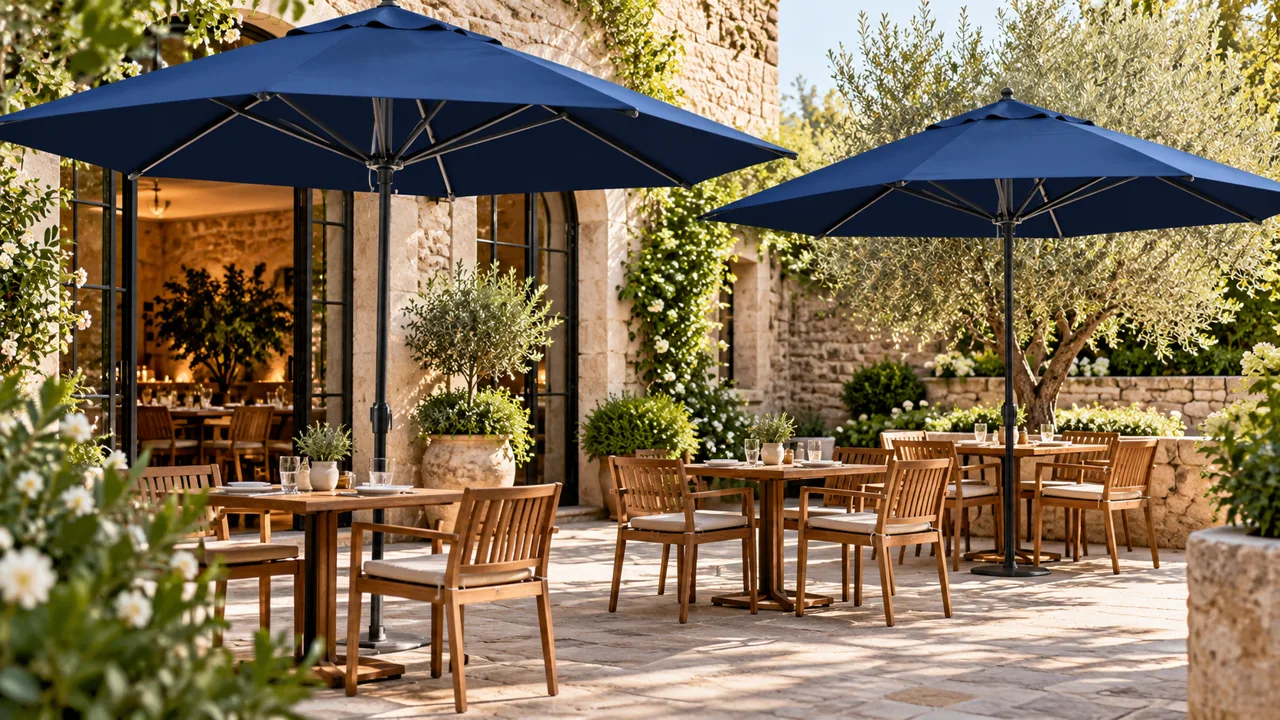
What Makes the Ausbrella Design Different?
The Ausbrella range centres on reinforced pole construction. Awnet describes Storm’s twin-skin pole and Hurricane’s double twin-skin pole, alongside bolted fabric covers and an opening mechanism without ropes or pulleys. Its product pages also identify matching in-ground stainless steel sockets.
These details matter for different reasons. The pole and frame address structural demands, while the opening mechanism affects everyday handling. For a business that opens and closes several umbrellas, ask for a demonstration before ordering. Check who will operate each umbrella and whether the procedure fits the team’s routine.
Awnet markets Ausbrella as the world’s strongest umbrella. That is a manufacturer slogan, not an independently established ranking in this article. The more useful comparison is the documented specification of the model being quoted.
Ausbrella Storm 135 or Hurricane 160+?
The Storm 135 specifications state a wind rating of 135 km/h. Awnet also says engineering certification and the Monash University test report are available on request. Those documents are worth obtaining before deciding whether the model fits an exposed site.
The Hurricane 160+ specifications describe testing beyond 160 km/h and a double twin-skin pole. The page identifies a wind-tunnel demonstration at 161 km/h. That supports a distinction between the published models, but does not establish suitability for every possible location.
For an Ausbrella purchase, send the supplier details of the proposed position, canopy requirements and mounting surface. Ask which configuration its recommendation covers. Buying the model with the larger number is less useful than obtaining advice that matches the actual installation.
Read Wind Ratings in Context
A wind-tunnel figure is not an instruction to leave an umbrella open during severe weather. Ask for the operating limit, closure procedure and installation conditions for your exact Ausbrella. Keep those instructions available to everyone responsible for it.
The Bureau of Meteorology’s explanation of wind gusts and squalls shows why average wind speed does not describe every short burst. A forecast’s average figure should not be treated as the only information relevant to an outdoor setup.
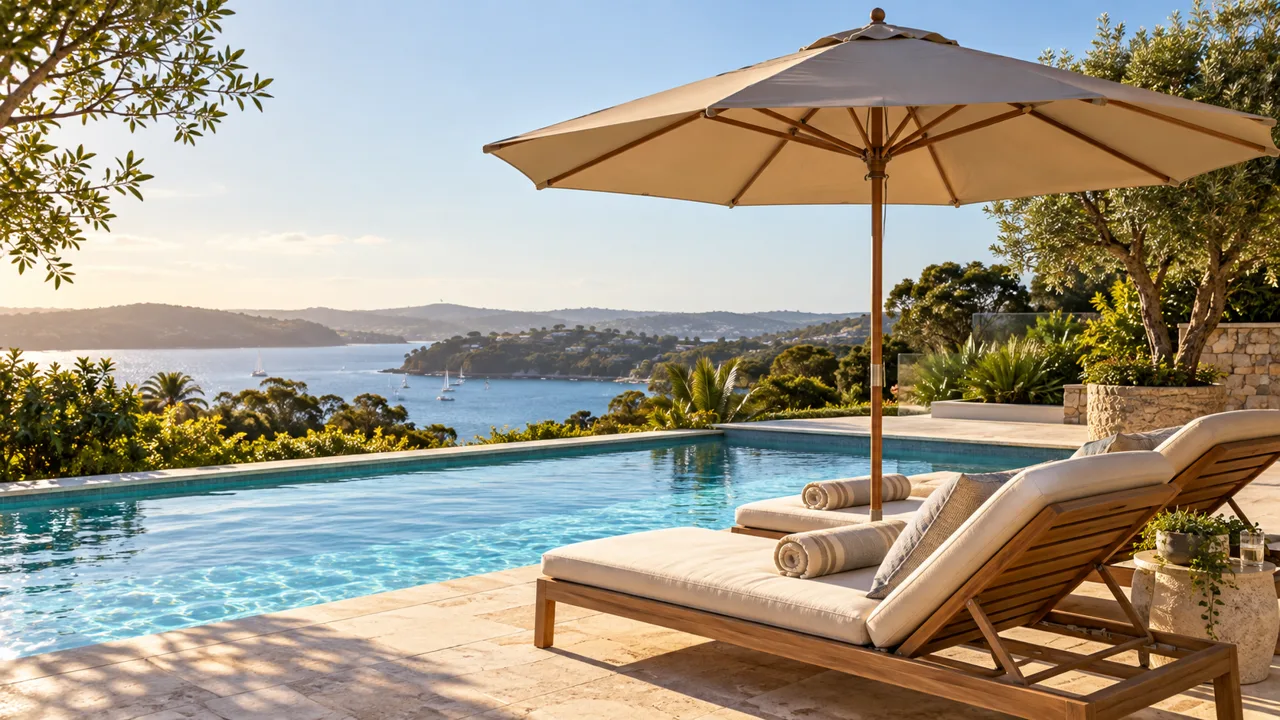
Plan the Shade Before Choosing a Size
An Ausbrella should shade the area people actually use. Measure the table and occupied seating space, including room to pull chairs out. Then consider how the sun moves during the hours when the patio, terrace or pool area is busiest.
For example, a canopy centred over an empty table might leave occupied chairs near its edge in direct sunlight later in the day. Mark the proposed pole position and observe the space at lunchtime and in the afternoon before settling on a layout.
Keep measurement units consistent when comparing dimensions. Our guide to checking measurements and area calculations explains why mixing metres and centimetres can produce misleading results.
Shade also belongs within a broader sun-protection routine. ARPANSA’s guidance on sun protection using shade recommends combining shade with other protective measures. Ask for information about the particular canopy fabric rather than assuming a wind rating also describes UV protection.
What Does Ausbrella Cost?
The product pages reviewed do not provide a single fixed retail price for every Ausbrella configuration. Request an itemised quote covering the umbrella, mounting components, delivery and installation. Confirm which fabric and size are included before comparing suppliers or models.
A useful quote should also explain replacement-cover availability and servicing arrangements. Consider how you would deal with a damaged component several years after purchase. A lower initial price does not necessarily answer that practical question.
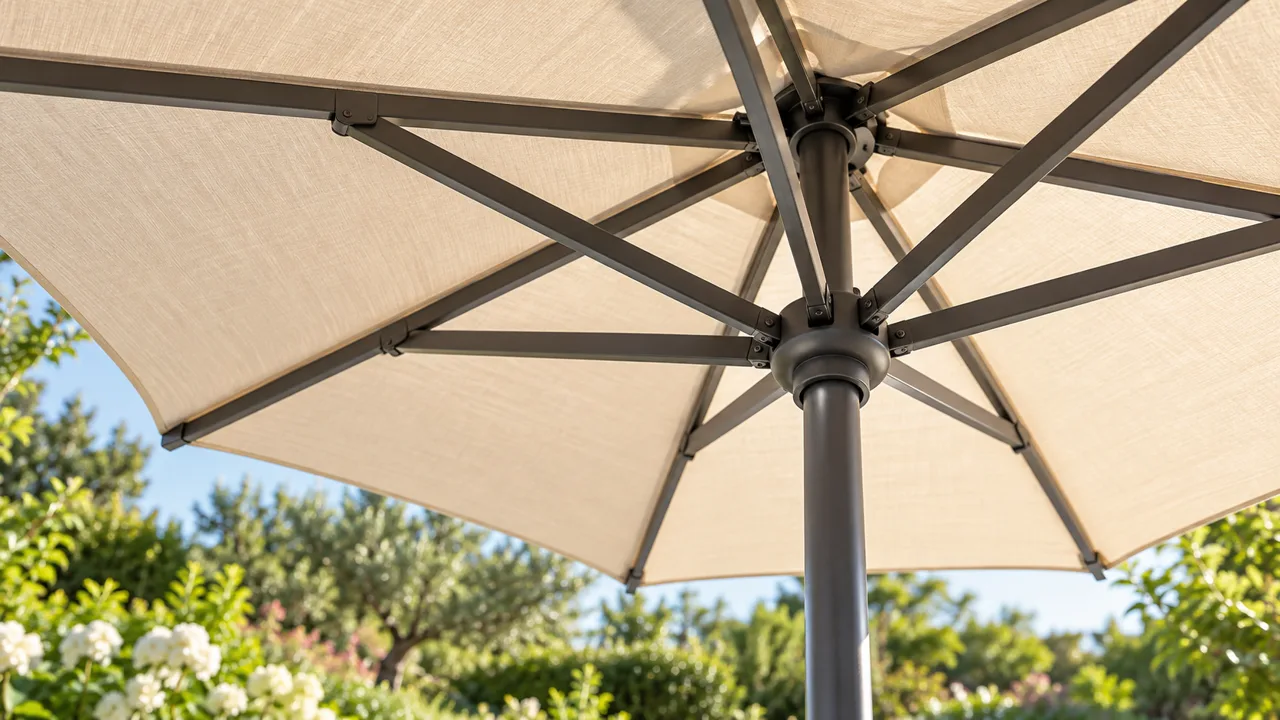
Installation, Care and Warranty
Both reviewed Ausbrella model pages advertise a five-year warranty on the frame and acrylic canvas cover. Ask for the complete written terms, including exclusions, maintenance requirements and the process for making a claim.
For installation, have the supplier or an appropriately qualified installer assess the mounting arrangement. Do not assume an existing patio-umbrella base is suitable. The supporting surface and specified fixing system are part of the purchase decision.
After installation, follow the supplied cleaning and inspection instructions. Check for visible damage before use and raise concerns with the supplier. Images in this guide are AI-generated outdoor-shade concepts, not photographs of verified Ausbrella installations.
Ausbrella FAQs
Is Ausbrella made in Australia?
Awnet describes the Ausbrella range as Australian made. Its published business address is in Dandenong, Melbourne.
Can Ausbrella be used at home?
Awnet markets the range for residential outdoor areas as well as commercial and public settings. Available space, mounting suitability and budget will determine whether it fits your home.
Is Ausbrella Hurricane 160+ storm-proof?
No umbrella should be described as universally storm-proof from a test figure alone. Follow the model’s documented operating and closure instructions.
Which Ausbrella should I choose?
Compare the exact canopy, pole, mounting and operating requirements. Ask Awnet to recommend a configuration for your location and provide the supporting documents with the quote.
Choose for the Space You Have
Ausbrella offers a clearly defined choice between two reinforced outdoor-umbrella models. The best purchase begins with measurements and a site-specific quote, then moves to documented performance and practical daily use. For more reading across home and everyday interests, explore our Lifestyle section.

5 Comments
Pingback: Windstrebe Meaning: A Practical Guide to Wind Bracing Uses
Pingback: iProwess Guide: Speakers, Features and Smart Buying Checks
Pingback: Boursin Cheese Guide: Ingredients, Uses and Storage Tips
Pingback: Kalil Vieljeux: BD Barcelona Role and Public Profile Guide
Pingback: Pearabiner: Meaning, Uses and Climbing Safety