


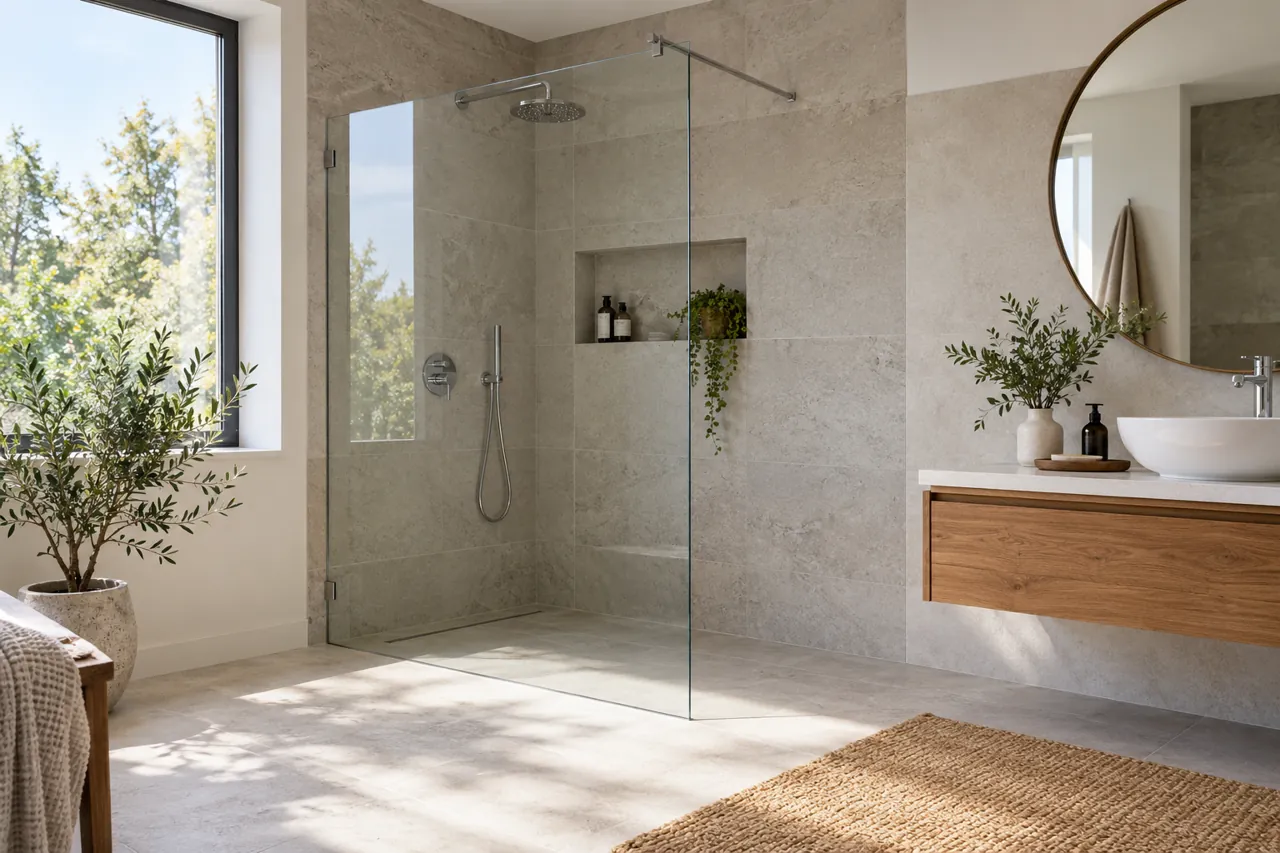
Acezanble appears on marketplace listings for shower screens and enclosures, including walk-in panels and sliding-door configurations. The name alone does not tell you which arrangement will fit your bathroom. A useful comparison starts with the exact listing, the selected size and the parts included in that particular package.
This Acezanble guide examines documented examples and explains the questions to settle before ordering. Public sources were checked on 20 October 2026. We have not purchased, fitted or independently tested these products, and the AI illustrations show generic bathroom concepts rather than authenticated Acezanble models.
Acezanble at a glance
| Question | What to check |
|---|---|
| Product type | Walk-in screen, corner-entry enclosure or another specified configuration |
| Size | Exact selected variant and installation dimensions |
| Glass | Thickness and specification for that model |
| Package | Whether tray, waste, support bar and fittings are included |
| Installation | Current manual and compatibility with the intended bathroom |
| After-sales support | Seller contact, replacement parts and applicable terms |
Start with one identifiable Acezanble listing
A ManoMano Acezanble walk-in-screen listing describes a 1200 × 2000 mm screen with a flipper panel, 8 mm glass and a support bar. It states that the tray is not included. These are listing claims for that variant, not a specification for every product carrying the name.
The same page contains an adjustment measurement labelled in a way that appears inconsistent with the stated height. Do not resolve an ambiguous dimension by guessing. Ask the seller for the dimensioned drawing and installation range, then have the fitter confirm what the figures mean for your opening.
Save the product reference as well as the title. A long title may look almost identical across several variants while the package changes. The reference, selected options and order description together are more useful than a screenshot of the main photograph alone.
Walk-in screens and enclosures solve different problems
A separate Acezanble corner-entry enclosure listing identifies a 900 × 900 × 1850 mm sliding-door configuration. Its format differs from the open walk-in-screen example. Compare the intended access and room layout before comparing finishes or photographs.
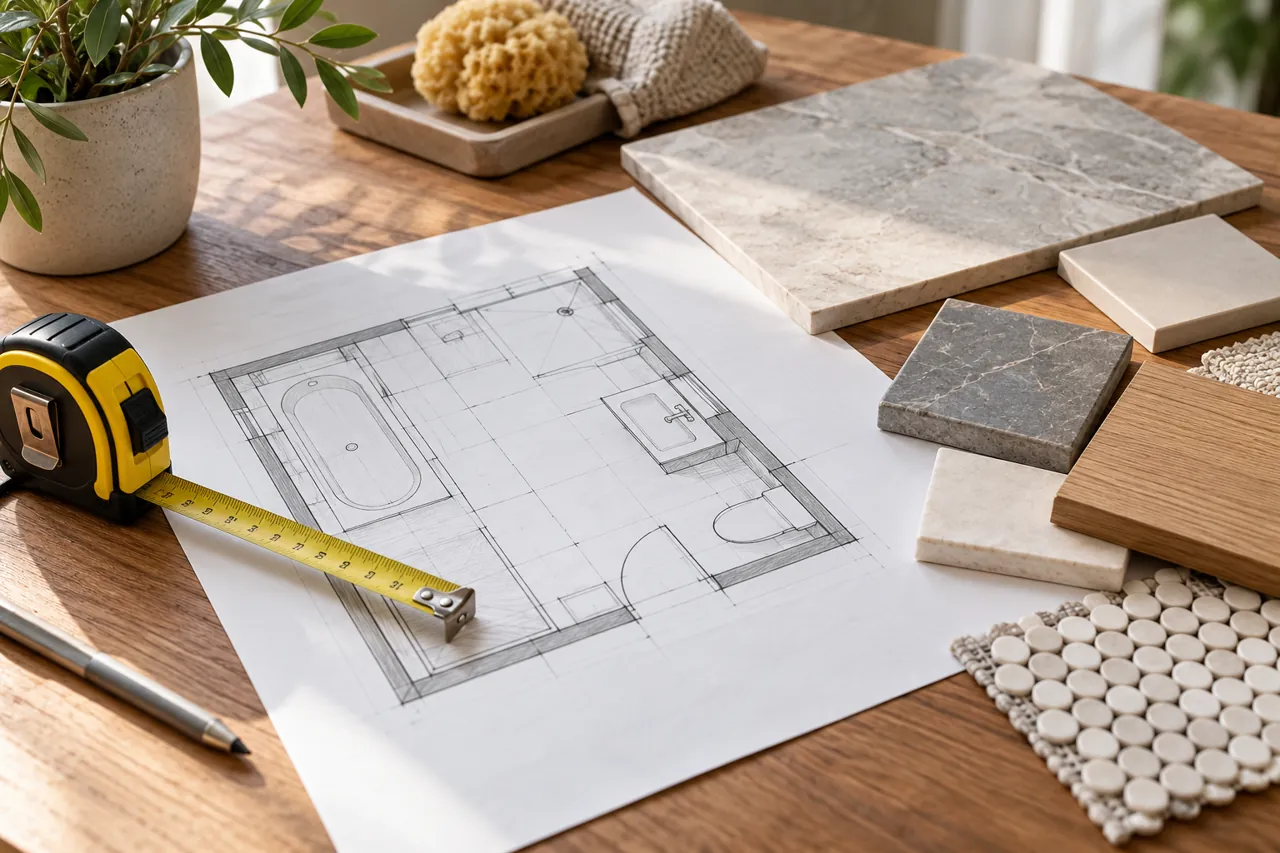
Imagine the movements involved in using the room: opening the bathroom door, reaching the shower controls, entering the shower and stepping out to a towel. A design can fit within the measured footprint yet feel awkward because another fixture occupies the approach. Sketch the neighbouring basin, toilet and storage as well as the shower.
The ManoMano shower-screen guide identifies size, material, type and wall channels as selection factors. Use those headings to organise questions, but rely on the exact product manual for installation decisions. General buying advice cannot determine which fixing arrangement suits your walls.
Measure the finished space, not an optimistic outline
Ask your fitter which surfaces the manufacturer’s measurements refer to. A dimension taken before wall finishes are completed may not describe the final opening. Record units clearly and distinguish the nominal product size from any installation adjustment range. Never assume that a small discrepancy will disappear during fitting.
Height also needs a context. Consider the selected tray or floor arrangement, the ceiling and any nearby sloping surface. Note where a support bar must attach and whether anything obstructs it. These are planning questions to answer with the manual, not reasons to improvise modifications to a glass panel.
If the product is described as reversible, confirm exactly which part reverses and whether the installation instructions support your preferred arrangement. A photograph facing one direction does not prove that every component can be rearranged. Clarifying this before delivery is easier than discovering it after unpacking.
Read the package contents line by line
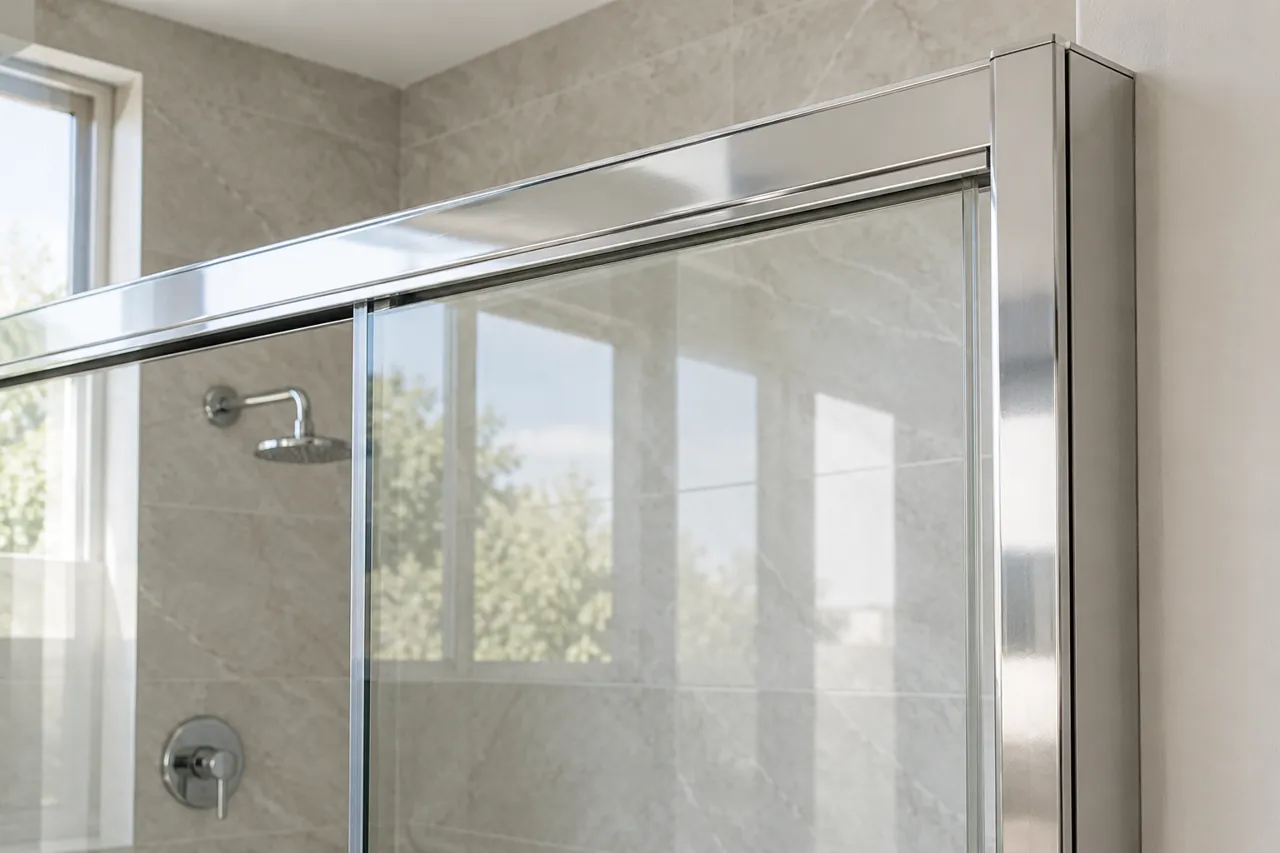
Separate the screen or enclosure from the tray, waste, riser kit, seals and fixing components. Some listings offer combinations through selectable options; others sell a single component. Compare what will actually arrive, not what appears in a styled bathroom photograph.
The ManoMano shower-tray guide discusses tray shape and drainage arrangements. Its useful contribution is the reminder that the visible enclosure is only part of the installation. Ask the installer to confirm the tray, drainage and access requirements together.
Make a short purchase record with one line for each supplied component and another for items your installer must provide. If a seller’s title and description disagree, request clarification before paying. A low headline price means little if essential parts are excluded or the selected option is not the one you intended.
Treat performance language as something to verify
Terms such as easy-clean, anti-limescale and safety glass can be helpful starting points, but they do not replace model-specific documentation. Ask what care the coating requires and which claims apply to the selected variant. This guide does not independently certify the glass or the product’s compliance.
Do not assume that a thicker panel automatically makes a complete installation better. Support, compatibility and correct fitting still matter. Have a competent installer follow the supplied instructions, particularly for glass handling and attachment to the building. A product photograph cannot establish the condition of the wall behind it.
Keep expectations proportionate when reading reviews. Look for comments that identify the same size and configuration, and distinguish delivery feedback from long-term use. A rating for a combined family of products may not describe the exact version in your basket.
Plan cleaning and support before ordering
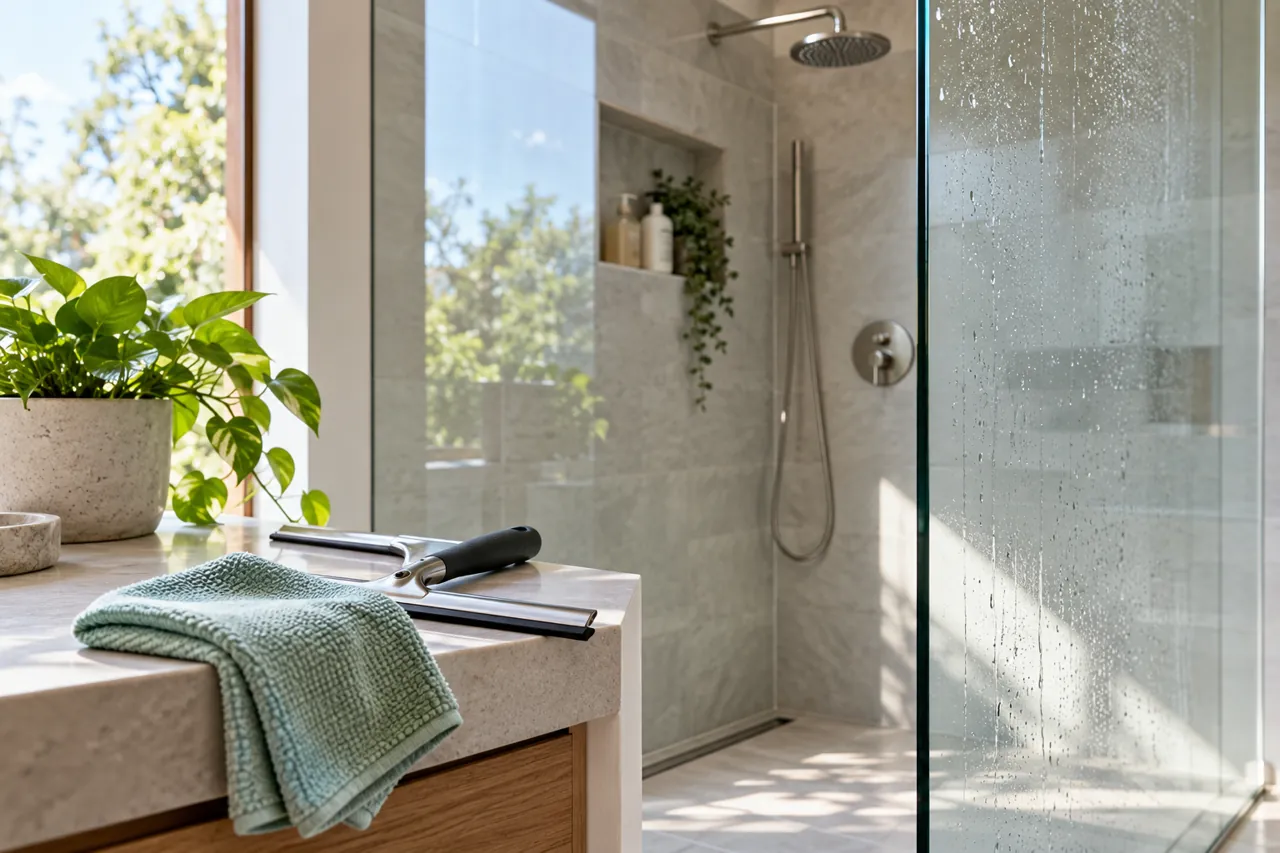
Ask for the cleaning instructions and a route to obtain replacement seals, rollers or other model-specific parts where applicable. Keep the manual and product reference after installation. A clear identifier makes a later parts enquiry much more useful than a description such as the chrome shower door.
Coordinate the shower with the room without letting styling outrun practical checks. Our slatted oak shelf guide discusses material samples and placement, while the BD Barcelona design-context guide explains why an attractive object still needs accurate product attribution. These are related interiors resources, not Acezanble endorsements.
Acezanble FAQs
Does every Acezanble screen include a tray?
No universal inclusion should be assumed. The walk-in example reviewed here explicitly excludes one; check your exact package.
Can I rely on the title for every measurement?
Use the title as a starting point, then obtain the dimensioned drawing and adjustment information. Resolve conflicting figures with the seller and installer.
Has this guide tested the products?
No. It is a source-based buying checklist, not a hands-on review or a guarantee of quality.
Choose the configuration before the finish
A sensible Acezanble purchase begins with fit, access, contents and support. Once those are clear, you can compare the visual details with confidence. Keep the exact product reference and agreed specification at the centre of the decision, rather than asking a catalogue image to answer technical questions.
