


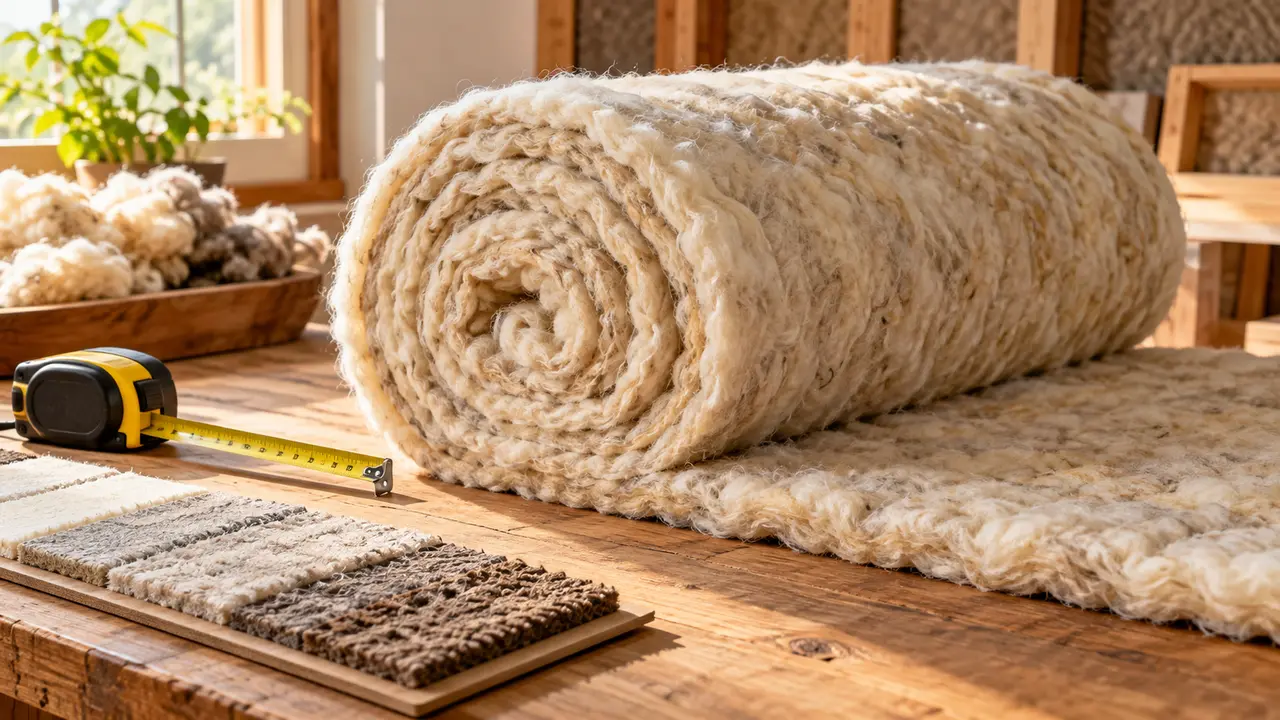
Wollmatten is the German plural of Wollmatte, meaning wool mats. The label can describe very different products: flexible sheep-wool insulation for a building, felt pads for interiors and crafts, or wool sheets used around plants. Those items share a fibre family, but they are not interchangeable.
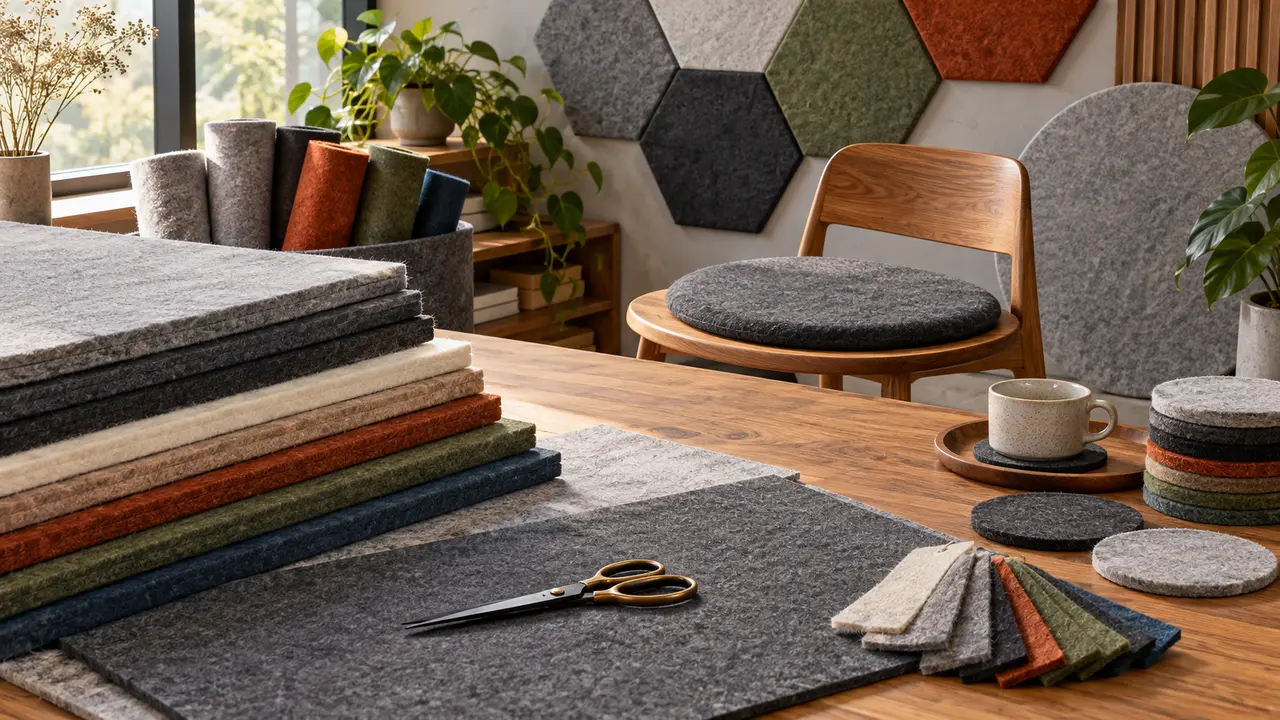
This Wollmatten guide explains the main categories, useful properties and buying checks without treating every wool mat as identical. Product composition, treatments, density and intended use can vary. The four images are AI-generated editorial illustrations of generic uses, not photographs of a named product or installation.
Wollmatten at a glance
| Type | Typical purpose | Most important check |
|---|---|---|
| Insulation mat | Thermal or acoustic layers in roofs, walls and floors | Certified specification for the exact construction |
| Garden mat | Mulch, soil cover or seasonal plant protection | Composition and suitability for outdoor contact |
| Dense felt mat | Pads, crafts, furniture protection or acoustic products | Thickness, density and colourfastness |
| Yoga or comfort mat | Warm, soft surface for a stated activity | Backing, grip, cleaning and allergy information |
What Wollmatten means in product listings
A search for Wollmatten does not identify one standard product. “Wool” may mean sheep wool, a wool-rich blend or, in casual listings, a fibre-like material whose composition needs checking. “Mat” describes shape more than performance. Start with the fibre declaration, intended use and technical sheet rather than the photograph alone.
Insulation references commonly distinguish mats, felts and loose stuffing. BauNetz Wissen’s sheep-wool overview lists applications including roofs, walls, ceilings, façades, impact-sound layers and cavity filling. That range shows why the same material name can sit behind products with different thicknesses and structures.
Wollmatten for building insulation
Sheep-wool insulation mats are flexible products intended to fit within a designed building assembly. Their useful qualities can include thermal insulation, sound absorption and moisture buffering. BauNetz Wissen gives an indicative thermal-conductivity range of 0.035–0.046 W/(mK), while warning that values can change with product development. Use the declared value for the exact product, not a number copied from a general article.
Certification and compliance matter. Germany’s Federal Environment Agency insulation resource links environmental criteria for sheep-wool insulation alongside other materials. A label can help evaluate emissions or material requirements, but it does not replace structural, fire, moisture or local-code design.
Before buying building Wollmatten, ask for the current technical datasheet, declared thermal value, dimensions, density, fire classification, pest-protection method and installation instructions. Confirm whether synthetic support fibres, binders or treatments are present. A qualified designer or installer should match the product to the wall, roof or floor build-up. Do not improvise vapour control, clearances or fire details from a generic guide.
For another example of measuring before choosing a natural-looking interior product, see our slatted oak shelf guide. The same principle applies: appealing material is only one part of fit, support and safe use.

Wollmatten in gardens
Garden wool mats may be sold as soil covers, mulch layers or wraps for pots and stems. The intended benefit can be physical protection or slower moisture loss, while wool gradually changes outdoors. However, a garden mat should not be confused with certified building insulation or an indoor furnishing felt.
Check whether the product is untreated, biodegradable under stated conditions and safe for the proposed plants and soil. Ask how it should be secured, how long the seller expects it to last and whether any mesh, backing, dye or additive remains after the wool breaks down. Avoid wrapping plants so tightly that air movement and drainage are compromised.
Garden claims also need proportion. A wool product may contribute nutrients as it decomposes, but the effect depends on material, quantity, soil and time. Treat it as one component of garden management, not a guaranteed substitute for watering, soil testing or a suitable fertiliser plan.

Felt Wollmatten for home and craft use
Dense wool felt can become coasters, chair pads, drawer liners, craft sheets or parts of acoustic products. Selection turns on thickness, density, surface finish and the way the mat is backed or bonded. A soft decorative sheet cannot automatically carry loads, protect a floor from every stain or deliver tested acoustic performance.
Ask for a sample when colour and texture matter. Test it discreetly against the intended surface, especially on delicate finishes. Our tulle fabric and craft guide explains a similar rule: fibre name, construction and project requirements must be considered together.
Industrial felt has different specifications again. The site’s sammying guide shows how felt can function as a working machine component. That example should not be used to select domestic Wollmatten; it simply demonstrates how dramatically felt requirements change with the application.
Care, storage and pest awareness
Follow the manufacturer’s care instructions. Vacuuming, spot cleaning, airing or professional cleaning may be recommended depending on construction and backing. Do not assume a washable-looking mat belongs in a washing machine; agitation, heat and moisture can shrink, distort or felt wool further.
Store clean, dry wool products where they can be inspected. The German Environment Agency’s clothes-moth guidance notes that larvae feed on keratin-containing materials such as wool. That does not mean every mat will be infested, but it supports sensible cleaning, monitoring and prompt action if damage or larvae appear.
A practical Wollmatten buying checklist
- Purpose: building, garden, craft, furniture or exercise?
- Composition: pure wool, blended fibres, backing, binders or treatments?
- Dimensions: length, width, thickness, density and tolerance?
- Evidence: datasheet, certification and instructions for the exact product?
- Care: cleaning, moisture, storage and pest guidance?
- End of life: can layers be separated, reused or disposed of locally?
Wollmatten FAQs
Are all Wollmatten made from pure sheep wool?
No. Some are pure sheep wool, while others may include support fibres, backing, dyes, binders or pest treatments. Read the declaration for the exact item.
Can garden Wollmatten be used as building insulation?
Do not assume so. Building products need documented performance and suitability for the designed assembly. A garden mat is made and sold for another purpose.
Are Wollmatten naturally fireproof?
No blanket claim is safe. Check the tested fire classification and installation requirements for the specific product and jurisdiction.
How should wool felt mats be cleaned?
Use the maker’s instructions. Construction and backing determine whether gentle vacuuming, spot treatment or professional cleaning is appropriate.
Choose the mat by its job
Wollmatten is a useful search term, not a complete specification. Decide what the mat must do, then verify composition, dimensions, evidence and care. That approach protects you from comparing a garden cover with a building product—or choosing a decorative felt by claims that belong to a certified insulation mat.
