


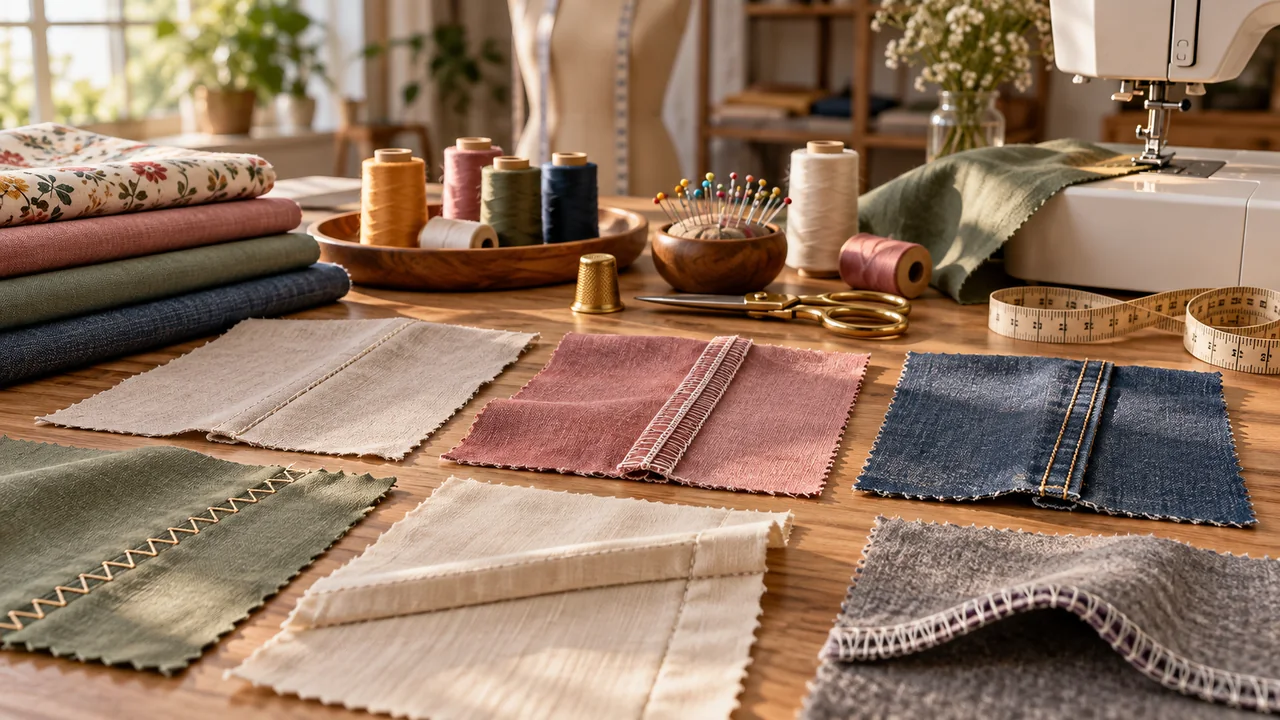
Nahttypen is the German plural term for seam types. In sewing and garment construction, it describes different ways material pieces or edges are arranged and joined. The right Nahttyp depends on the fabric, load, desired finish, available machinery and whether raw edges must be hidden, bound or trimmed.
A seam is not exactly the same thing as a stitch. A stitch describes how thread is formed and interlaced; a seam also includes the relationship between the material pieces, folds and edges. This Nahttypen guide keeps those ideas separate and uses recognised textile sources rather than treating every familiar sewing name as a formal class. The AI-generated illustrations are teaching concepts, not photographs of certified seam samples.
Nahttypen at a glance
| Nahttyp / seam family | Typical purpose | Key consideration |
|---|---|---|
| Superimposed or plain seam | Joining two pieces placed face to face | Raw edges may need a separate finish |
| Lapped seam | Overlapping pieces for strength or a flat result | Bulk and stitch placement |
| Bound seam | Enclosing an edge with a separate strip | Binding width and flexibility |
| Flat seam | Reducing thickness or improving next-to-skin comfort | Machine and stitch compatibility |
| French seam | Enclosing raw edges in light woven fabric | Curves and heavy fabrics can be difficult |
| Flat-felled seam | Durable enclosed construction on shirts or denim | Requires accurate folding and topstitching |
What Nahttypen means in English
The singular German word Naht can translate as seam or stitches depending on context, as shown by the Cambridge German–English entry for Naht. Typen means types, so Nahttypen is naturally read as seam types. In a pattern, training document or factory specification, the surrounding diagram should determine the intended construction.
Do not translate Nahttypen automatically as “stitch types.” Stitches create a seam, but the two classifications answer different questions. A lockstitch or chainstitch concerns thread formation. A lapped or bound seam concerns how the fabric components are positioned. One seam construction may be produced with different suitable stitches.
How ISO classifies seam types
ISO 4916:1991, Textiles—Seam types, classifies, illustrates and designates stitched seams using material cross-sections. ISO says the standard should be read with ISO 4915, which covers stitch types. This pairing reinforces the difference between the arrangement of materials and the thread formation that joins them.
The Coats technical guide to seam types explains that ISO 4916 defines eight classes according to the type and number of components. Coats contrasts that system with older descriptive groupings such as superimposed, lapped, bound and flat. Home-sewing names remain useful, but an industrial code provides more precise construction detail.
For everyday sewing, you do not need to memorise every ISO designation. The practical lesson is to look at the cross-section: Which layers overlap? Where are the raw edges? Which fold is secured? A name alone may be used differently across patterns, languages or workshops.
Common Nahttypen in practical sewing
Plain or superimposed seams
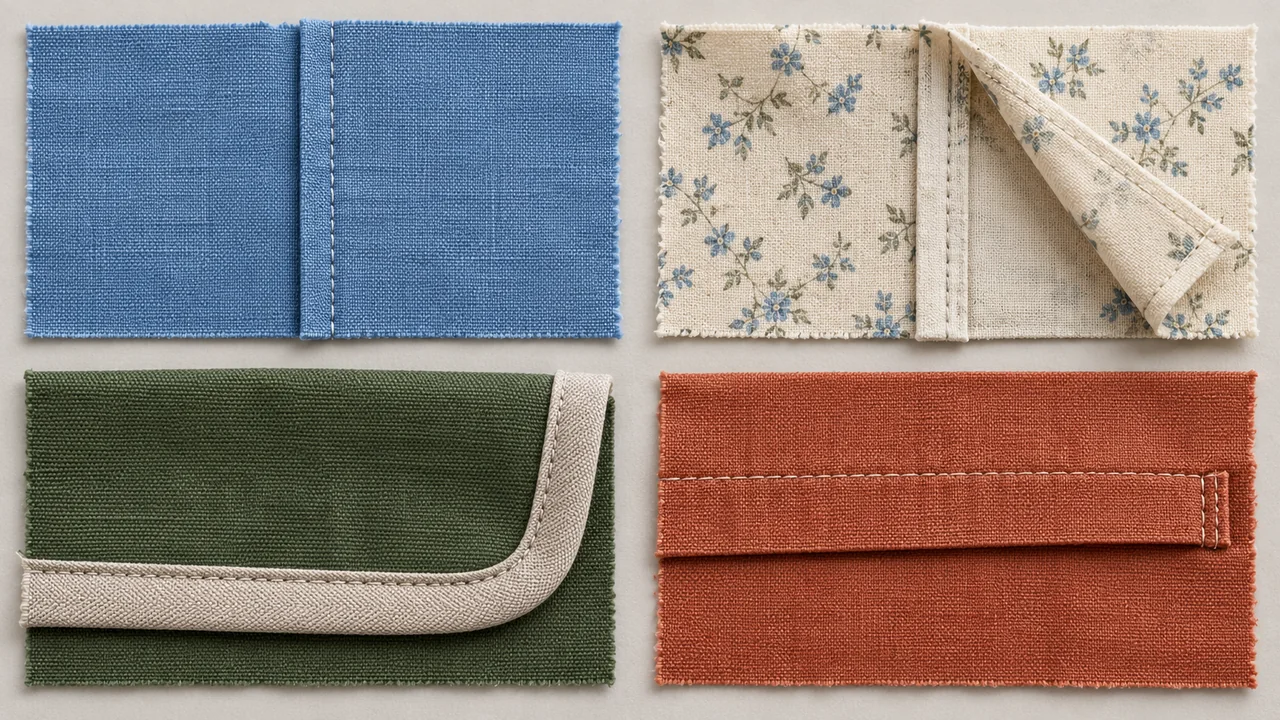
A basic garment seam usually places fabric right sides together, stitches along the seam line and presses the allowances open or to one side. It is efficient and versatile. Woven fabrics that fray often need overlocking, zigzagging, binding or another edge finish after the main seam is sewn.
The correct seam allowance comes from the pattern, not a universal rule. Changing it without adjusting the stitching line changes the finished dimensions. Curves may also require clipping or notching so the allowance can lie smoothly without pulling.
French seams
A French seam encloses raw edges inside a second seam. It gives a tidy interior on lightweight or sheer woven fabrics and can be useful when no overlocker is available. Because the allowance is folded twice, it adds bulk and is less convenient on sharp curves or thick materials.
Flat-felled and lapped seams
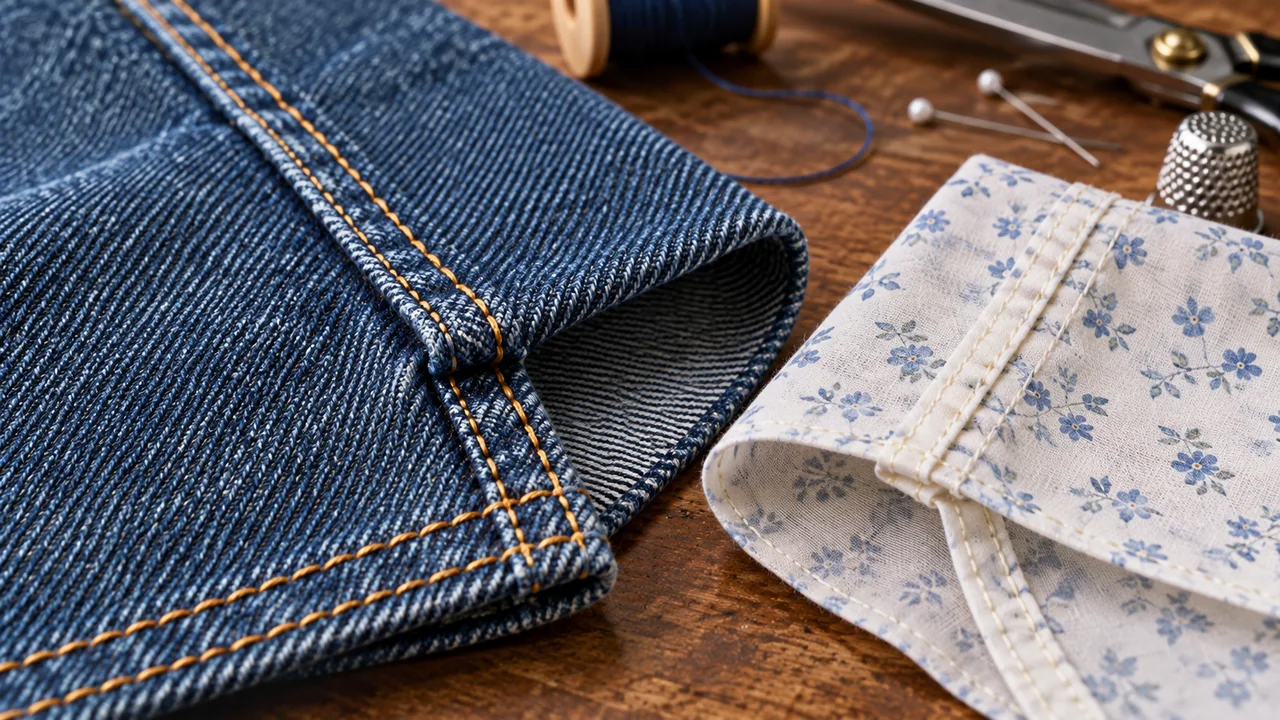
A flat-felled seam encloses the raw allowances and secures them with visible stitching. It is associated with durable shirts, workwear and denim. Accurate trimming, folding and topstitching matter; otherwise the seam can twist or become unnecessarily thick.
Lapped seams place one component over another rather than positioning two matching edges face to face. The exact overlap and number of stitch rows depend on the specification. They can provide a relatively flat construction and are common where strength or controlled positioning is important.
Bound and edge-finished seams
A bound edge uses another strip—often bias binding—to cover a raw edge. It can create a clean interior, but the binding must suit the curve, thickness and flexibility of the base fabric. Edge finishing alone does not necessarily join two garment panels; sometimes its function is simply to prevent fraying.
Stitch choice changes how Nahttypen perform
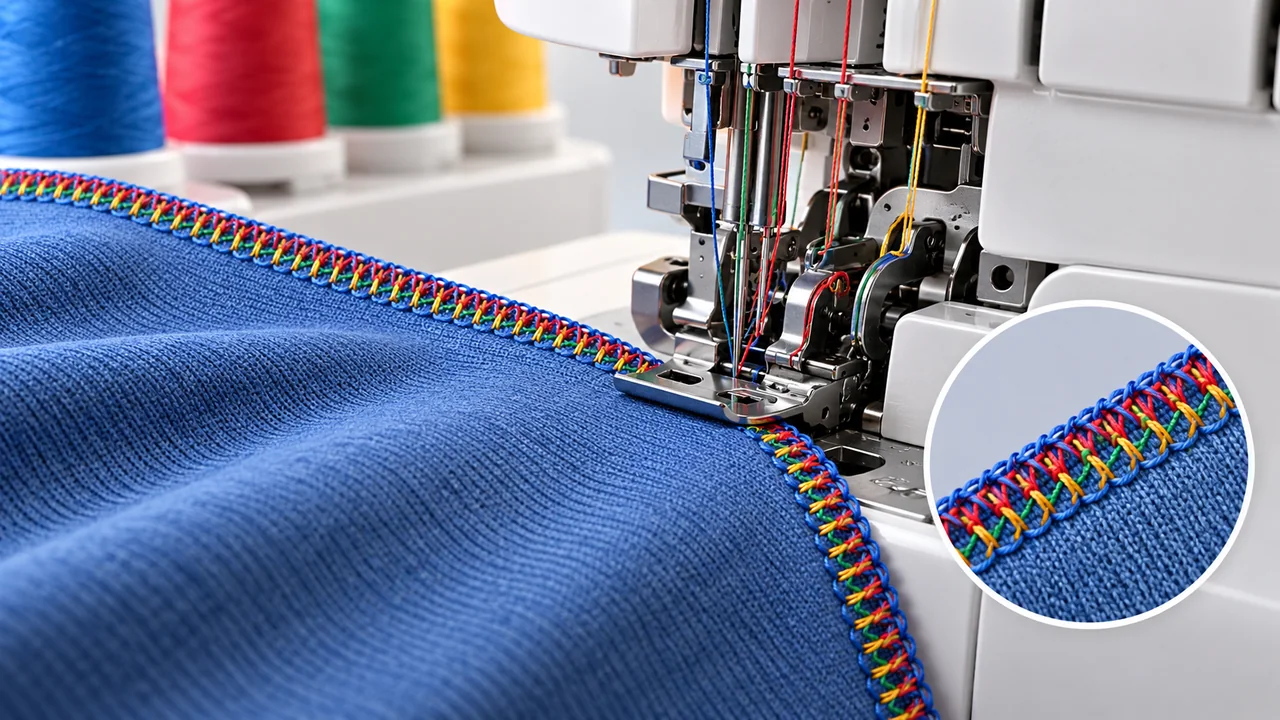
The Coats guide to basic stitch types shows why the stitch must suit the seam. It describes stitch 504 as a three-thread overedge formation used for serging and joining plies, while stitch 516 combines a chainstitch with a three-thread overedge for a five-thread safety construction. Coverseam types can provide a flat, flexible finish for stretch garments.
A straight lockstitch may work well on stable woven cloth but break when a highly elastic knit is stretched. An overedge or cover formation can provide more extension, yet machine settings, differential feed and thread choice still matter. Test on scraps made from the same number of layers as the final project.
How to choose between Nahttypen
- Identify the fabric structure: woven, knit, leather or technical material.
- Consider direction and amount of stretch.
- Estimate the load and abrasion the seam will face.
- Decide whether raw edges must be enclosed or merely finished.
- Check allowable bulk, especially at intersections.
- Match the seam with an appropriate stitch, needle, thread and machine.
- Sew and wash a sample before committing to the project.
Thread thickness, needle point and tension can change the result even when the seam construction is correct. A test sample reveals puckering, skipped stitches, weak joins and unwanted stiffness before they affect the finished item.
Reading unfamiliar German textile terms
Technical vocabulary is safest when tied to its industry and diagram. Our Windstrebe guide applies that method to construction terminology, while the Messonde guide separates spelling evidence from device specifications. For textile processing, the Sammying guide shows how a process term changes meaning when removed from its production setting.
For Nahttypen, save the original cross-section, stitch code and material notes. Translating only the heading may hide whether the document describes a seam class, a decorative effect, a hem or an edge finish.
Nahttypen FAQs
What is the singular form of Nahttypen?
The singular is Nahttyp, meaning seam type.
Are seam types and stitch types identical?
No. Seam type describes material arrangement; stitch type describes thread formation.
Which Nahttyp is best for lightweight sheer fabric?
A French seam can create a clean enclosed finish on many light wovens, but test curves, transparency and bulk first.
Which seam is common on denim?
Flat-felled constructions are common because they enclose edges and can provide a durable, topstitched finish.
Build the seam from the fabric outward
Nahttypen become easier to choose when you begin with the material and function, not the name. Examine the layer arrangement, select a compatible stitch and thread, then prove the combination on a sample. A neat seam is the result of a coordinated system rather than a single fashionable technique.
