



A trallehylde can make a useful starting point for anyone looking beyond a solid, uninterrupted shelf board. The name appears on a slatted oak shelf sold by Danish furniture business Toka Design. Its appeal is easy to understand: visible timber, spaces between the slats and a surface that can contribute to a room even before anything is placed on it.
The important distinction is between that verified product and assumptions attached to an unfamiliar word. This guide uses Toka Design’s listing as its reference, checked on 18 October 2026. It does not treat every shelf described online as a trallehylde as an identical product. Images are AI-generated styling concepts, not photographs of the manufacturer’s shelf or supplied fittings.
What is a trallehylde?
Toka Design’s trallehylde product listing describes an oak shelf made with slats and black spacers. The page offers length selection and clear, white or black oil finishes. It also presents optional hooks and containers, specifying that these accessories fit the outermost slat. Books, plants and decorative objects appear among the suggested uses.
| Detail | Verified reference or planning question |
|---|---|
| Reference product | Toka Design trallehylde |
| Material and appearance | Oak slats with black spacers |
| Finish choices shown | Clear, white and black oil |
| Optional accessories | Hooks and containers for the outermost slat |
| Before ordering | Confirm selected dimensions, included supports and suitable fixings |
| Before loading | Obtain the applicable installation and load guidance |
Those details identify a particular offering. They do not establish a universal size, load capacity or installation method for all slatted shelves. Treat dimensions, hardware and load limits as questions about the exact item you intend to purchase, rather than details that can be inferred from a room photograph.
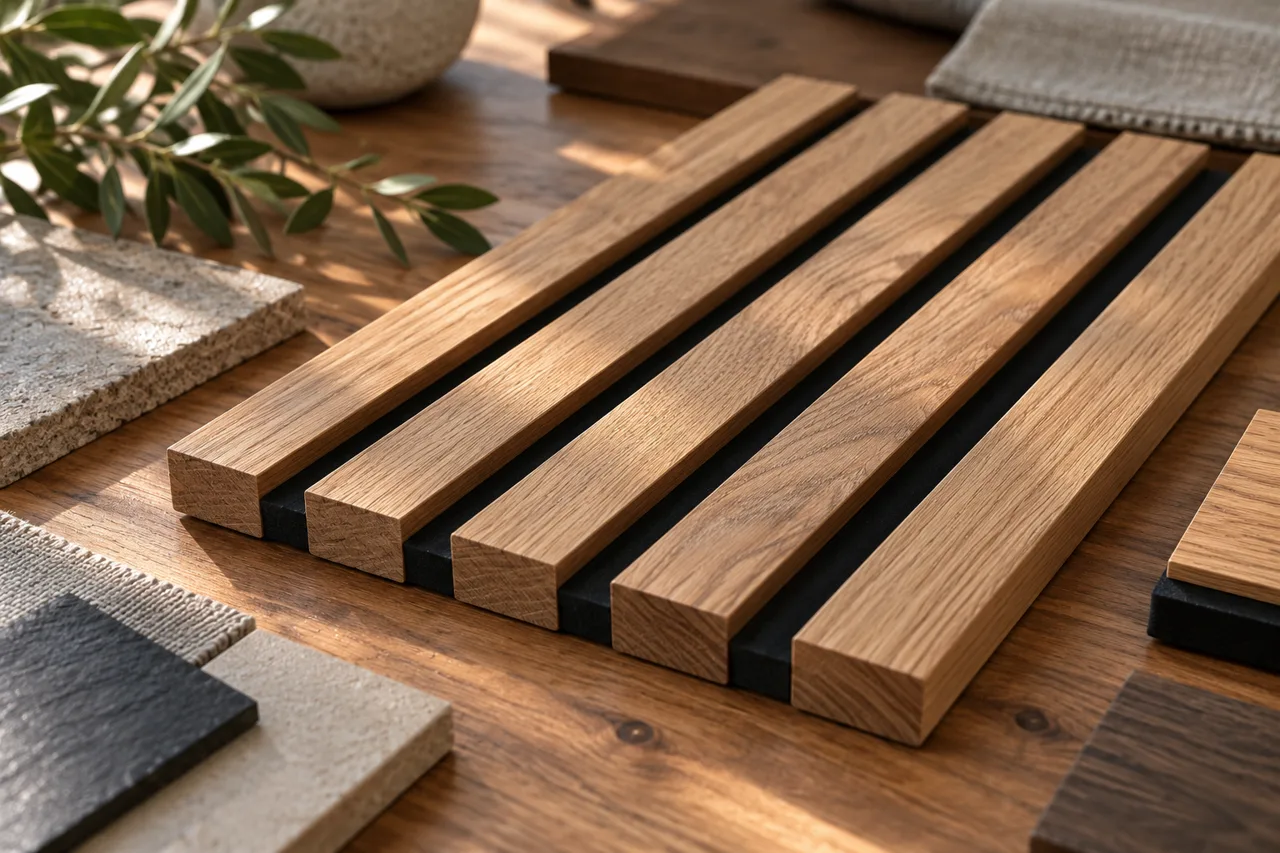
Plan the trallehylde around what it will hold
Start with the objects, not the empty wall. Lay out a small selection of the things you genuinely want within reach: perhaps a few favourite books, a light decorative bowl or a small plant. Measure their footprints and heights. This produces a more useful brief than choosing a long shelf first and then searching for objects to fill it.
A slatted surface also deserves a different check from a continuous board. Consider whether the base of each object will sit securely across the available supports. A narrow-footed ornament or a tiny container may need a different position or a suitable supporting tray. Do not assume that an attractive arrangement in a concept image demonstrates stability.
Leave some space unassigned. In a compact room, the gaps between objects can be as important to the visual effect as the gaps between the timber slats. A shelf that starts completely full leaves little flexibility when your daily needs change.
Choose a finish in the room’s real light
Think of the trallehylde as one part of a larger composition. Compare the intended finish with nearby furniture, the wall colour and the floor. The goal need not be an exact timber match: a deliberate contrast can be easier to manage than two almost-matching shades that look different every time the light changes.
If possible, assess a physical sample where the shelf will go. Screen images are useful for narrowing a preference, but they are not a reliable promise of the final appearance. Look at the proposed location in daylight and under the lamps normally used in the evening before committing to the overall palette.
For a digital mood board, our Fonvira colour-picker guide explains colour-code formats that can help organise a palette. Use those codes for planning the graphic, not as a substitute for checking real wood and paint samples together.

Make a home-office shelf work with the desk
Above or beside a work area, decide whether the trallehylde is decorative storage or part of a daily routine. Frequently handled items should be easy to reach without awkward stretching. Less-used decorative pieces can occupy a quieter part of the composition. Check the arrangement while seated as well as standing.
Keep equipment planning separate from shelf styling. If the desk needs convenient power access, our HONGRMTACX desk power hub guide covers a related workspace component. Planning the desk and wall together can help you avoid putting a shelf exactly where a lamp, monitor or cable route needs space.
Support is a specification, not a styling choice
The general principle in IKEA’s wall-shelf anchoring guide is that different wall materials require appropriate fixing choices. That reference is useful background, but its product-specific ratings must not be transferred to a trallehylde from another manufacturer.
Ask the supplier which supports are required, what is included and how the stated load applies to the complete installation. If the wall construction is uncertain, get a competent installer to identify it before drilling. A shelf’s appearance cannot tell you whether the fixing arrangement behind it is suitable.
Keep the installation instructions after the work is finished. They are more useful than a remembered weight estimate when you later decide to replace a light ornament with a row of books. Changes in how the shelf is used deserve another check against the manufacturer’s guidance.
Care for the finish you actually bought
Toka Design has a care-products page for its oak furniture. Its existence is a useful prompt to ask which product and method suit your selected finish; it is not a reason to apply every cleaner or oil shown to every surface.
Build care into the layout. Leave enough room to remove objects and reach the gaps between slats. Use a suitable protective arrangement beneath a plant rather than making the wood the first place water collects. Follow the supplier’s instructions for cleaning and any treatment, including drying or curing requirements, instead of inventing a universal re-oiling timetable.

Frequently asked questions about trallehylde
Is trallehylde a trolley or wheeled shelf?
Not in the verified product discussed here. The reference is Toka Design’s slatted oak shelf. An unfamiliar name should not be treated as proof of wheels or another mechanism.
Can any hooks be used with it?
Do not assume universal compatibility. The listed optional accessories are described as fitting the outermost slat. Confirm dimensions and intended use before buying alternatives.
How much weight can a trallehylde carry?
This guide does not establish a verified capacity for the chosen configuration. Obtain the applicable rating and installation requirements directly from the supplier.
Is it suitable for every room?
Suitability depends on the product’s specified conditions and your placement. Ask before using it in a damp or outdoor setting; an oak appearance alone is not a suitability guarantee.
Give the shelf a clear job
A successful trallehylde arrangement begins with a modest brief: the right objects, enough space and verified support. Once those decisions are settled, the slats and finish can do their visual work. Choose the shelf for the room you actually use, rather than asking the room to imitate a styled photograph.
