


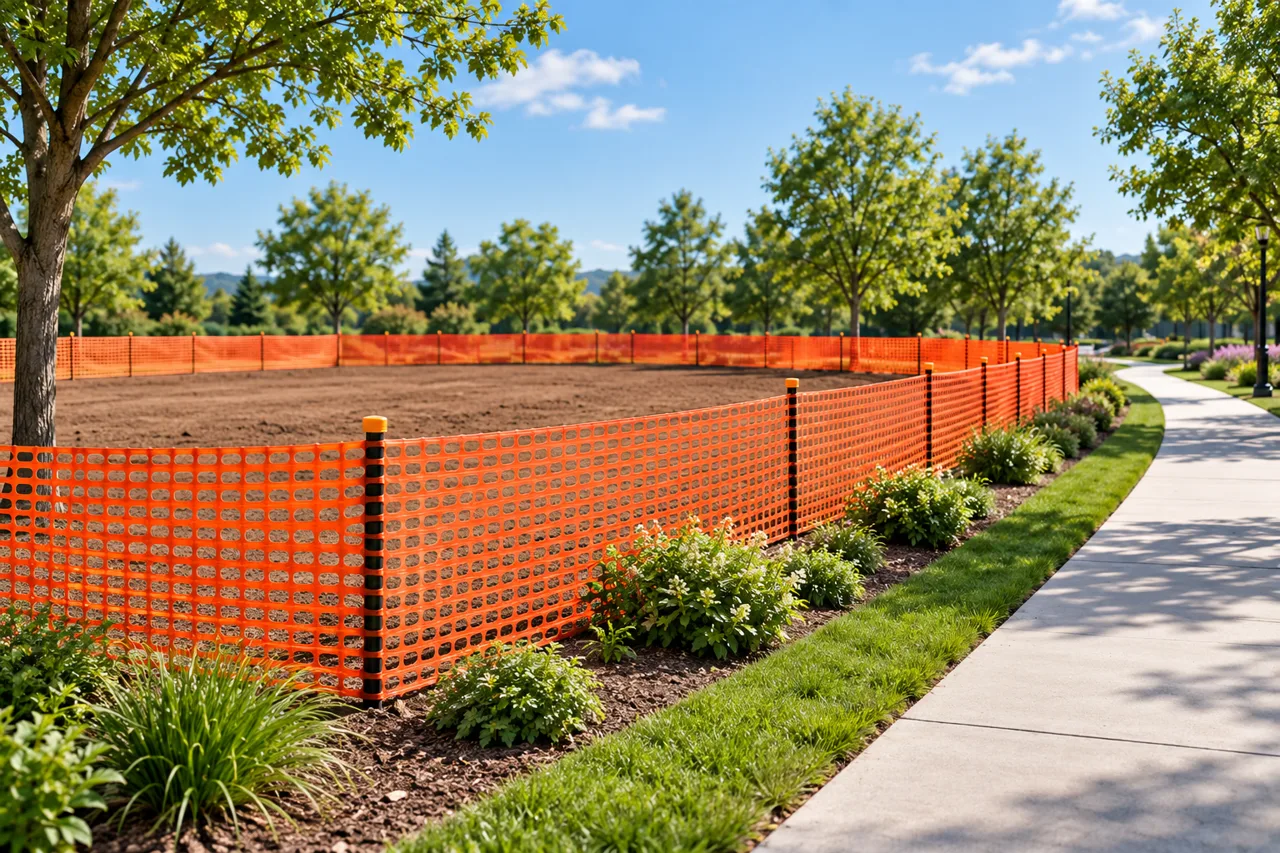
Werfnetten is a Dutch-language term encountered when shopping for construction-site netting and temporary barrier mesh. In Belgian supplier catalogues, it commonly appears around brightly coloured mesh used to mark work areas. The word is useful for finding products, but it is not a technical certification and does not establish what a particular net can safely do.
Before selecting werfnetten, identify the actual job: making a boundary visible, controlling access, containing material or protecting people from a fall. Those jobs can require very different equipment. This guide explains the distinctions, shows how to read a product listing and identifies questions to resolve with a competent supplier or site professional.
Werfnetten at a glance
| Detail | Practical meaning |
|---|---|
| Language context | Dutch-language construction and site-supply catalogues. |
| Common catalogue example | Orange plastic mesh for temporary demarcation. |
| Typical information to check | Dimensions, material, mesh opening, intended use and installation instructions. |
| Not established by the name | Fall-arrest performance, debris containment or secure access control. |
| Main buying principle | Choose against the actual hazard and documented product specification. |
What suppliers mean by werfnetten
The Traffimex site-signalling catalogue groups werfnetten with other boundary and signalling products. Its listings illustrate why the term often brings up orange mesh rather than a single engineered safety system. Product families can differ in construction and intended function, even when their photographs look similar.
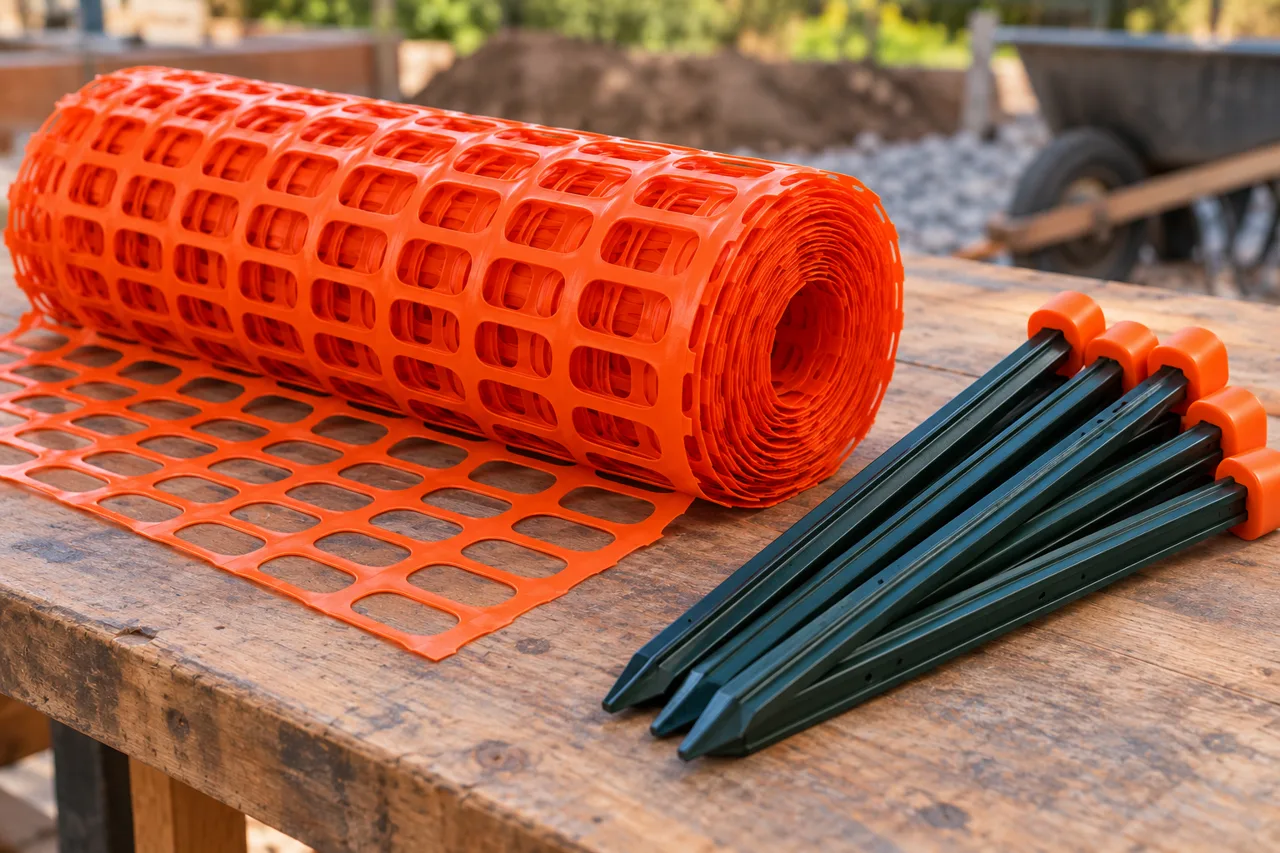
Another supplier, LBV’s werfnet range, lists examples measuring one metre by fifty metres, with different mass-per-area descriptions. These are examples from a catalogue, not universal dimensions for all werfnetten. A heavier listed material does not, by itself, prove a specific impact resistance or suitability for a safety-critical application.
Visibility, access control and protection are different jobs
Bright mesh can make a line easy to notice, but visibility should not be confused with physical security. A person may still be able to cross or disturb a lightweight barrier. Where unauthorised access would expose someone to danger, the boundary needs to be selected as part of the overall site arrangements, rather than chosen solely for colour or convenience.
The UK Health and Safety Executive’s guidance on protecting the public around construction work discusses defining boundaries and restricting unauthorised access. This provides useful context for UK projects. Requirements and site circumstances vary elsewhere, so a Dutch product label should not be mistaken for evidence that a proposed boundary satisfies local obligations.
Similarly, a net intended to contain debris needs documented performance for that task. Ordinary open mesh does not automatically stop fine dust, falling tools or small fragments. A fall-arrest net is another distinct safety system. Never substitute general werfnetten for equipment specified to protect people from falling.
Read the specification before comparing rolls
Begin with the product’s stated intended use. Next, check its dimensions and construction, along with any stated limitations. If a listing uses broad terms such as strong, durable or professional, ask what those words mean in measurable terms. A product photograph cannot tell you how a material behaves after prolonged exposure or under a particular load.
Compare like with like. Roll weight, material weight per square metre and tensile performance describe different things. A longer roll can weigh more without using a stronger material. If the supplier gives only a total weight, avoid turning that number into an unsupported claim about resistance to impact, tearing or wind.
Also check whether the price covers only the mesh or includes compatible supports and fixings. A complete boundary involves more than the roll itself. Access openings, changes in direction and the surface beneath the supports can affect the practical arrangement. The appropriate design should come from the site assessment and product instructions.

Think about wind and the supporting structure
Adding material to a structure changes how wind interacts with it. This becomes especially important where netting or sheeting is proposed on scaffolding. The HSE’s scaffold guidance explains that sheeting and debris netting should not be added without involving those responsible for the scaffold’s design and erection.
Our Windstrebe guide to wind bracing offers related background on why lateral stability matters. It does not provide a design for a werfnetten installation. Avoid transferring a familiar fixing arrangement from one structure to another without checking the actual conditions and the equipment manufacturer’s requirements.
For ground-level demarcation, plan how the boundary will be observed during changing weather and site activity. A sagging or displaced section may no longer communicate the intended route. The response should be to restore an appropriate arrangement, not simply accept a compromised boundary because the mesh itself remains in one piece.
Plan the route, not just the fence line
Imagine a small landscaped area temporarily closed for maintenance. A visible boundary is only part of the task. People still need an obvious way past the work, and the alternative route should not lead them into vehicles, stored materials or another obstruction. This is an illustrative planning example, not an installation specification.
Ask where deliveries arrive, where authorised workers enter and whether the work area will change during the day. A boundary that was sensible in the morning may conflict with an afternoon delivery. Assign responsibility for reviewing those changes so that temporary convenience does not quietly replace the intended site arrangement.

Inspect, maintain and store werfnetten thoughtfully
Use a simple inspection record that identifies the location, observed condition and action required. Look for damage, displacement and loss of visibility, and follow the supplier’s instructions for the specific product. If the equipment performs a protective function, inspection arrangements must reflect that function and the risks involved.
Before reusing werfnetten, check whether previous handling or exposure has affected the material. Do not assume that a roll is serviceable merely because it can still be unrolled. Keep product information available so the next user knows what the material was intended to do and can distinguish it from other netting held in storage.
Werfnetten frequently asked questions
Does werfnetten mean a certified safety net?
No. The term alone does not establish a certification or protective performance. Read the documentation for the exact product and use equipment specified for the relevant task.
Will orange mesh stop construction dust?
That should not be assumed. Open barrier mesh and dust-control systems serve different purposes. Ask for evidence of the product’s intended containment performance where dust control is required.
Can the same mesh be attached to any scaffold?
No generic approval follows from its appearance or name. Additional netting can affect the scaffold arrangement and wind loading, so involve the responsible scaffold professionals before making changes.
Choose the boundary around the real task
Werfnetten becomes easier to understand once the task is clearly defined. Start with the required function, obtain the right specification and keep the boundary under review as conditions change. Our business coverage includes related practical explainers. The AI illustrations show general low-risk demarcation concepts and are not technical drawings or approved installation instructions.
