


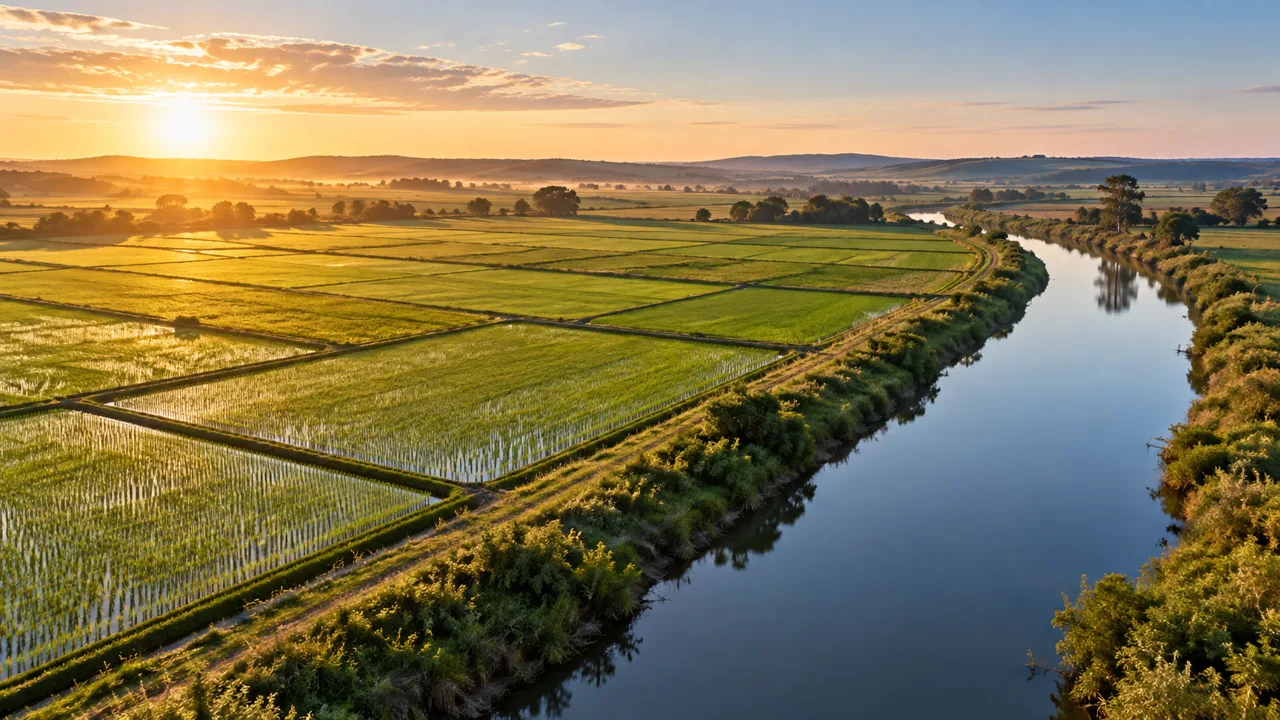
Comisaco is a Uruguayan company associated with the administration of the India Muerta dam, an irrigation asset serving rice-growing areas in Rocha. Its importance becomes clearer when you look beyond the company name: rice production depends on a connection between stored water, delivery canals and the farms receiving that water.
Public information from SAMAN and Coopar provides the clearest starting point for understanding Comisaco. Their company pages identify its connection to the dam concession and describe the scale of the irrigation system. This guide brings those facts together and explains what the published figures mean.
What Is Comisaco?
Comisaco S.A. is identified by SAMAN as the concession holder responsible for administering the India Muerta dam. SAMAN states that it owns 50 percent of the company. Coopar also identifies itself as a shareholder in Comisaco.
These descriptions place Comisaco within Uruguay’s agricultural infrastructure rather than presenting it as a consumer rice brand. The key activity discussed here is the dam concession and its irrigation role. That should not be confused with the separate processing or retail activities of associated businesses.
Comisaco at a Glance
| Detail | Published information |
|---|---|
| Company | Comisaco S.A. |
| Country | Uruguay |
| Associated infrastructure | India Muerta dam and irrigation network |
| Location | Rocha department |
| SAMAN shareholding | 50 percent, according to SAMAN |
| Other shareholder identified | Coopar |
| Main context | Irrigation supporting rice cultivation |
Where Is the India Muerta Dam?
SAMAN locates India Muerta in Uruguay’s department of Rocha, between Velázquez and Lascano. Its dam concession profile describes more than 200 kilometres of canals and approximately 10,000 hectares of rice fields irrigated annually.
Those figures explain why Comisaco matters beyond one reservoir. Water must reach agricultural land through a wider network. A dam can hold water, but the connection between storage and fields determines how that resource becomes useful to growers.
The published area is an approximate figure from the company description. It should not be presented as a verified total for every individual harvest season. Weather, available water and the area planted can affect the questions a grower needs to ask in a particular year.
Comisaco’s Connection With SAMAN and Coopar
The two associated businesses offer complementary information. SAMAN describes its ownership share and the location of the irrigation network. Coopar’s associated-company information confirms its shareholder relationship and provides physical figures for the reservoir and embankment.
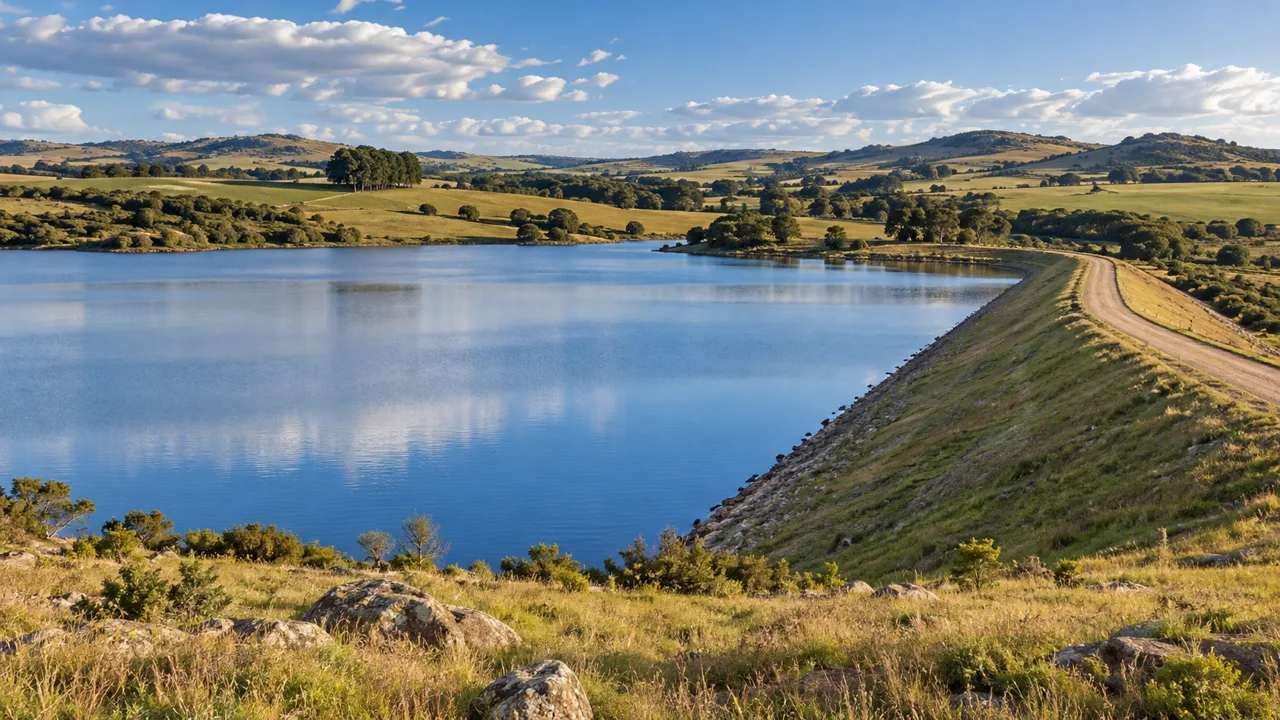
Coopar reports useful stored-water capacity of 127.5 million cubic metres and a dam length of 3,200 metres. It also describes irrigation capacity for roughly 10,000 hectares of rice annually. These are published infrastructure figures, not live measurements of water currently in storage.
Reading the two sources together gives a more useful Comisaco profile than relying on a directory entry alone. It establishes the business relationship and agricultural setting without assuming details about current executives, financial results or operating contracts that the pages do not supply.
How Storage and Canals Support Rice Farming
An irrigation system connects water availability with the timing of agricultural demand. Storage, conveyance and field-level management are different parts of that process. A large reservoir does not remove the need to manage how and when water reaches each area.
For Comisaco, the documented combination of the India Muerta reservoir and its canal network is the central point. The company is associated with infrastructure that links a water source to a wider rice-growing area.
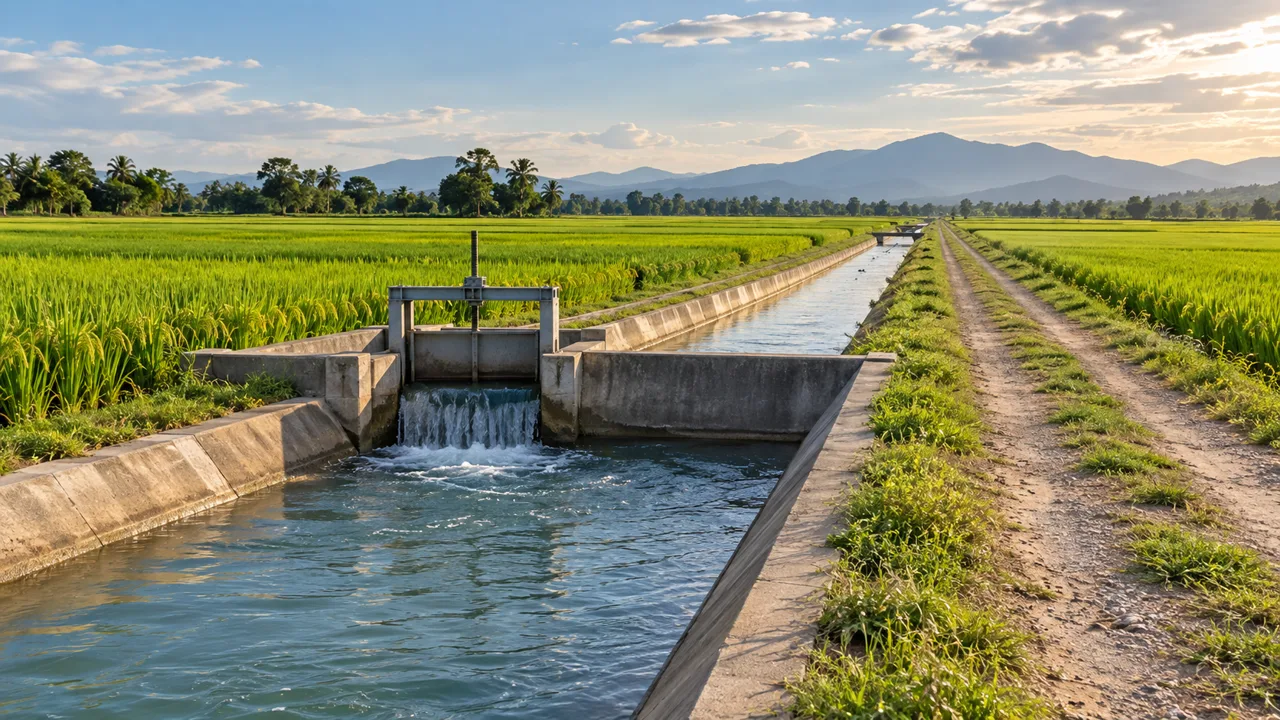
As a general explanation, think of the reservoir as the storage component and canals as the delivery routes. Farm-level water management is another layer. This distinction helps readers understand why reservoir size alone cannot describe the performance of an entire irrigation system.

What the Capacity Figures Actually Tell You
Water volume and agricultural area are different measurements. Cubic metres describe a quantity of water; hectares describe land area. Neither figure directly states crop yield, revenue or how much water an individual farmer will receive.
The Comisaco-related figures published by Coopar are useful for understanding scale. However, dividing storage volume by the reported area would not, by itself, produce a reliable irrigation allocation. Such a calculation would omit timing, incoming water, losses and the conditions attached to supply.
For readers comparing units, our guide to measurement and calculation checks explains why the setup matters as much as the arithmetic. Keep each figure attached to its original definition before using it in a report or comparison.
Comisaco in Uruguay’s Wider Rice Sector
FAO’s Uruguay irrigation mapping provides broader context for the relationship between agriculture and irrigated land. Its country material identifies rice as a major irrigated crop.
Those mapping statistics refer to the source periods described by FAO; they should not be relabelled as current-year production totals. They help explain the setting in which a company such as Comisaco operates, rather than measuring Comisaco’s own annual performance.
The wider lesson is that agricultural output depends on infrastructure as well as activity in the field. Irrigation links engineering decisions with planting plans and seasonal water needs. That is the practical context behind the company’s association with India Muerta.
Questions Worth Asking About Irrigation Access
Someone investigating a farm or commercial project connected to Comisaco needs more than a company overview. Useful questions include whether the property lies within the service area, what agreement applies, and which party can confirm seasonal water arrangements.
Request current written information about availability, charges, delivery responsibilities and relevant conditions. A historical capacity figure does not guarantee supply to a particular property. Likewise, a nearby canal does not establish an entitlement to use its water.
This article does not provide a current tariff or a farm-specific allocation. Those details require up-to-date information from the responsible parties. Separating a general company profile from a specific supply arrangement keeps the research useful.
Comisaco FAQs
What does Comisaco do?
The associated-company sources describe Comisaco as the company administering the India Muerta dam concession, linked to irrigation for rice farming.
Where is Comisaco’s associated dam?
India Muerta is in Rocha, Uruguay, between Velázquez and Lascano, according to SAMAN’s description.
Does SAMAN own Comisaco?
SAMAN states that it owns 50 percent. Coopar separately identifies itself as a shareholder. This article does not infer an additional ownership breakdown beyond those statements.
How much farmland does the system support?
The company descriptions refer to approximately 10,000 hectares of rice irrigation. Treat that as a published approximate scale, not a live season-by-season total.
Is Comisaco the same as a rice mill?
The role documented here is irrigation-concession administration. Associated businesses may have other activities, but those should not automatically be attributed to Comisaco.
The Infrastructure Behind the Name
Comisaco is best understood through its connection to India Muerta: a business associated with the water infrastructure supporting a rice-growing region. The shareholder descriptions establish that connection; the capacity figures explain its scale. For related company explainers, visit our Business section.
Images in this guide are AI-generated agricultural concepts, not photographs of Comisaco facilities or the India Muerta dam.

1 Comment
Pingback: Hypake Explained: Finnish Wellbeing Projects and Context