



Hypake appears in Finnish reporting and project records connected with wellbeing and health services. One clearly documented use is shorthand for hyvinvointipalvelukeskus, a wellbeing service centre, in discussion of a proposed development in Kokkola. Another documented context is the name ICT & Hypake in material about developing digital services in Kainuu.
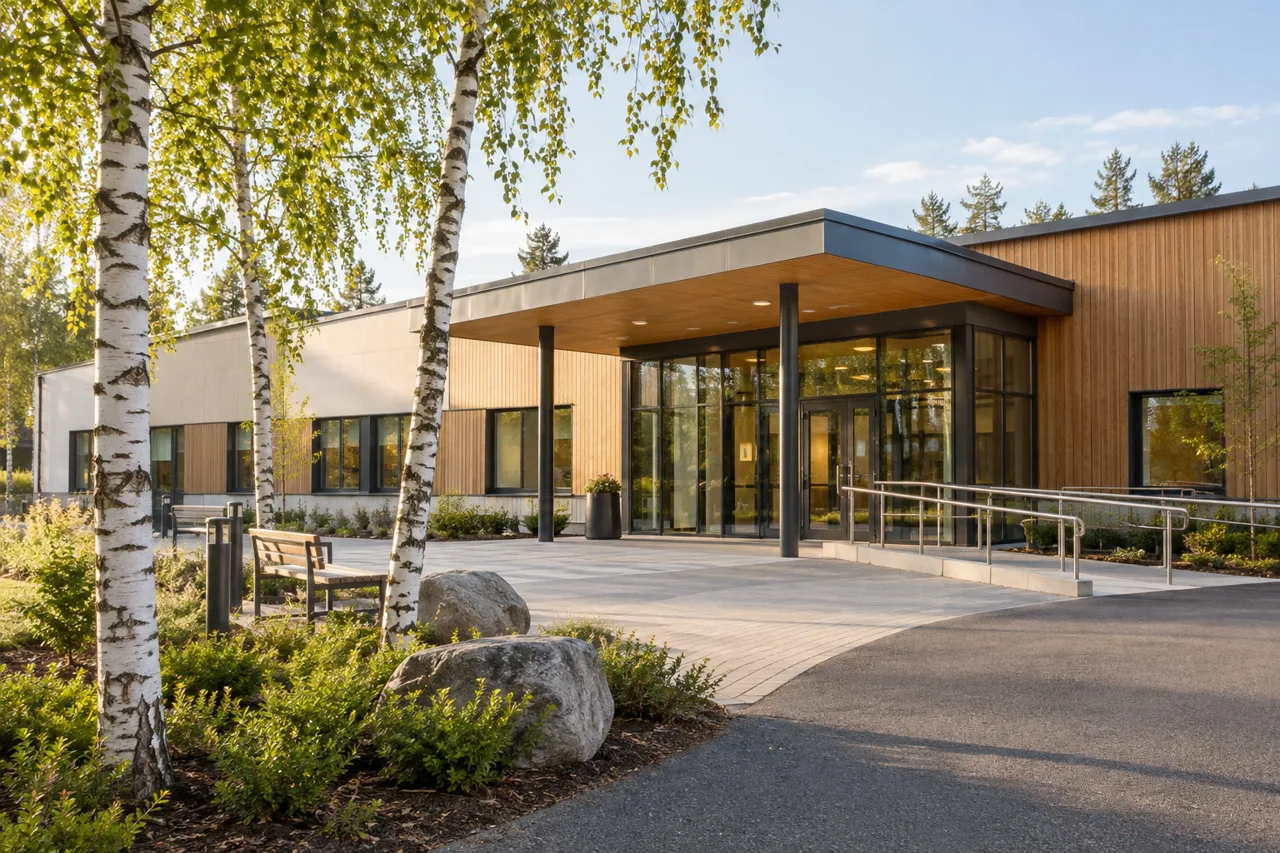
These references make Hypake a subject that can be explained with evidence, provided its location and date remain attached. This guide follows those documented uses and shows how to read the project history. Sources were checked on 18 October 2026. The images are AI-generated illustrations of public-service planning and Nordic settings, not photographs of the proposed centre or the people involved.
Hypake at a glance
| Question | Documented context |
|---|---|
| Meaning in Kokkola reporting | Shorthand for hyvinvointipalvelukeskus |
| Plain English explanation | A wellbeing service centre |
| Location of that proposal | Kokkola, Finland |
| Historical reporting examined | 27 August 2019 and 27 October 2020 |
| Separate project reference | ICT & Hypake in Kainuu development records |
| Important distinction | A proposal, a development project and a current service are different things |
| Present-day information | Use the responsible organisation’s current service pages |
What Hypake meant in Kokkola
In its 27 August 2019 report on Kokkola’s proposed wellbeing service centre, Finnish public broadcaster Yle explicitly explains the shorthand. The proposed first phase would bring together health-centre functions, dental care for the central Kokkola area, adult rehabilitation and disability-service offices. These were described as activities then located in the existing premises or scattered rented accommodation.
The same report describes a planning choice between adapting an existing educational property and constructing new premises. At that point, more investigation was being sought. The article therefore records a proposal under consideration, rather than an announcement that a finished centre had opened.
That is the central point for an English-language reader meeting Hypake in an old search result. The word identifies the subject of a local discussion, but the verbs around it establish what had actually happened. “Would bring together” describes an intended arrangement. It does not prove that those services subsequently moved into one building.
Why the project history needs more than one date
A later Yle report dated 27 October 2020 describes continuing problems with Kokkola’s health-centre premises. It reports that the Hypake proposal had fallen in the council the previous year and that the original concept was being left behind while other accommodation options were considered.
The report discusses possible temporary premises and a smaller construction option. Those details show that the original plan and the later search for suitable facilities were not interchangeable. A service need can remain urgent even when a particular project does not proceed in its original form.
Read the two reports as a sequence. The 2019 article explains what the proposal meant at that time. The 2020 article updates the position and describes a different set of options. Neither should be silently rewritten into a claim about the exact arrangement operating today.
The separate ICT & Hypake reference
Finland’s official EURA 2014 record for the DIHYTE project, A71528 supplies a second useful context. It identifies Kainuun Etu Oy as the applicant and gives a planned implementation period from 11 January 2016 to 31 March 2018, with the activity recorded as ended.
The record says that DIHYTE’s planning considered experience from ICT & Hypake. It describes work on digital wellbeing and health services involving regional organisations and businesses. This establishes a documented relationship in project planning; it does not establish that ICT & Hypake and the Kokkola building proposal were the same scheme.
When a short name appears in two records, compare the place, applicant, purpose and dates before combining them. Shared words such as wellbeing or health are not enough to demonstrate common ownership, identical funding or a single delivery team.

How to read a Hypake project record
Begin with the record’s full title and identifier. Then locate the responsible organisation and the time period. A project code is particularly useful because a short name may be reused, abbreviated differently or mentioned in a later initiative’s background.
Next, identify the type of statement you are reading. An objective explains what a project hoped to achieve. A budget describes a financial provision. A decision records an authorised step. An evaluation considers what happened afterwards. These documents can all concern the same project while supporting different conclusions.
Our Comisaco and India Muerta infrastructure profile covers a different country and sector, but illustrates why identifying an organisation’s role matters when explaining infrastructure. For Hypake, use the Finnish records themselves to establish who proposed, considered or operated each part.
What a building proposal can and cannot establish
A proposed centre can describe where services might be located and which functions might be brought together. To establish delivery, look for later records about completion, occupation or actual service arrangements. A planning illustration or estimated timetable is not a substitute for that evidence.
For example, a researcher preparing a short history could keep three separate notes: the original service proposal, the decisions reported during planning and the later information needed to establish the outcome. This makes an unresolved question visible rather than filling it with an assumption.
It also helps avoid confusion between an organisation and its property. A provider may continue delivering services while considering different premises. The history of one proposed building therefore does not describe the full history of the services themselves.
Finding current services after reading about Hypake
For current information in the Kokkola area, consult Soite’s official English-language service information. It identifies the Wellbeing services county of Central Ostrobothnia and provides routes to service information and digital services. Those current pages are the appropriate starting point for finding today’s instructions.
Use the relevant service page to check location, contact details and any appointment requirements. A historical article may explain why accommodation was debated without providing a usable address for a visit today. Keep a history note and a current service note separately if you are researching both.
Our practical guide to evaluating online articles offers a related reading method: identify what an article establishes and follow consequential details to the responsible source. With Hypake, the date and project identity are essential parts of that process.
Frequently asked questions about Hypake
What does Hypake stand for?
In the Kokkola reporting examined here, it is shorthand for hyvinvointipalvelukeskus, a wellbeing service centre. Other appearances should be interpreted within their own source context.
Was the Kokkola Hypake proposal an operating centre in 2019?
The August 2019 report describes planning and further investigation. It does not establish an opened facility.
Is ICT & Hypake the same project?
The evidence examined here does not establish that. The EURA record mentions ICT & Hypake in the background to a separate Kainuu digital-services initiative.
Where should someone look for current service details?
Start with the responsible provider’s current pages, such as Soite for the Kokkola context, and follow the instructions for the specific service.
Let the record keep its context
Hypake has a documented place in Finnish service-project discussions. The clearest account keeps the full meaning, organisation, location and date together. That approach preserves the useful history while helping readers find the current information they need.
