


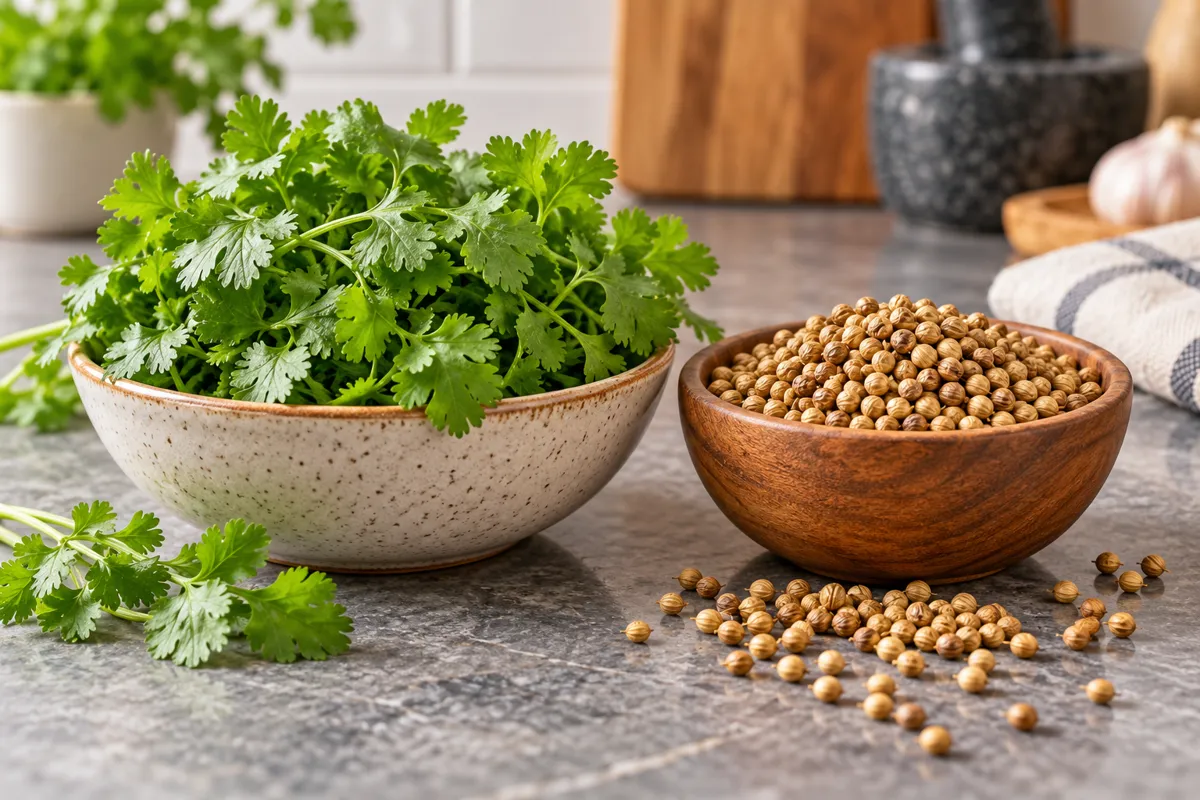
Koriandri is an Estonian form connected with koriander, the word for coriander. That language detail matters when you encounter it in an ingredient list or gardening text. It is not evidence of a separate exotic herb or a new food brand. The next task is to establish whether the text is discussing the plant, its fresh leaves or its seeds.
This guide connects the word with practical kitchen and garden decisions. It explains how to read the surrounding context, distinguish ingredient forms and keep useful notes when trying a recipe. The serving examples are editorial suggestions rather than claims about a traditional national dish.
What koriandri means in Estonian
The Estonian Language Institute’s Sõnaveeb entry gives koriander as the base form and koriandri as its genitive form. It also records koriandrit as a partitive form. These are grammatical forms of a word, not three different plants.
For a beginner, the useful lesson is to look up the base form when a recipe word seems unfamiliar. A dictionary may list the ingredient under koriander even when the sentence uses koriandri. Preserve the complete phrase while checking it so that the role of nearby words is not lost.
Our guide to language forms and context explains another case where recognising the grammatical category prevents a misleading interpretation. With ingredient vocabulary, this habit also helps you avoid buying the wrong form of a familiar food.
Leaves and seeds need different recipe decisions
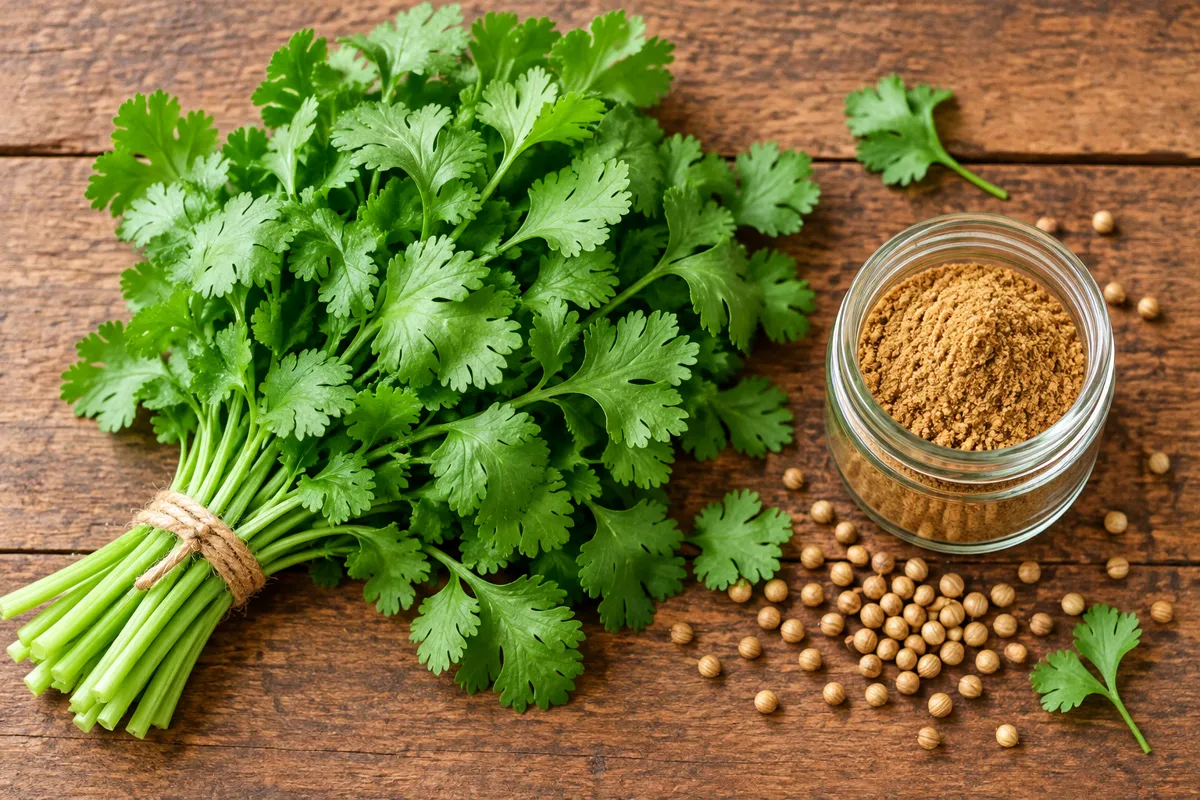
Fresh coriander leaves and coriander seeds belong to the same plant, but a recipe does not necessarily use them in the same way. Look for clues such as a fresh bunch, chopped leaves, whole seeds or ground spice. The amount and the stage at which an ingredient is added can also help identify the intended form.
If an instruction simply says coriander, inspect the rest of the method before substituting anything. A final scattering over a finished dish suggests a different role from a measured ground spice mixed into a sauce. When the recipe remains unclear, consult its author or another reliable version rather than assuming a one-to-one replacement.
| Ingredient clue | Likely form to investigate | Practical question |
|---|---|---|
| A fresh bunch or chopped garnish | Leaves and tender stems | When should it be prepared? |
| Whole round spice seeds | Coriander seeds | Are they used whole or ground? |
| A measured powdered spice | Ground coriander | Does the recipe specify a spice blend? |
| A sowing or flowering discussion | The living plant | Is the aim leaves or seed? |
| An unfamiliar Estonian ending | A grammatical word form | What is the dictionary base word? |
Read an unfamiliar recipe in two passes
On the first pass, identify the dish’s sequence: preparation, cooking and finishing. Mark every appearance of the unfamiliar ingredient. On the second pass, match each mention to the ingredient list. This helps catch a common problem in translated recipes, where a broad ingredient name is used in one place and a more specific form appears later.
Create a short working note in your own language. For example, write that the recipe needs fresh coriander for the final garnish, and keep that separate from any ground coriander used earlier. Your note should describe the actual recipe, not replace it with assumptions about how similar dishes are usually made.

Try a small kitchen comparison
If you are learning how the ingredient forms behave, choose a familiar dish and change one feature at a time. You might compare two small servings with different amounts of fresh herb, keeping the rest of the meal the same. Record what you preferred in plain words rather than trying to invent a technical flavour score.
Use a separate experiment for seeds or ground spice. This makes the result easier to interpret. If you change the herb form, quantity, cooking method and several other ingredients together, you may enjoy the dish but learn little about which change caused the difference.
A practical notebook entry can include the recipe source, ingredient form, approximate amount used and the stage of addition. Add a brief preference note such as “use less next time” or “prepare the garnish just before serving.” These observations are more useful for your next meal than a generic claim that coriander always improves a dish.
Growing coriander with a clear goal
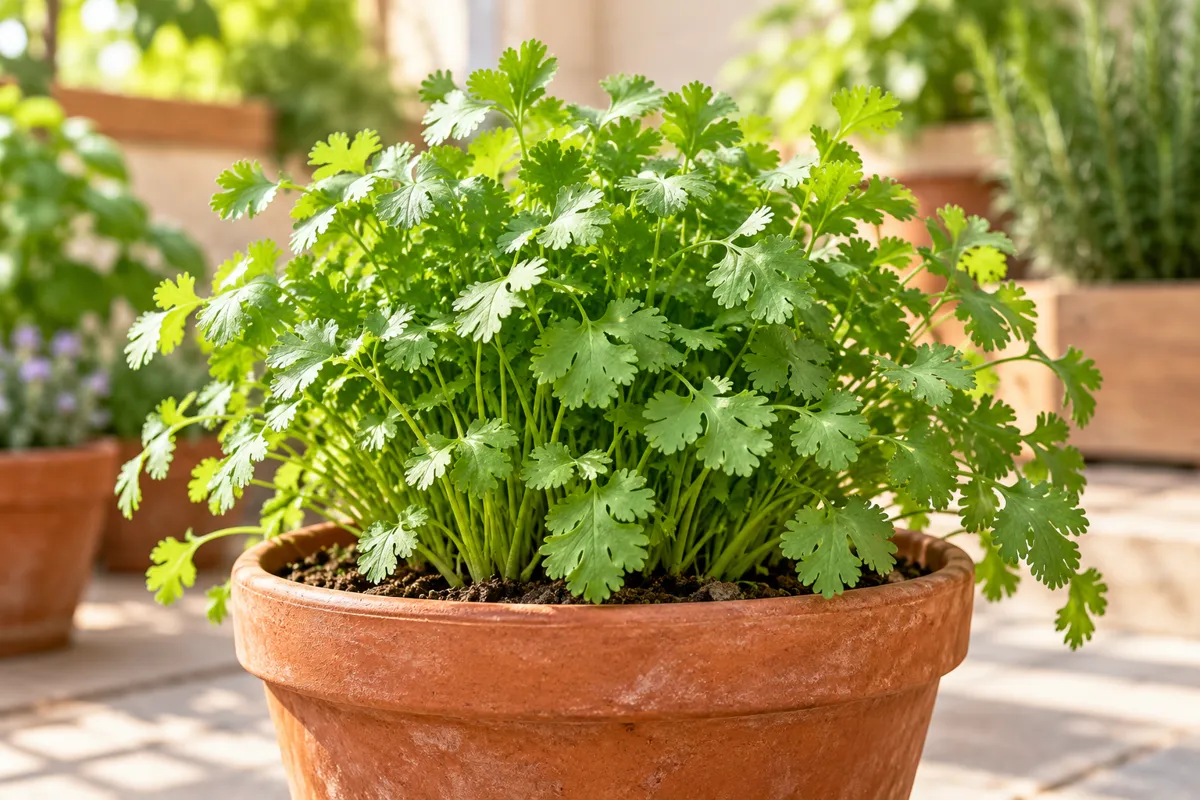
The Royal Horticultural Society’s coriander guide identifies the plant as Coriandrum sativum and explains growing it for leaves and seeds. Its UK guidance describes repeat sowing and notes that hot, dry conditions can encourage flowering. The plant is annual rather than a permanent source of leaves.
Start by deciding what you want to observe: leaf growth, flowering or seed development. That choice changes what counts as success in your garden notes. A plant moving toward seed may be disappointing if you wanted only leaves, but useful if you intended to observe its complete life cycle.
Adapt advice to your location and conditions. Record the sowing date, growing position and what happens, then compare those observations with local guidance. A seasonal timetable written for one climate should not be copied automatically into another.
Keep identification separate from health claims
A dictionary can establish a word form, and a gardening guide can explain cultivation. Neither automatically supports claims that an herb treats a medical condition. This article discusses language, ordinary culinary use and gardening; it does not establish therapeutic benefits.
The illustrations are AI-generated editorial images of coriander-related kitchen and garden scenes. They are not a plant-identification test. If you are unsure what a plant is, do not rely on an attractive image or an unfamiliar label as sufficient identification for eating it.
The broader habit of checking what a name actually establishes also appears in our guide to names shared across different subjects. A familiar-looking word is a useful starting point, but the source determines its meaning.
Questions readers ask about koriandri
Is koriandri a separate herb? In the Estonian dictionary source cited here, it is a grammatical form of koriander, meaning coriander.
Does the word tell me to use leaves? Not by itself. Read the full ingredient phrase and cooking method to identify the required form.
Can seeds replace a fresh garnish? Do not assume that substitution preserves the recipe’s intended result. The forms serve different culinary roles.
Should I follow a UK sowing calendar everywhere? Treat it as location-specific guidance and compare it with your own climate and local growing advice.
Turn an unfamiliar word into a useful cooking note
When you meet koriandri, look up koriander, keep the full phrase and identify the ingredient form. Then write a simple note that connects the word to an action in the recipe or garden. That sequence gives you a repeatable way to learn vocabulary while making better practical decisions, without turning an ordinary word ending into a mystery ingredient.
