



Giniä is a Finnish grammatical form of gini, the word for gin. Specifically, it is the singular partitive form. That is a documented language explanation, and it should be distinguished from unrelated online claims that the same spelling names a universal lifestyle, technology system or spiritual philosophy.
The useful question is not simply what the letters resemble, but how the word functions in a sentence. Finnish often changes a noun’s ending to express its role. This guide explains the basic distinction, offers an approachable method for reading inflected words and shows why spelling matters when comparing language references with brand names.
Images in this guide are AI-generated editorial illustrations, not screenshots or reproductions of the cited sources.
Giniä and its dictionary form
The Finnish entry for gini identifies the noun and lists giniä in its singular partitive row. It also shows ginin as the genitive and ginejä as the plural partitive. These forms belong to the same noun; they are not separate product names or a sequence of unrelated concepts.
A dictionary normally organizes an entry around a base form. If you search only the form encountered in a sentence, you may miss that entry. Record both the encountered spelling and the dictionary form in your notes. That simple pairing makes it easier to return to the right source later.
| Form or label | What it tells you |
|---|---|
| gini | Dictionary form of the Finnish noun |
| giniä | Singular partitive |
| ginin | Singular genitive |
| ginejä | Plural partitive |
| Context | Needed for a natural translation |
What the partitive contributes
The Finnish learning resource Uusi kielemme’s partitive guide explains several contexts for this case, including unspecified amounts of mass nouns and objects in negative sentences. It also covers uses connected with numbers and particular verbs. There is more than one reason for a partitive form to appear.
For a beginner, the safest first step is to avoid assigning one English word to the ending in every sentence. Sometimes an explanation involving an unspecified amount helps. In another construction, the grammar may be driven by negation or the verb. Read the entire phrase before deciding what the ending contributes.

This is why a vocabulary card containing only “giniä = some gin” can be too narrow. It may help with one example but encourage a mechanical translation elsewhere. A more useful card says “giniä: singular partitive of gini” and then includes a verified example sentence from your course or dictionary.
A practical way to read unfamiliar forms
Start by copying the sentence accurately, including the letters with dots. Underline the word you do not recognize and locate the main verb. Then identify whether the sentence is a statement, a question or a negative construction. You do not need to solve every grammatical detail before beginning, but these clues help organize the search.
Look up the probable base form and compare its inflection table with the word on the page. If the letters do not match, pause before forcing the result. You may have a different noun, a typing error or a form from another language. Keep the uncertain point visible in your notes until a reference resolves it.
Finally, draft a natural English translation of the whole idea. Compare it with the original to check that you have not added a quantity, intention or emphasis the sentence does not express. Translation works at the sentence level, even when the original difficulty begins with a single noun ending.
Why the letter ä should stay visible
In Finnish writing, ä is a distinct letter rather than optional decoration. Removing the dots can make a search less precise or obscure the original spelling. A website address may simplify a word for technical convenience, but that does not make the simplified address the preferred spelling in language notes.
Keep two versions only when you genuinely need them: the exact written word and an explicitly labelled simplified search or filename version. Do not silently replace one with the other. This is the same attention to source forms discussed in our Messonde spelling guide.
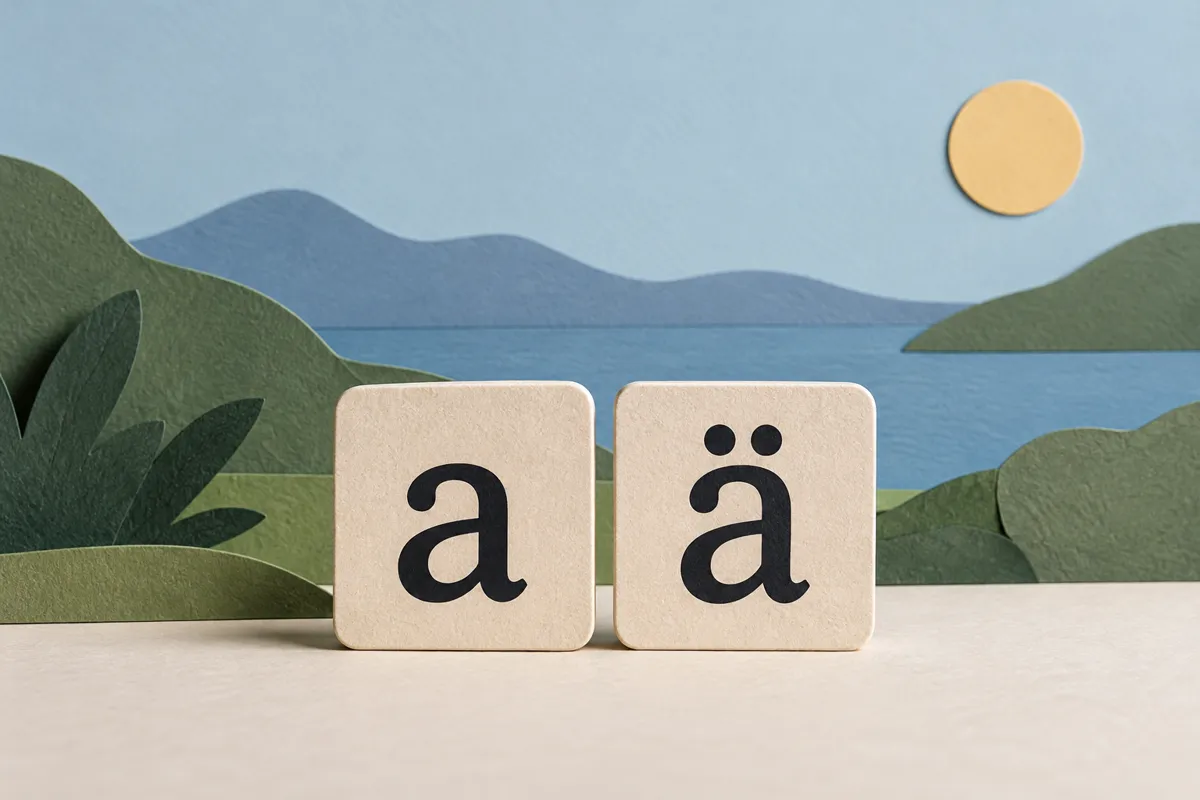
A useful proofreading exercise is to compare the heading, opening paragraph, table and vocabulary notes. Did the accented letter survive copying? Did a keyboard substitute a different character? Have you accidentally changed a lowercase word into what looks like a proper name? These small checks prevent larger errors in the explanation.
Separate Finnish grammar from similar names
Giniä, Gini and Ginia can appear in different contexts. A similar-looking personal name, company label or statistical term should not automatically inherit the Finnish noun’s meaning. Before comparing sources, identify their language and subject. A page discussing a brand may be relevant to the brand but irrelevant to the grammatical form.
This also applies to broad claims about cultural meaning. A writer can invent a name for a project, but describing it as an established tradition requires evidence beyond a creative explanation. A repeated phrase across several blogs does not substitute for a language reference or a clearly identified source community.
Our Mirativi language guide provides another example of why grammatical terminology should be understood within its language setting. Similar spelling is a starting clue, not a complete interpretation.
Build a compact vocabulary entry
Use a four-part note: encountered form, base form, grammatical label and source. Add one sentence explaining what you learned. For this entry, the central relationship is between giniä and gini. Keep that relationship prominent instead of filling the page with speculative histories or unrelated brand associations.
When reviewing the note, test recognition before production. Can you identify the base noun when you see the inflected form? Can you explain why a sentence needs further context? Once those questions are comfortable, use the exercises in a structured Finnish course to practise choosing endings yourself.
You can also maintain a short uncertainty list. If you understand the noun but not the reason for its case in a particular sentence, write that exact question down. A precise question is easier for a teacher or reference work to answer than a request for the meaning of an isolated word.

Common questions about giniä
Is giniä a standalone English word? The verified meaning discussed here is Finnish. An English explanation should identify the language and grammatical form.
Is it always a brand name? No. It has an ordinary grammatical use. A particular brand using similar letters would require separate identification.
Does the partitive always translate as some? No. Its role depends on the construction. Use the full sentence and a grammar reference.
Follow the sentence, not the trend
Giniä becomes straightforward once its base form and case are recognized. Preserve the spelling, consult the correct language entry and translate the complete idea. That approach gives a learner something practical to use while avoiding the unsupported meanings that can accumulate around an unfamiliar search term.
