


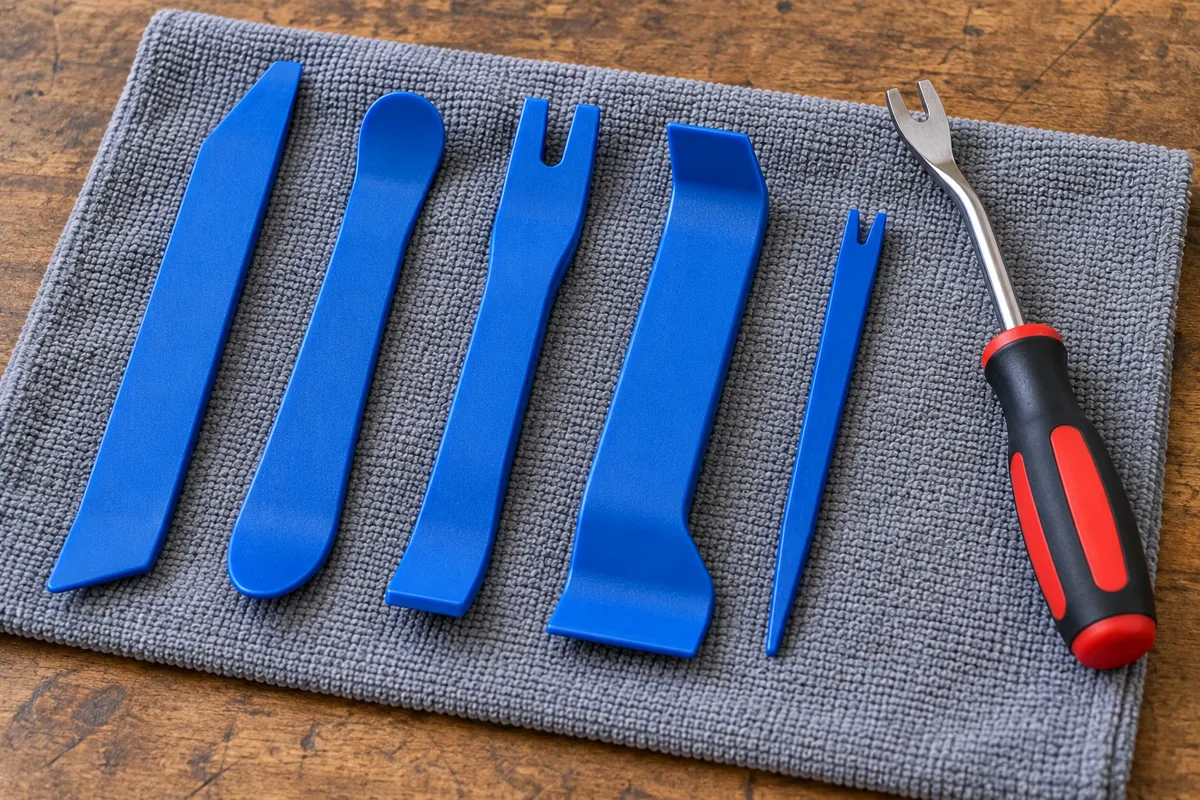
Levapioli is a useful Italian catalogue term to recognize when searching for automotive trim-pin removal tools. Rather than treating it as a mysterious brand or a universal tool specification, compare the actual product description, material and working-end shape. The same broad task can involve tools designed for different access conditions and fasteners.
This guide uses manufacturer listings to establish the term’s practical context, then offers a selection checklist. It is not a hands-on product test or a vehicle-specific repair procedure. The AI-generated illustrations are generic workshop concepts and do not depict a tested product or an approved removal method.
What levapioli means in a tool catalogue
Beta’s Italian listing uses levapioli for a stainless-blade tool. The corresponding English listing describes a trim-pin remover. That paired terminology gives a concrete translation in an automotive bodywork context.
The manufacturer also lists a five-piece nylon trim-pin remover kit. Together, these examples show why the keyword alone is insufficient for choosing a tool: products in the same broad category can use different materials and shapes. Match a specific model to the intended work instead of buying solely from the translated name.
| Selection detail | What to compare | Why it matters |
|---|---|---|
| Working-end shape | Fork, wedge, bend and access angle | The tool must reach the intended fastener |
| Material | Manufacturer-stated nylon or metal | Different tools have different handling characteristics |
| Dimensions | Actual width and thickness | A photograph does not establish clearance |
| Handle | Grip and available working space | Reach and control depend on the location |
| Vehicle information | Correct trim and fastener documentation | Similar-looking panels may attach differently |
Identify the fastening system first
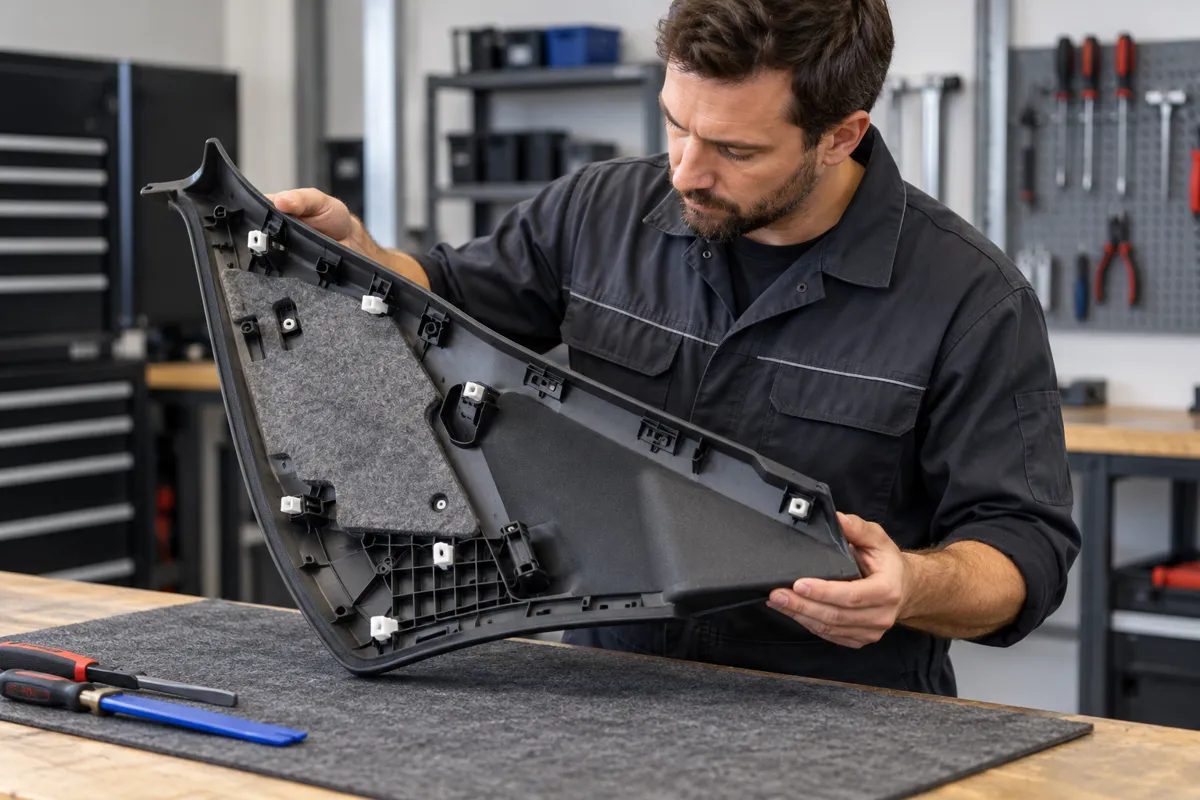
Before selecting a remover, establish what holds the part in place. A visible plastic head does not prove that every nearby attachment is the same type. Trim assemblies can include concealed fixings, locating tabs or connections that are not obvious from the outside. Use the relevant vehicle documentation or ask a qualified technician.
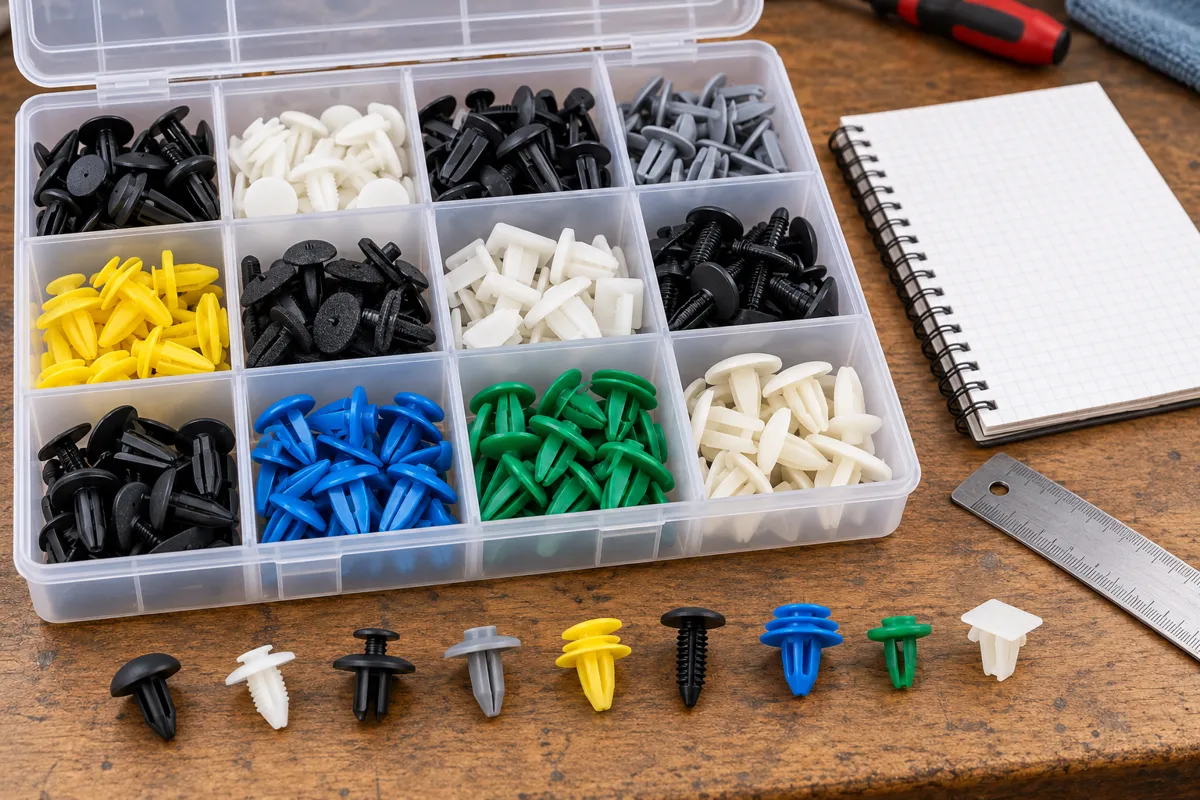
Write down the vehicle model, year and exact panel location. If you already have a replacement fastener, record its part number and compare it with the specified original. A general search for “door trim clip” may return parts that look alike but differ in dimensions or retention design.
This preparation can save a mistaken purchase. The first question is not how much force a tool can apply; it is whether you understand the attachment and have selected an appropriate method. If the fastening system remains uncertain, stop before levering against the panel.
Compare nylon and metal without absolute promises
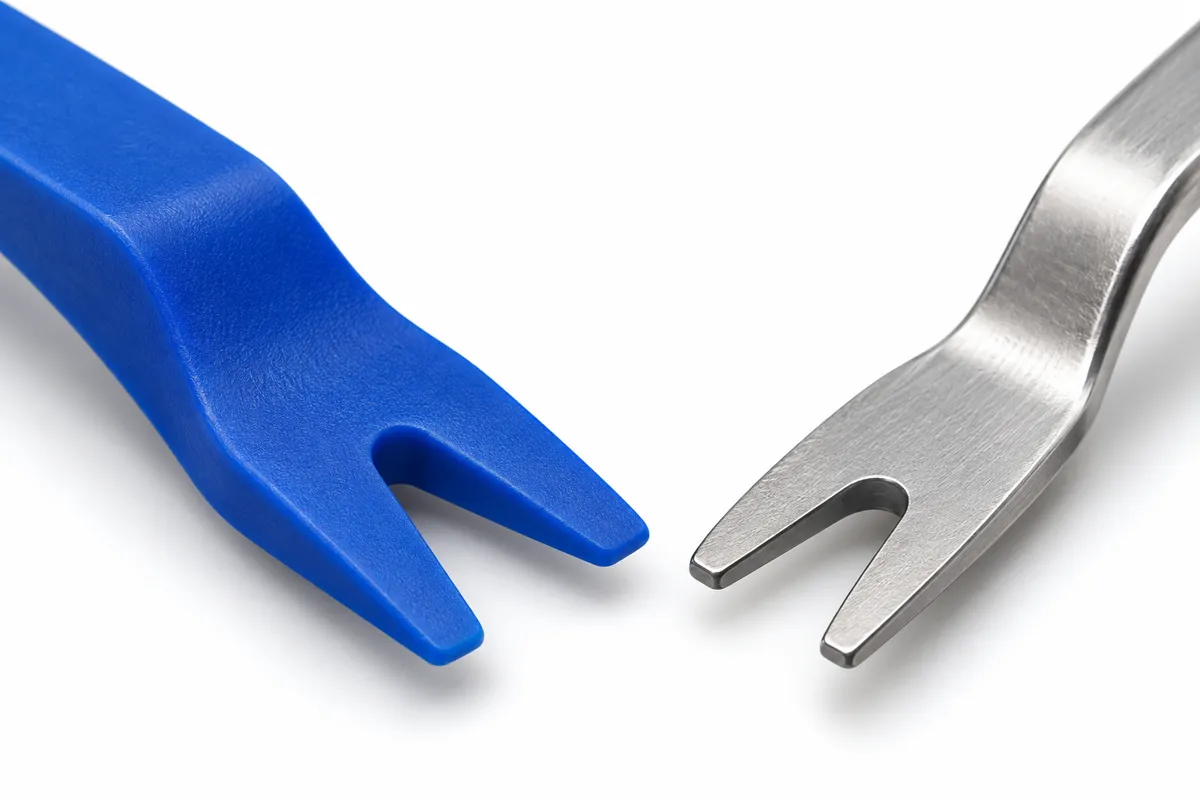
Material is useful information, but it is not a guarantee of a damage-free result. A nylon tool may be chosen for a particular trim task, while a metal tool may suit a different fastener or access requirement. The relevant question is what the manufacturer and vehicle procedure specify for that situation.
Do not describe any tool as universally scratch-proof. Dirt trapped between surfaces, an unsuitable edge or pressure in the wrong location can undermine careful intentions. Inspect the tool’s condition and the working area before beginning, and replace a damaged tool rather than treating wear as harmless.
Similarly, a strong-looking metal blade is not automatically the better choice. Greater stiffness does not resolve uncertainty about a hidden clip or fragile mounting point. Choose based on documented suitability, dimensions and controlled access, not the impression that a heavier tool must be more capable.
Read product photographs alongside specifications
Photographs help you compare the general shape of a tool, but perspective can distort size. Look for listed dimensions and an identifiable model number. A long handle may be convenient in open space and awkward in a confined area. A forked end may appear suitable while its opening is wrong for the fastener.
When a listing lacks the information you need, ask the seller or manufacturer before ordering. A precise question might request the working-end width or confirmation of the intended application. “Will this fit my car?” is harder to answer without the model, year and component location.
Our Messonde terminology guide shows a related research habit: establish the documented product term, then compare specifications. The spelling of a tool name is only the beginning of a useful technical search.
Plan the workspace and the stopping point
Keep removed hardware organized by location. A labelled tray or a simple sketch can help distinguish fasteners that look similar. Photographing the undisturbed arrangement can also provide a reference, provided the image is clear enough to show orientation and placement. Do not rely on memory when several pieces are involved.
Arrange lighting so you can inspect the area without pulling a panel farther than the documented procedure allows. If there are electrical connectors, restraint-system components or unfamiliar assemblies nearby, use the vehicle’s service information and appropriate professional assistance. A general trim tool article cannot establish a safe procedure for every vehicle.
Set a stopping point before you start: unexpected resistance, an unknown connection, cracking or a fastener that does not match the documentation all deserve reassessment. Repeating the same motion with more force does not supply the missing information.
Buy the smallest suitable set
A larger set is useful only if its shapes address the work you actually expect to do. Compare the included pieces rather than the piece count. If several tools duplicate the same practical role, the extra number may add little value for your task.
Storage and replacement availability can also matter. Tools kept loose with sharp hardware may become damaged or difficult to identify. A dedicated location makes it easier to inspect their condition before reuse. These are practical ownership considerations, not evidence that any particular kit is the best available.
The broader lesson also appears in our Werfnetten material-selection guide: a category name does not replace matching the material and specification to the job.
Frequently asked questions
Is levapioli a brand? In the cited Italian catalogue it is a product term used for a trim-pin remover. The actual manufacturer and model are separate details.
Are all trim removers interchangeable? No. Compare working-end geometry, material, dimensions and the documented fastening system.
Will nylon guarantee no marks? No material provides that universal guarantee. Tool condition, contamination, surface finish and the chosen procedure all need consideration.
Can this guide replace a workshop manual? No. It explains terminology and selection questions, not the removal sequence for a particular vehicle.
Choose by the fastener and the fit
A productive levapioli search ends with a clearly identified tool for a clearly identified task. Confirm the attachment, compare specifications and plan how to keep parts organized. When the vehicle details or procedure are uncertain, resolving that uncertainty is more useful than buying a larger kit or applying more force.
