


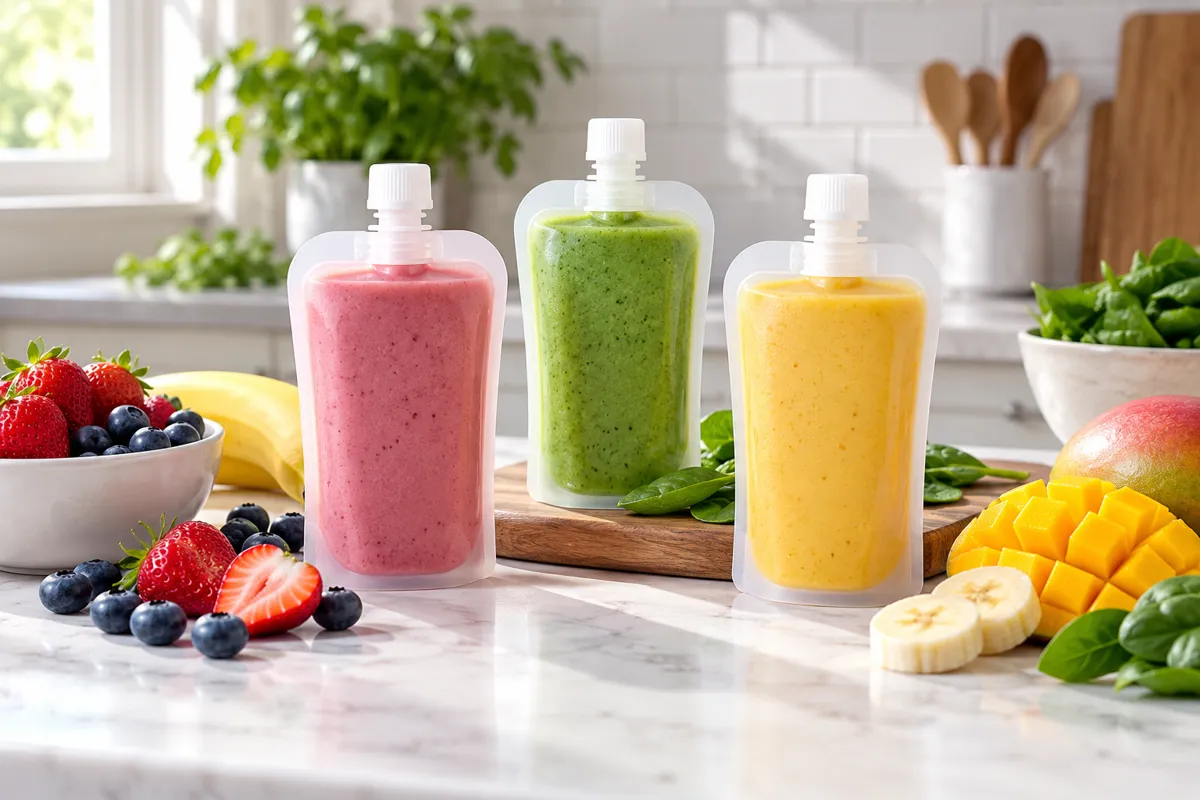
Smoothiepussit is a Finnish shopping term used for smoothie pouches. It can lead to refillable containers as well as ready-filled products, so the word alone does not identify a brand, material or cleaning method. For anyone comparing reusable options, the useful questions concern the opening, removable parts, closure, capacity and instructions supplied with the exact model.
A pouch can make a portion easier to carry, but it adds a cleaning task and does not change the storage requirements of its contents. This guide focuses on choosing and looking after refillable pouches, separating manufacturer instructions from general food-handling guidance. Product illustrations are conceptual examples rather than photographs of a particular brand.
What does smoothiepussit describe?
Finnish retail listings use the term for products in the snack-container category. For example, Pikku-Vakka’s Silvia smoothie pouch listing describes a silicone product with a stated 170 ml capacity. That establishes one specific retail use of the term, rather than a universal specification for everything returned by a search.
Before comparing prices, establish whether the listing sells empty reusable containers, a pack of prepared food or replacement accessories. Count the actual pouches included. A picture containing several colours may show variants rather than the contents of one order. Similarly, an advertised capacity does not tell you how much room the manufacturer expects you to leave when filling.
A practical comparison at a glance
| Check | What to establish |
| Product type | Empty reusable pouch or prepared food |
| Opening | Access for cleaning and inspection |
| Parts | Removal and replacement instructions |
| Storage | Food and container requirements |
Choose a design you can actually clean
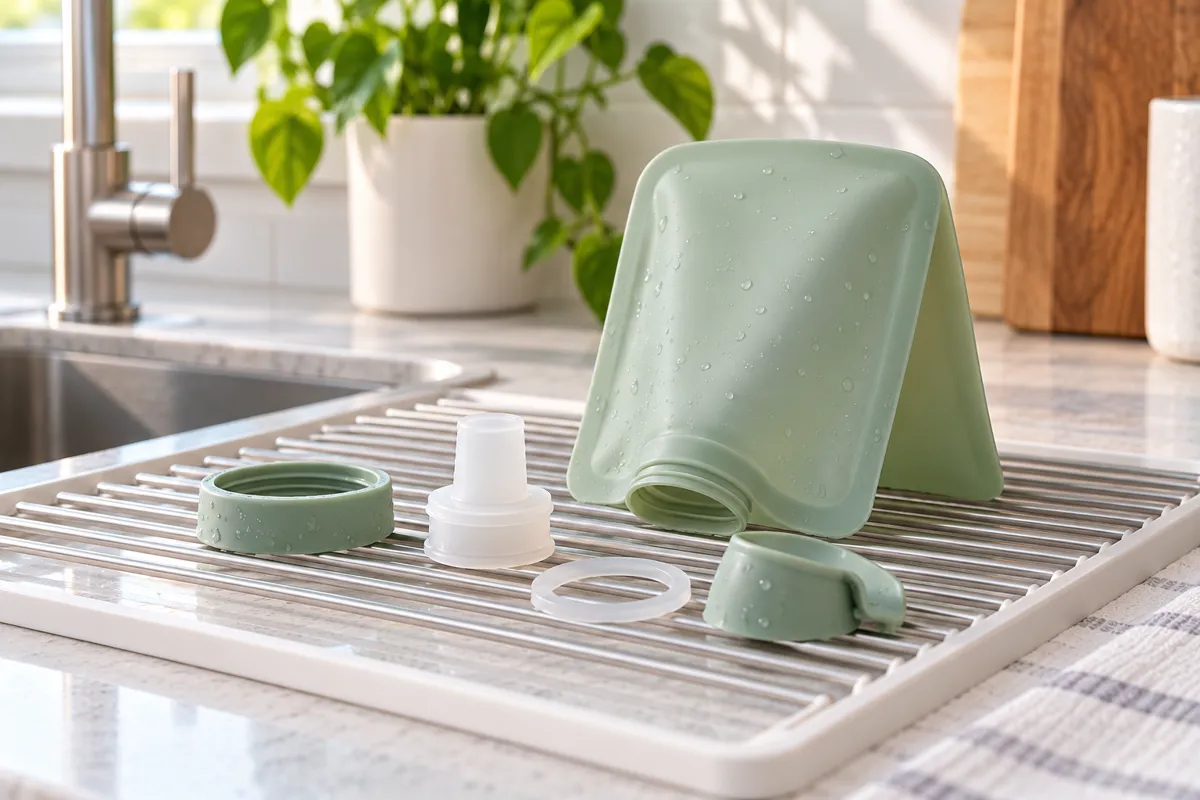
The most useful opening is one that lets you inspect the interior and reach the places where food collects. Look at the base, shoulders, seams, spout and any valve. A wide opening may simplify access, but the whole design matters. A product with a generous mouth can still have small components that need separate attention.
Check whether the spout, lid and other parts detach, and whether replacements are available. Keep the manual where it can be found later. If a seller provides only attractive photographs without care instructions, request the instructions before buying. The material name by itself is not enough to establish suitability for boiling, dishwasher cycles, microwave heating or freezing.
The Haakaa Silicone Yummy Pouch product page, for instance, describes a wide-neck design and removable components. Its care guidance includes taking parts apart, washing with warm soapy water and avoiding abrasive cleaning tools. Those directions belong to that product; another pouch may need a different method.
Build a repeatable cleaning routine
Read the manufacturer’s current directions before first use and keep the parts together during cleaning. Disassemble only as instructed. Wash the interior and each removable component, paying particular attention to the closure and spout. Rinsing through the opening is not a substitute for the specified cleaning process.
Inspect the pouch in good light after washing. If food remains in a corner, repeat the approved cleaning steps rather than hiding the problem by reassembling it. Let components dry thoroughly before storage, following the product directions. Store them where they will stay clean and where small parts will not become mixed with unrelated lids or valves.
Make inspection part of the routine, especially around seals and areas that flex repeatedly. If you find damage, a loose component or a closure that no longer works properly, stop using the item and consult the manufacturer. An uncertain seal is a reason to resolve the problem, not to rely on a second bag to contain leaks.
Fill with portion size in mind
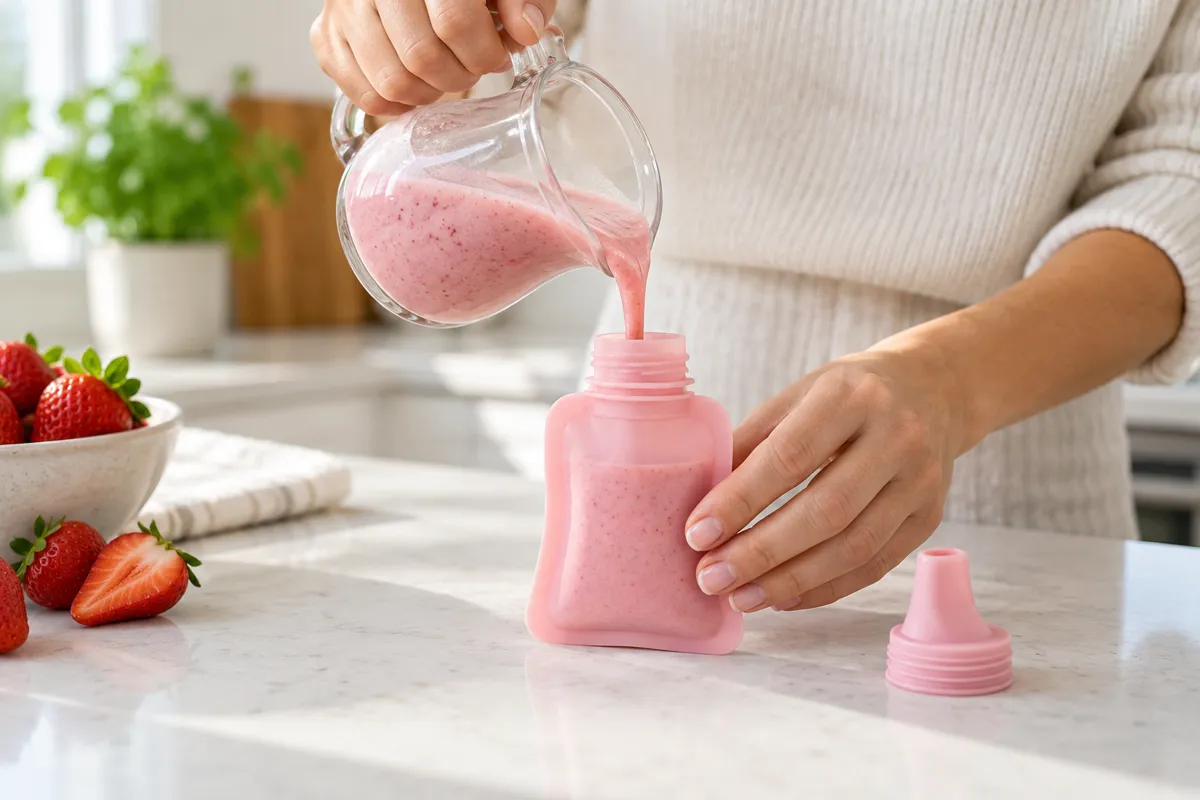
Prepare the food using clean hands, utensils and surfaces. Choose a portion you expect to use rather than automatically filling the pouch to its maximum capacity. This makes it easier to manage leftovers and reduces the temptation to repeatedly open, carry and return the same portion to storage.
Follow the fill line and closure directions, then check that the parts are properly fitted. Keep the exterior clean so that residue does not transfer to a lunch bag. For a new container, first practise opening, closing and handling it with water at home. This simple fit check can reveal an incorrectly assembled closure before you pack food.
Texture is also a practical issue. A narrow spout may not accommodate the same mixture as a wide one, and forcing a blockage can create a mess. Follow the model’s intended use and avoid improvising modifications to the valve or opening. For children, follow the product’s age guidance and supervision instructions; a pouch is not a toy.
Keep food storage separate from container claims
A reusable pouch does not make a homemade smoothie shelf-stable. The Food Standards Agency’s chilling guidance recommends a fridge temperature between 0 and 5°C and following the storage instructions on food packaging. It also advises defrosting food in the fridge. Apply food-specific directions alongside the container’s instructions.
Avoid assigning one storage life to every recipe. Ingredients, preparation and previous handling differ, while commercial ready-filled products have their own labels. Mark homemade portions with their contents and preparation date so that someone else does not have to guess. A date label helps organisation; it does not establish that a food remains suitable.
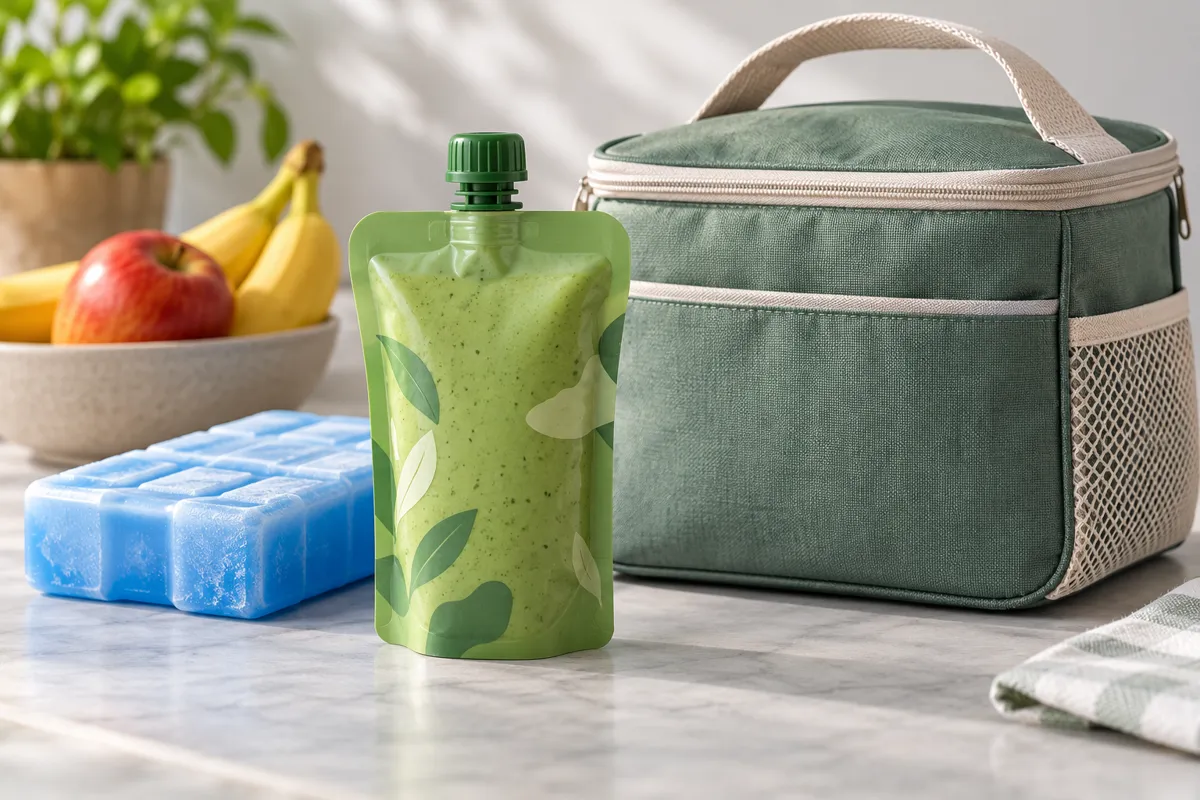
For journeys, plan how chilled food will remain chilled and how long the trip will take. An insulated bag and appropriate cold packs can be part of that plan, but simply placing a pouch in a bag is not a temperature guarantee. Our Boursin storage guide explores the related habit of checking the actual food label.
Compare cost without assuming savings
Work out the price per usable pouch, including any separate accessories you need. Then consider whether the design fits your normal washing and packing routine. A cheaper set that is difficult to clean may sit unused, while an oversized container may not suit the portions you prepare.
Claims such as reusable or eco-friendly do not quantify an individual household’s environmental savings. Frequency of use, replacement parts, washing and eventual disposal all affect the comparison. Ask concrete questions about durability and care instead of treating a broad slogan as a measured result.
Questions worth settling before purchase
Can you find clear instructions for the exact model? Can you see and clean its interior? Are the capacity, pack quantity and replacement parts clearly stated? Does it fit your storage and travel arrangements? These questions create a more useful shortlist than colour alone.
For another example of checking product details against family needs, see our TheHappyTrunk reader guide. With smoothiepussit, the decision should ultimately rest on the particular pouch and its instructions. Choose a design you can inspect, clean and use consistently, then handle the food according to its own requirements.
