


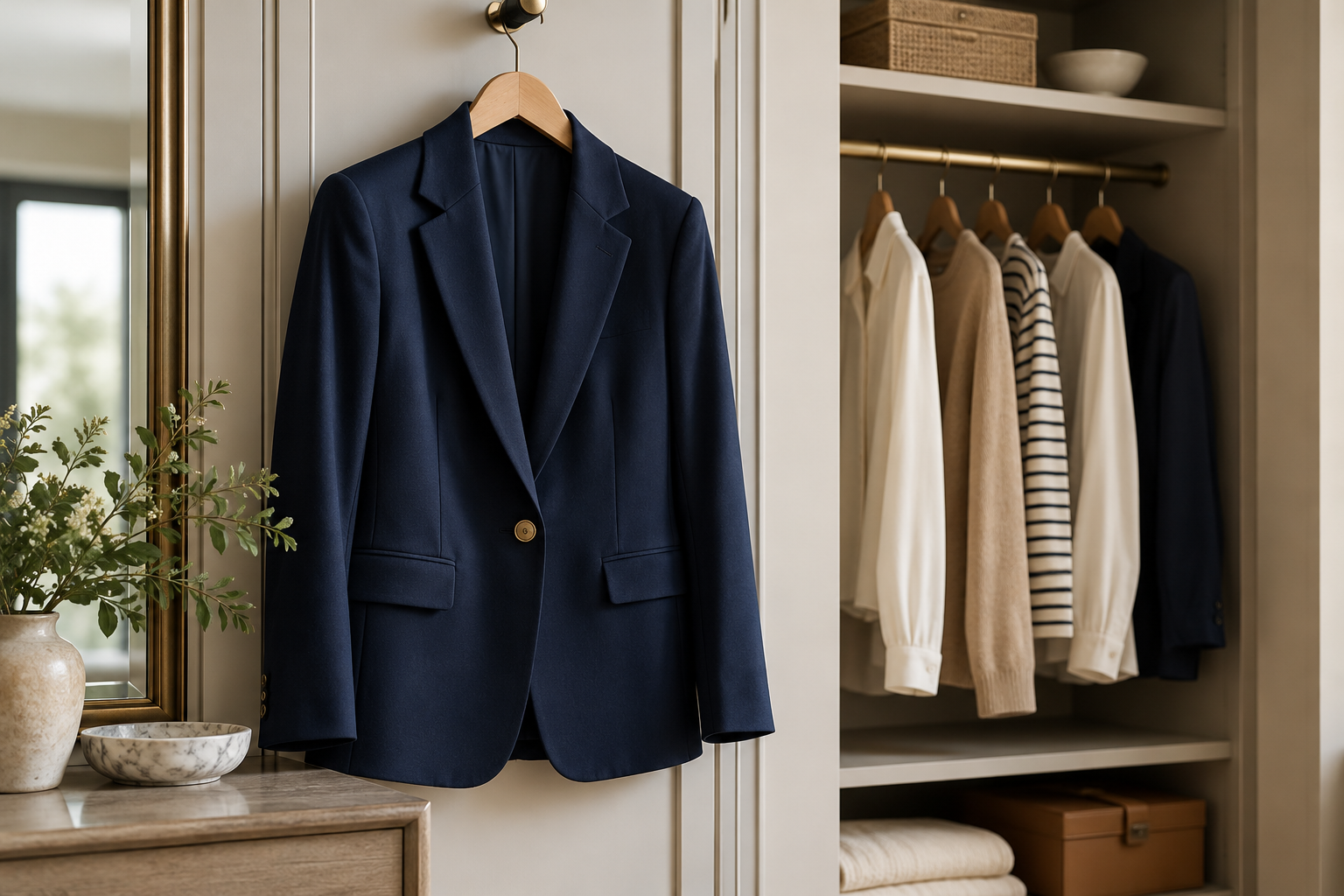
Blazertje is a Dutch diminutive of blazer: a word connected to the familiar tailored jacket. It should not automatically be treated as a newly invented fashion category, a specific brand or a guarantee of a cropped fit. The word helps identify the garment; the product description still needs to explain its actual size, fabric and construction.
For an English-speaking shopper, the useful next step is simple: understand the language, then assess the jacket. This guide covers the verified spelling, practical fit checks and adaptable styling ideas, without claiming that every item called a blazertje follows one trend or silhouette.
| Fit area | Practical check |
| Shoulders | Seam placement and comfortable movement |
| Sleeves | Length with arms relaxed |
| Front | Closure without unwanted pulling |
What does Blazertje mean?
The Dutch Woordenlijst entry for blazertje identifies it as a noun and connects it to the base word blazer. The plural is blazertjes. This supports the language explanation; it does not establish a particular designer, launch date or fashion movement.
In a listing, the diminutive can appear in ordinary descriptive language. Do not infer exact dimensions from it. An adult jacket can still be described informally with a diminutive, so check the size chart and measurements instead of assuming the item is for a child or has a short hem.
Start with the shape you actually need
A blazer can be structured, relaxed, fitted or deliberately oversized. Decide how you expect to wear it before comparing sizes. A jacket intended for a thin shirt may need a different amount of room from one you plan to wear over knitwear. The intended silhouette matters as much as the number on the label.
Try the garment with a realistic layer underneath. Stand naturally, close it as intended and check whether it pulls or twists. Then sit down and move your arms through ordinary tasks. A jacket that looks balanced in a still photograph may feel restrictive when worn for a full day.
Check shoulders, sleeves and the front
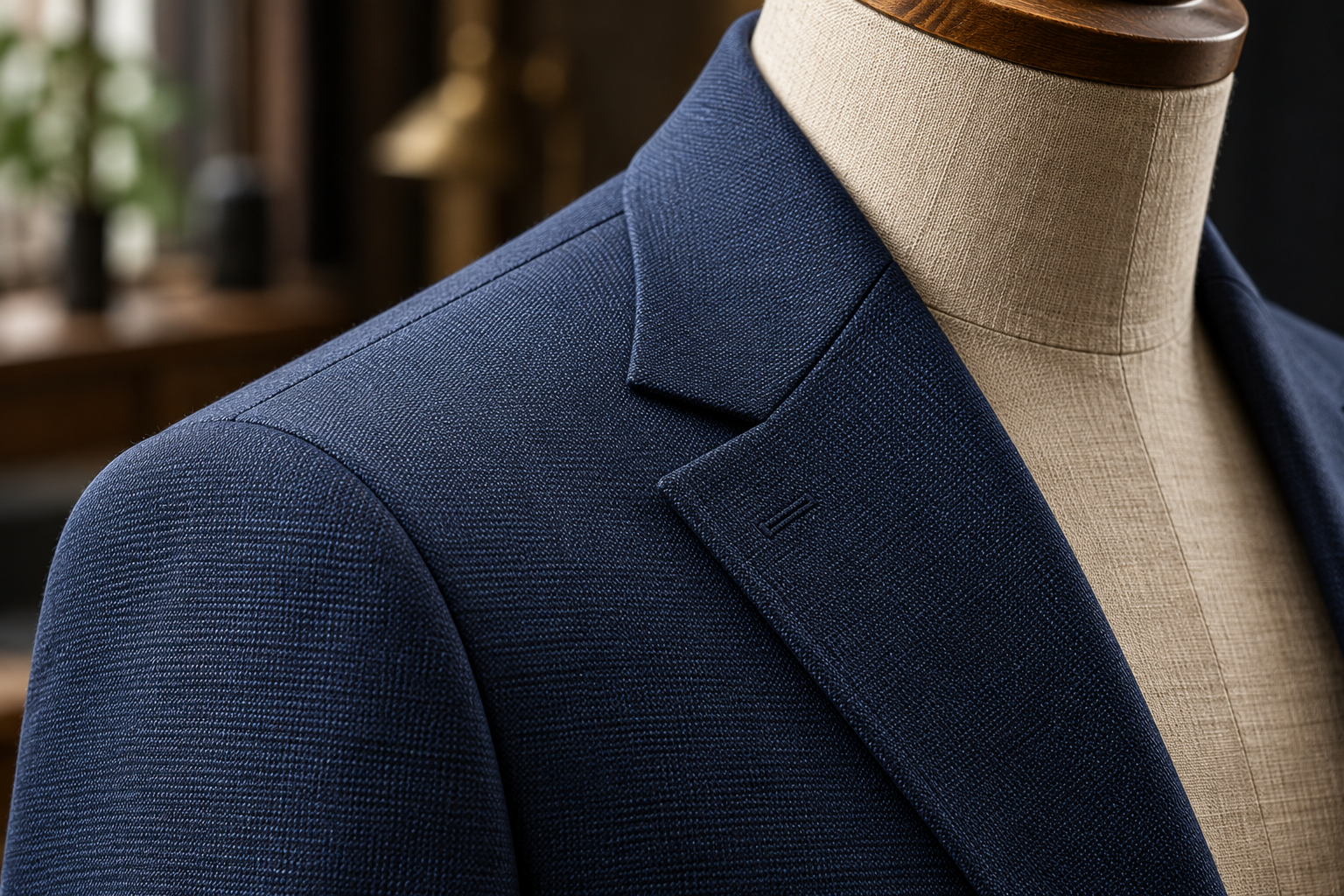
For a conventional tailored fit, the shoulder area should look intentional rather than accidentally collapsed or strained. With an oversized design, the seam can sit differently by choice. Compare the result with the maker’s intended shape rather than applying one rigid rule to every blazer.
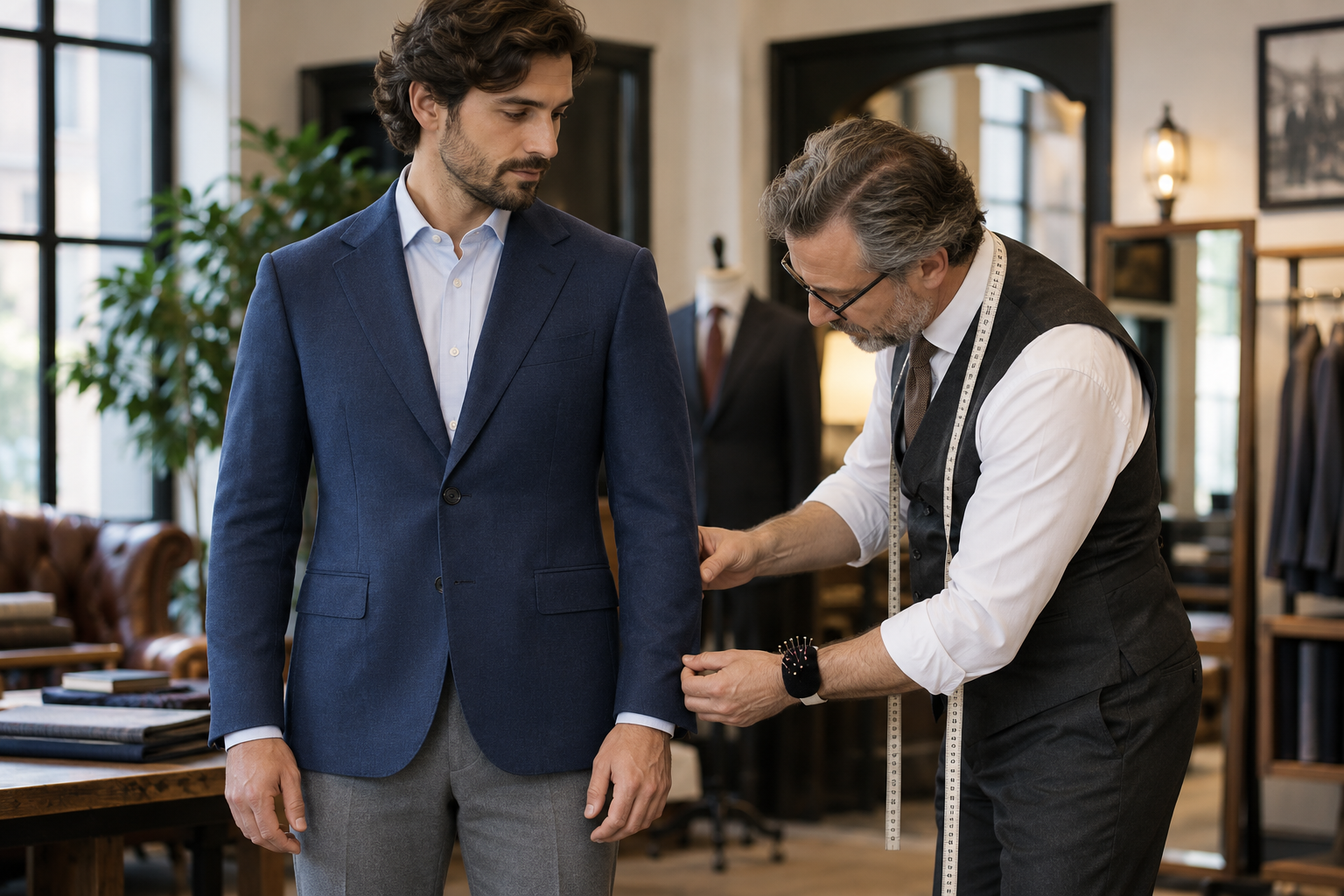
Look at the sleeves with your arms relaxed. Decide whether you want shirt cuffs visible and whether you normally push or roll the sleeves. Check the sleeve length on both arms, since stance and posture can change the impression. Avoid judging fit while holding your arms in an unnatural pose.
At the front, watch for tension around the fastening and for lapels that fail to lie as intended. Check the jacket from the side and back as well. If an alteration is being considered, ask a tailor what is feasible before buying; construction can make apparently small changes more involved.
Our Nahttypen seam guide offers related background on construction choices. It does not replace a tailor’s assessment, but it helps explain why the way a garment is made matters when evaluating fit or alterations.
Fabric and lining change the experience
The outer fabric, lining and internal structure all affect how a blazer feels. Compare the listed fibre composition and examine the drape. A light unstructured jacket and a firm tailored piece can serve different purposes even if their colour and general outline look similar online.
Check pockets, buttons and seams before removing tags. Make sure decorative pockets are understood as decorative and that any temporary stitching is identified correctly. If you are unsure whether a thread is meant to be removed, consult the seller rather than cutting into the garment.
For online shopping, compare measurements with a jacket you already own and enjoy wearing. Measure that garment flat according to the retailer’s method if one is provided. Body measurements and finished-garment measurements answer different questions, so confirm which kind the chart uses.
Three simple styling directions
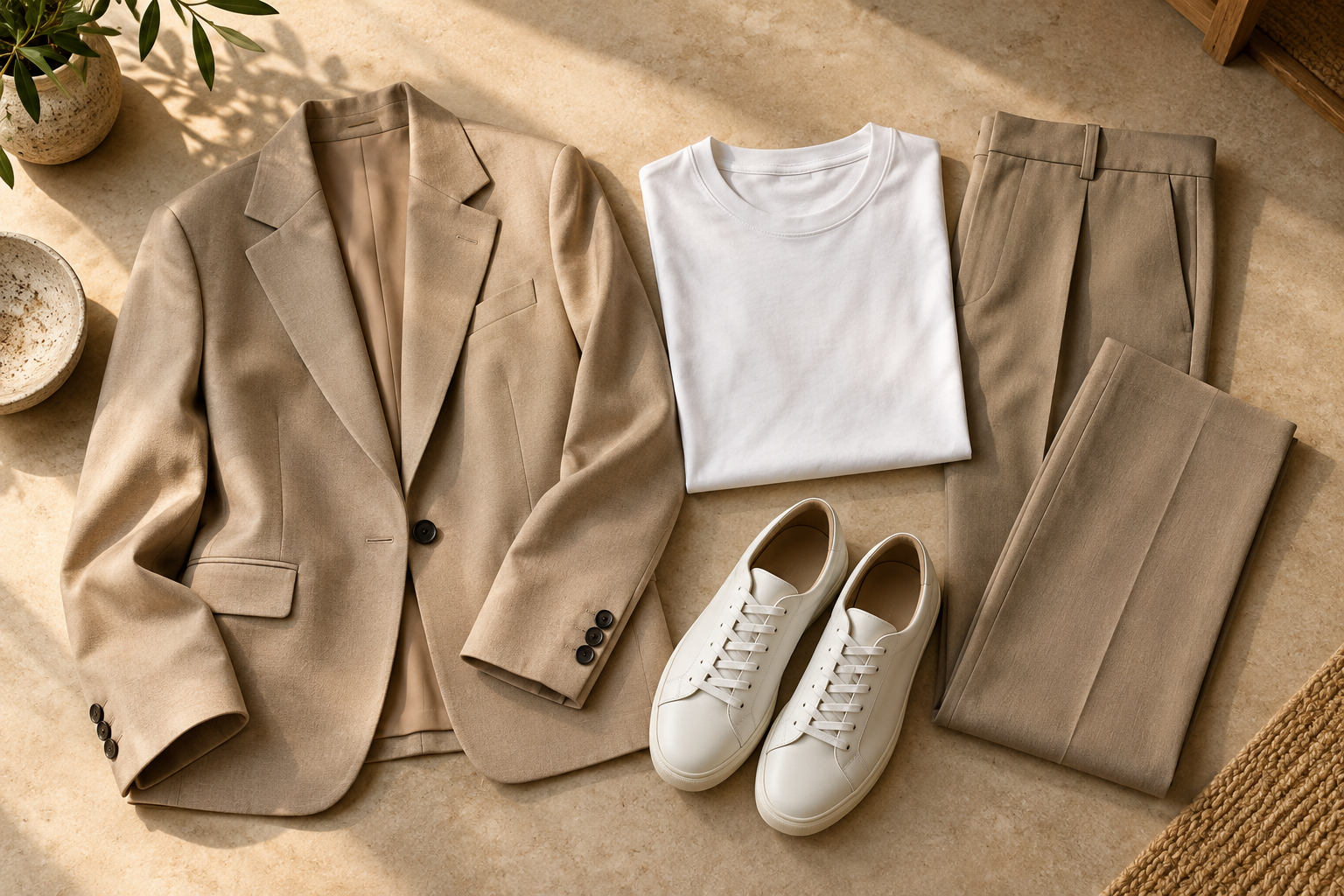
For an everyday combination, pair the blazer with a plain top and trousers or jeans that leave the jacket’s shape easy to see. Keep the first outfit simple while checking proportion. Once the fit feels right, introduce pattern or stronger colour through one element at a time.
For a more formal setting, coordinate the jacket with a shirt and trousers appropriate to the occasion. They do not always need to be a matching suit, but differences in fabric and formality should look deliberate. Consider the shoes and bag as part of the whole outfit rather than choosing them at the last moment.
For a softer layered look, try a fine knit underneath if the jacket allows enough room. Check the armholes and front again with the extra layer. A comfortable outfit is usually more convincing than a carefully styled one that restricts ordinary movement.
Our Trastullami fabric guide provides another example of why a material’s name and its actual properties should be checked separately. Styling begins with the garment you have, not an assumption based only on a label.
Care for the exact garment
The GINETEX care-symbol guidance explains the role of textile care labels. Follow the instructions on the blazer itself. The presence of a familiar fibre does not mean every jacket made with it can be washed or ironed in the same way.
The lining, trims and construction can affect care requirements. Check the label before buying if easy home care is important to you. Store the jacket in a way that supports its shape and avoid overfilling its pockets while it hangs. When a stain or repair is beyond routine care, use a suitable professional service.
Frequently asked questions
Does blazertje always mean a cropped blazer? No. The word does not provide a standardized hem length. Use the listing’s measurements and photographs to assess the cut.
Is it only a women’s garment? The word itself identifies a diminutive of blazer. The intended wearer and sizing come from the specific garment and retailer’s description.
Can I size down to create a fitted look? Not reliably. A smaller size can change several dimensions at once. Compare the intended cut and try movement checks rather than relying on the label alone.
Is there one correct way to style it? No. The suggestions here are starting points. Occasion, comfort, fit and personal preference should guide the final outfit.
Let fit do the work
A blazertje is easier to choose when the word stops being a mystery. Confirm the actual cut, inspect construction, test movement and read the care label. Those practical checks give a familiar jacket a useful place in your wardrobe without needing to turn it into a passing internet trend.
