


Trastullami can lead you to two very different subjects: an Italian expression and a fabric used in creative sewing. Both uses are real, but they should not be blended into one explanation. A dictionary entry helps with the language; a textile listing helps with the material.
In Italian, the word can mean “amuse me” or “entertain me.” In craft shops, the same spelling appears as the name of stretch tulle associated with I Nastri di Mirta. The surrounding sentence, product description or category usually tells you which interpretation belongs.
This guide separates those meanings, explains the grammar, and outlines practical questions for anyone researching the fabric. It avoids attaching a universal romantic meaning to the expression or treating every type of tulle as the same product.
Trastullami at a Glance
| Context | Meaning or use |
|---|---|
| Italian expression | Amuse me or entertain me |
| Grammatical structure | Trastulla, an informal singular command, plus mi |
| Related verb | Trastullare |
| Reflexive form | Trastullarsi, referring to amusing oneself or passing time |
| Textile context | A stretch-tulle product name associated with I Nastri di Mirta |
| Craft applications | Flowers, accessories and decorative sewing |
| Important distinction | The word’s grammar does not establish the history of the product name |
What Does Trastullami Mean in Italian?
The starting point is the transitive verb trastullare, documented by Treccani. Its meanings include amusing or entertaining someone through games and pastimes. Add an instruction addressed to one person and the object pronoun meaning “me,” and you obtain trastullami.
The literal meaning is useful, but tone depends on the situation. An expression can be playful, theatrical or demanding according to who says it and how. The word does not automatically mean “love me,” “comfort me” or “keep me company,” even if a particular conversation allows a looser English rendering.
Treccani also notes that the related verb can carry a joking or disparaging tone when used about adults spending time on trivial activities. That matters because some online descriptions present only a soft, affectionate interpretation. A dictionary’s range of meanings is broader than the mood of an individual caption.

How the Word Is Built
The structure is trastulla + mi. The first part is the informal singular affirmative imperative; the second is an unstressed pronoun. Treccani’s explanation of enclisis describes how such pronouns attach to certain verb forms, including affirmative imperatives.
You can recognise the same broad pattern in parlami, meaning “speak to me,” or ascoltami, meaning “listen to me.” Identifying the ending helps a learner avoid treating the whole word as an indivisible noun. It also shows why the form addresses another person while referring to the speaker as the recipient of the action.
An invented teaching example is “Trastullami con una storia”: “Amuse me with a story.” This illustrates the construction; it is not a quotation from a historical text or evidence that the phrase is a standard everyday request.
Trastullami and Trastullarsi Are Different
The difference lies in who receives the action. With trastullami, the speaker asks someone else to provide amusement. With trastullarsi, the verb refers to amusing oneself. They belong to the same verb family, but one is not a direct substitute for the other.
For translation, first identify the subject and the pronoun, then decide how the sentence functions. Is someone making a request, describing their own activity or commenting on another person’s behaviour? This small grammatical check prevents a plausible-looking translation from changing the relationship between the people involved.
Is It Always a Romantic Expression?
No single emotional label covers every use of trastullami. A playful exchange may give it an affectionate tone, while another setting may make it sound exaggerated or impatient. Context supplies that interpretation. It is better to translate the actual sentence than to invent an emotional meaning that must apply everywhere.
The verb family has literary history, but that does not establish claims about a particular song, social-media trend or viral phrase. If a page reports millions of views or widespread popularity, ask for a dated, identifiable source. Repeating an appealing story about a word is not the same as documenting its use.
Trastullami as a Textile Product
In a craft catalogue, the term has a different job. La Bottega di Barbara’s product listing identifies it as stretch tulle from I Nastri di Mirta and describes applications including fabric flowers, bag and hat decoration, doll clothing and other sewing projects.
This establishes a commercial textile use of the name. It does not show that the Italian verb translates as “tulle,” nor does it explain why the product received that name. Language meaning and product naming should remain separate unless the brand provides a documented explanation connecting them.
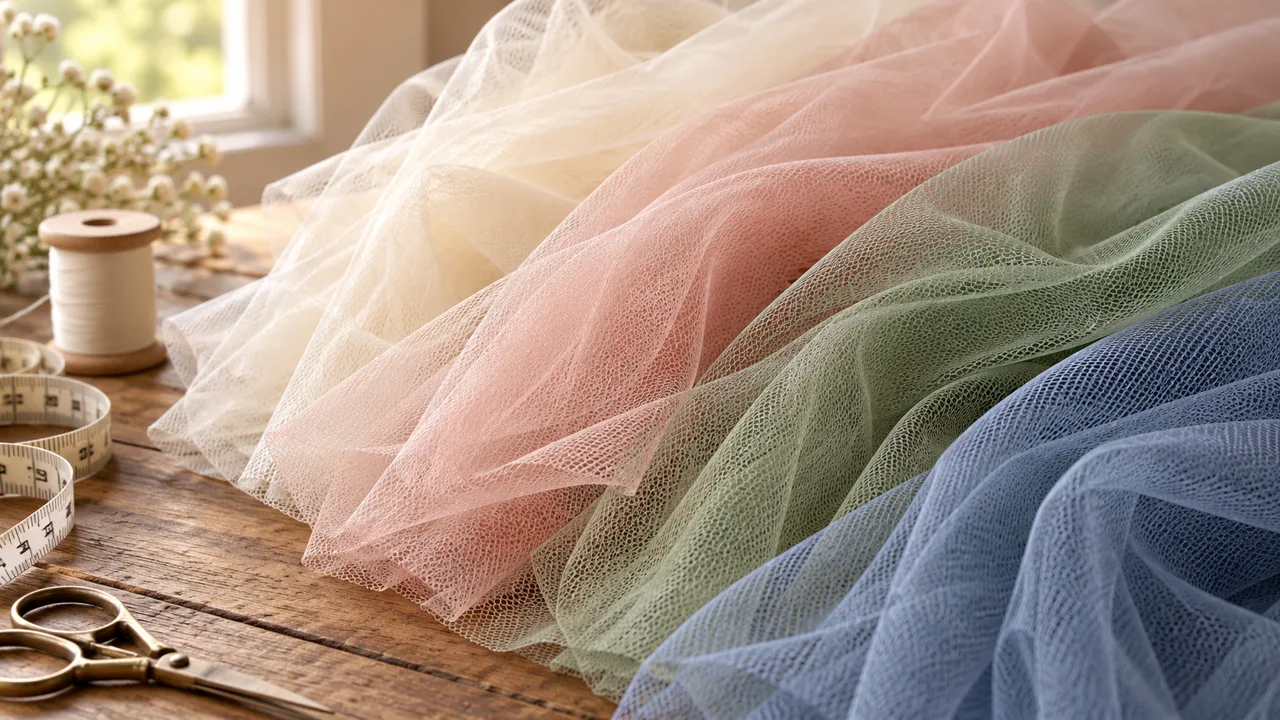
Another retailer, C’era una stoffa, describes its listing as soft, airy, bi-elastic tulle. It also provides item-specific composition, dimensions and handling information. Those details belong to the listed material; they should not be copied onto an unrelated fabric simply because both products are called tulle.
What to Check Before Choosing the Fabric
Start with the project, then inspect the specification. A decorative flower, a costume detail and a fitted garment place different demands on a material. Write down the effect you want before comparing colours. Does the project need softness, a defined shape, transparency or movement? The answer determines which details deserve attention.
Check the selling unit as carefully as the price. Fabric may be priced by a short increment, a fixed cut or another measure. The C’era una stoffa listing reviewed for this guide specifies 15-centimetre increments. That is a retailer-specific example, not a universal rule for Trastullami. Confirm the current listing before calculating an order.
Also confirm width, fibre composition, care instructions and the exact colour reference. A photograph is useful for orientation, but it cannot fully communicate texture or how a shade will look beside your other materials. If the project depends on a close match, ask whether a sample is available.
Creative Uses to Explore
Retailer descriptions identify several decorative applications. The ideas below are starting points for planning, rather than claims that every cut or finish will behave identically. Choose a small test piece before committing the material to a larger design.

Fabric Flowers and Removable Accessories
A flower is a manageable way to explore how a sheer material looks when gathered or layered. Before attaching it permanently, hold the sample against its intended background. A shape that stands out on dark fabric may look much subtler on a pale surface.
For a removable accessory, consider the weight of the finished piece and how it will be secured. A decoration for a hat may need a different attachment from one for a bag. Plan the fastening alongside the design rather than treating it as an afterthought.
Clothing Details and Decorative Layers
For a garment, test the material with the other fabrics involved. Look at the combined appearance in ordinary light and check how the layers move together. A successful sample should answer a practical question about the project, not merely demonstrate that two materials can be stitched together.
Readers exploring the broader fashion context can also see our guide to beauty and fashion content on UsElegance. Style inspiration and material specifications serve different purposes: the first suggests an appearance, while the second helps determine how to make it.
A Small-Sample Workflow
Begin by labelling an offcut with the seller, product reference and colour. Keep the original care information with it. This makes later comparison easier, especially if you are experimenting with several materials that look similar when folded.
Next, test the feature your project depends on: a gathered edge, a layered shape or a seam. Record what you changed between attempts. Without those notes, it is easy to forget which sample used which settings and repeat work that was already useful.
Finally, assess the sample in its intended position. Check the appearance, attachment and movement together. Follow the supplier’s care guidance rather than assuming that all mesh fabrics tolerate the same treatment. Stop experimenting once the sample answers the project’s actual requirements.
Comparing Two Fabric Listings
When comparing sellers, create a short record for each listing instead of relying on memory. Note the product reference, selling unit, width, colour and any stated composition. A lower displayed price may refer to a smaller amount of material. Compare equivalent quantities before deciding that one offer is cheaper, and include delivery charges when considering the total.
Do not silently correct an unclear measurement or assume a missing specification. Ask the seller to clarify it. This is particularly useful when an automated translation has changed the wording or a listing mixes units. Keep the reply with your project notes so the information remains connected to the exact item you intend to use. For a time-sensitive project, confirm availability and dispatch details separately from the fabric’s properties.
How to Find the Right Information Online
Add a context word to your search. “Trastullami Italian meaning” points towards language, while “Trastullami tulle” or “Trastullami I Nastri di Mirta” narrows the search towards the material. A more precise query reduces the chance of reading an explanation aimed at a different question.
Match the source to the claim. Dictionaries help establish meanings and grammatical distinctions. Retailers describe the items they offer. Neither source automatically verifies the other’s subject. Our online-magazine reading guide offers a broader approach to separating useful explanations from unsupported claims.
Frequently Asked Questions
What does trastullami mean in English?
As an Italian expression, it can be translated as “amuse me” or “entertain me.” The most suitable wording depends on the surrounding sentence and tone. It should not automatically be expanded into a statement about romance or emotional intimacy.
Is Trastullami a fabric or an Italian word?
Both contexts exist. The Italian form is built from a verb and pronoun. Textile retailers also use the spelling for stretch tulle associated with I Nastri di Mirta. Look for surrounding terms such as translation, sewing, fabric or colour to identify the intended meaning.
Is it the same as every other type of tulle?
No. A product name is not a complete technical specification, and the wider tulle category includes different materials. Compare the actual listing’s composition, dimensions and handling guidance rather than assuming that similar-looking products are interchangeable.
Can beginners use it for craft projects?
A small decorative sample is a sensible way to assess whether the material suits your experience and tools. Begin with a limited project and follow the supplier’s instructions. A retailer’s description of ease of use is not a guarantee that every technique will work on the first attempt.
Does the name prove an Italian manufacturing origin?
The name alone does not prove where a textile was made. An origin claim needs product-specific information. Check the description and supplier documentation for the item being purchased, and do not transfer a claim from one listing to another.
Which Meaning Do You Need Today?
If you encountered trastullami in a sentence, keep the complete sentence and work out who is speaking to whom. If you found it beside a fabric photograph, keep the product reference and inspect its specifications. Those two small habits resolve most of the confusion before it starts.

3 Comments
Pingback: Mirativi Meaning: A Guide to Surprise in Language and Use
Pingback: Babyfied Apparel Guide: Toques, Sizing, Care and Safety
Pingback: Wollmatten Guide: Types, Uses, Care and Smart Buying Tips