


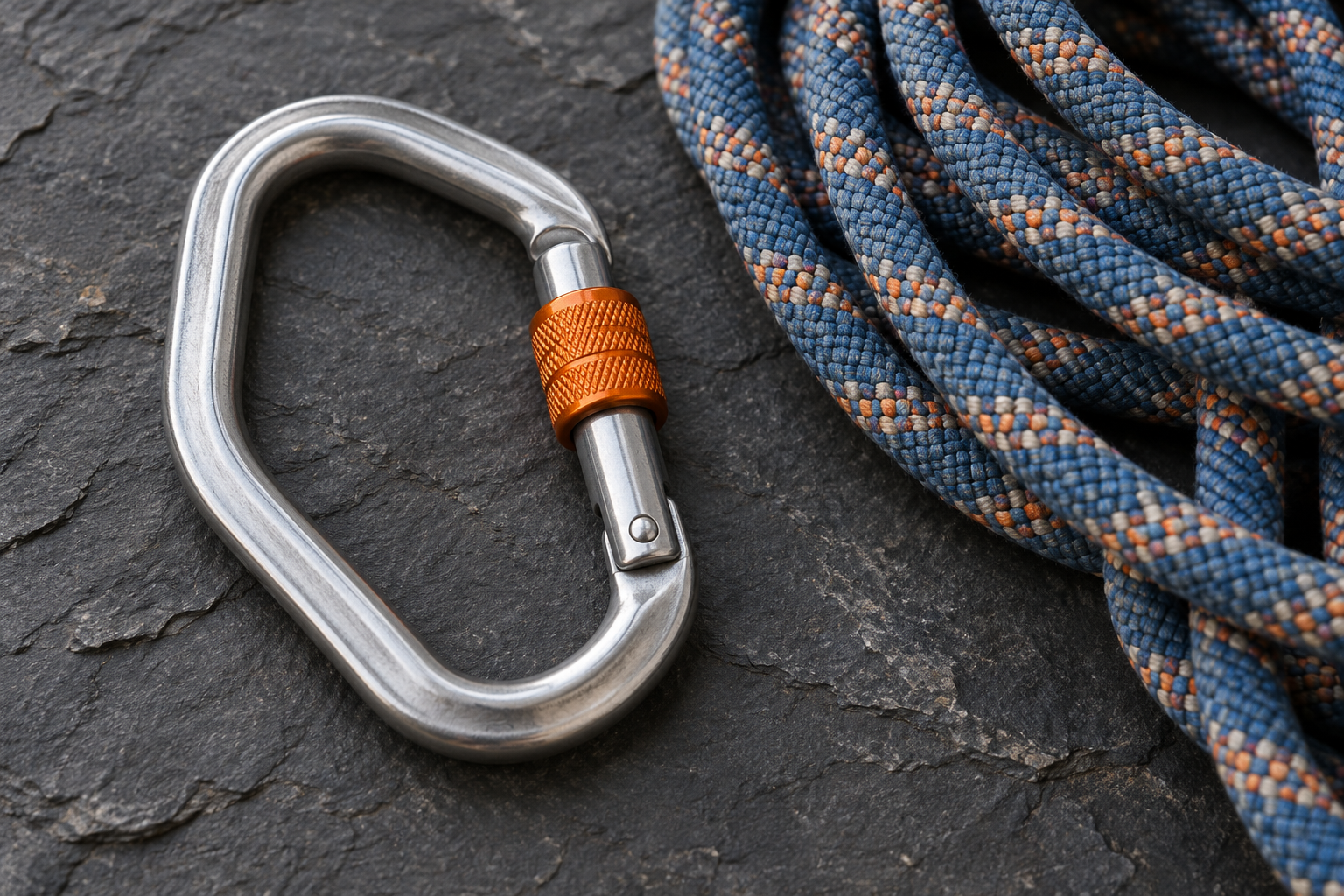
A pearabiner is a name associated with pear-shaped carabiners, including older climbing equipment sold under that name. The broad upper section and narrower lower end give the connector its recognisable outline. If you have seen the word in a gear listing or an older climbing guide, the useful question is which exact connector it describes.
This guide explains the terminology, the difference between common frame shapes, and what to check before choosing equipment. It is an overview, not belay training. The images are AI-generated illustrations, not product photographs or rigging instructions.
Pearabiner at a glance
| Question | Practical answer |
|---|---|
| What does the name describe? | A pear-shaped connector; it also appears in historical model names. |
| Is every pear-shaped clip climbing equipment? | No. Identify the manufacturer, exact model and intended use. |
| Does the shape determine compatibility? | No. The connected equipment’s instructions matter. |
| Is this a hands-on product review? | No. It explains terminology and manufacturer guidance. |
Where the Pearabiner name appears
The Karabin Climbing Museum’s Chouinard collection documents a 1989 Pearabiner prototype and describes its subsequent production by Black Diamond in 1990. That gives the name a real equipment-history context. It should not be interpreted as a new invention simply because it appears in a recent search result.
A historical model name is also different from a current product recommendation. An old listing may describe a discontinued design, while a modern retailer may use similar wording for a different connector. Match the complete model name and documentation rather than treating all search results as interchangeable.
How pear, D and oval shapes differ
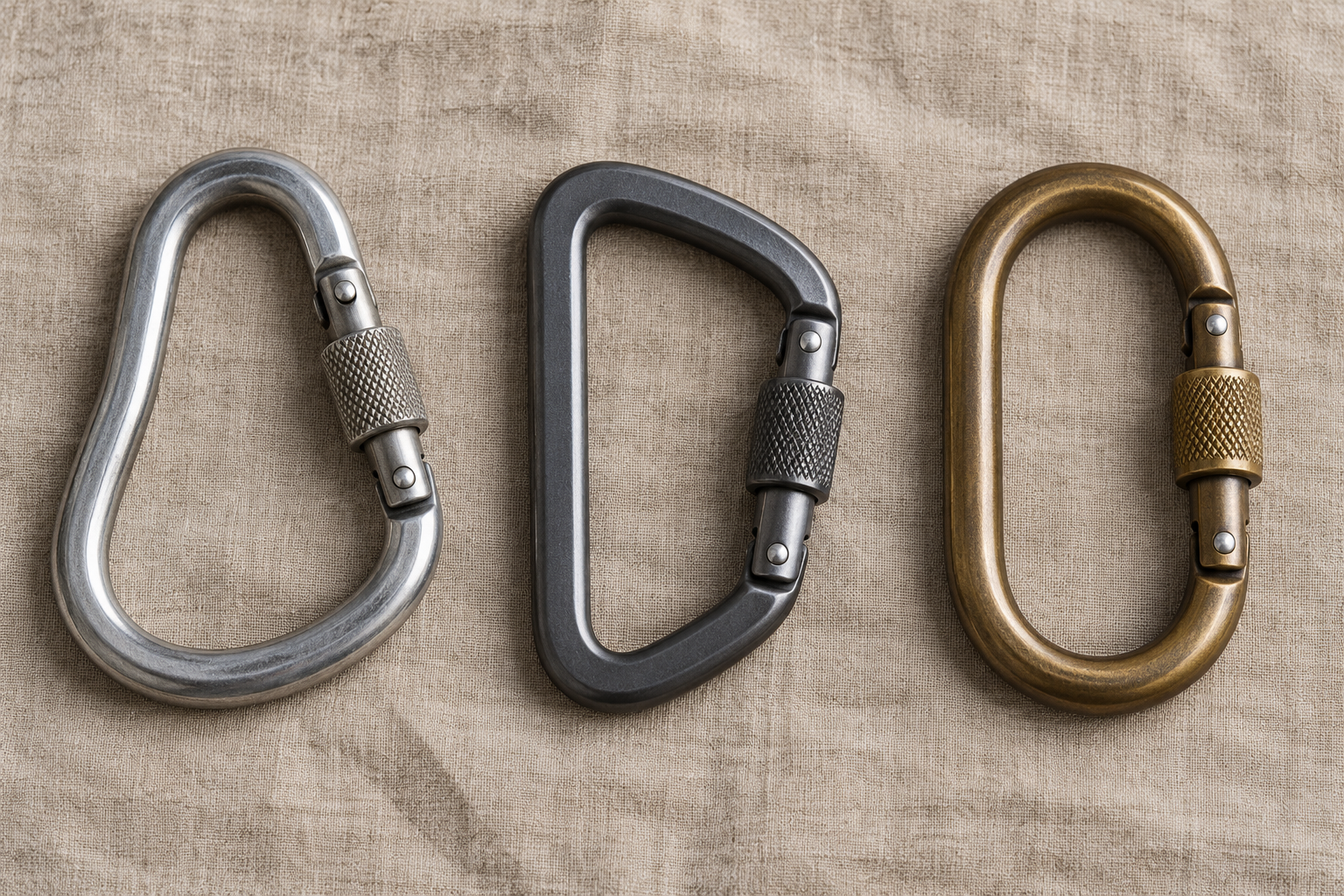
According to Petzl’s guide to carabiner shapes, a pear-shaped frame offers space for bulky or multiple items. A D-shaped frame directs the load towards the spine, while an oval frame provides a symmetrical shape for even loading with suitable equipment.
Those are design characteristics, not a ranking from safest to least safe. Petzl also notes that pear-shaped connectors can rotate more readily, which may lead to poor positioning. Extra internal space is useful only when the connector still sits correctly in the intended system.
HMS appears alongside pear-shaped connectors in climbing terminology. However, an informal label or a similar outline is not sufficient evidence that an unidentified clip is suitable for a particular climbing task. Consult the exact product instructions and the instructions for the device it connects to.
The locking mechanism is a separate choice
Frame shape and gate locking are different features. A pear-shaped connector may use a manual screw sleeve or an automatic locking design. The correct operation depends on the model, and different locking systems have different handling requirements.
Petzl’s locking-system guidance is a useful starting point for understanding these distinctions. Practice with your actual equipment under qualified supervision. A photograph cannot tell you whether a gate returns correctly, whether a sleeve engages properly, or whether the connector is compatible with your device.
What to check before using a pearabiner
- Identity: establish the manufacturer and exact model.
- Documentation: locate the instructions and retirement criteria for that model.
- Compatibility: check the instructions for every connected item.
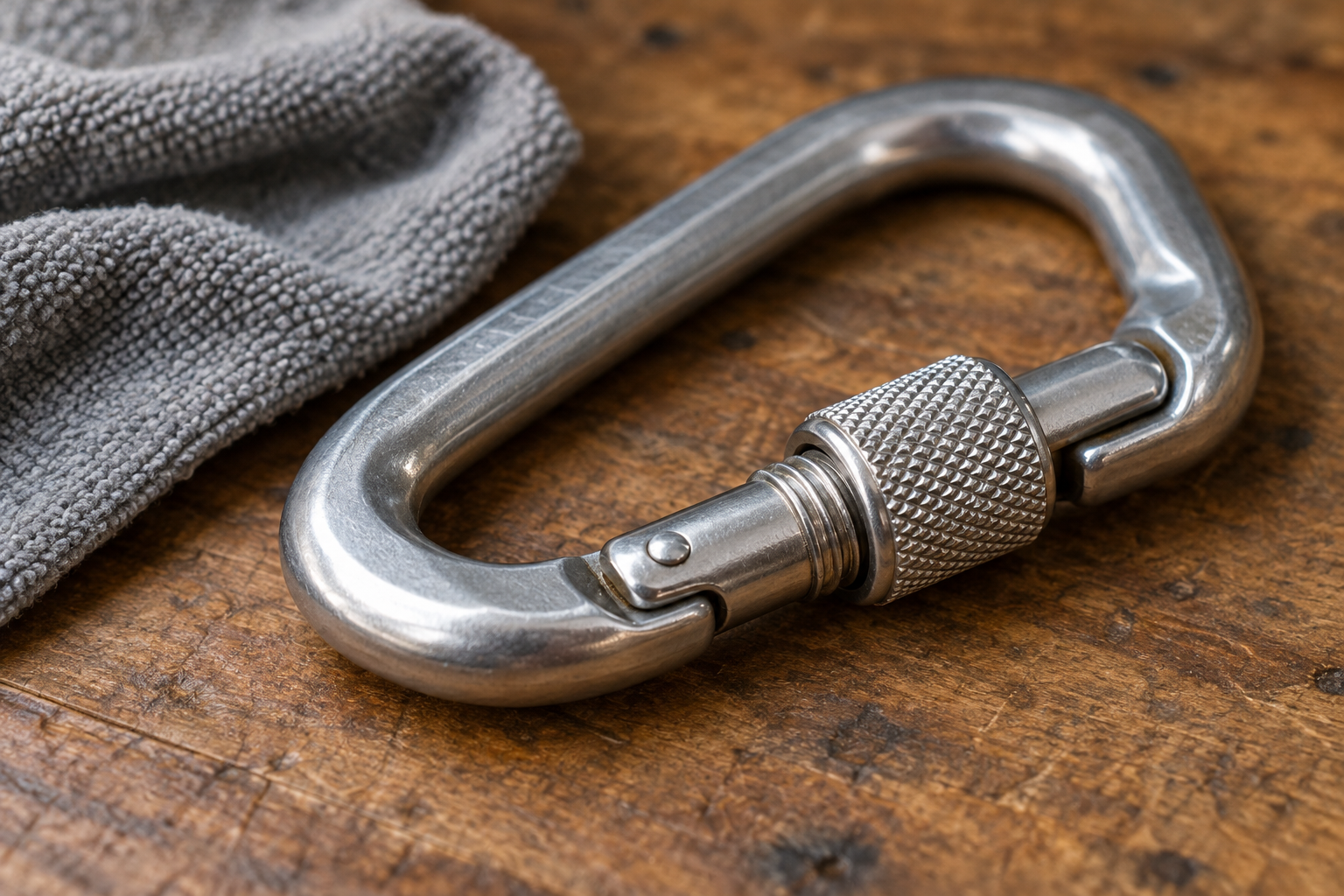
- Condition: follow the manufacturer’s inspection procedure, including the frame, gate and locking mechanism.
- History: do not assume an unknown second-hand connector has a safe service history.
Petzl’s carabiner basics explains the intended loading orientation: along the major axis with the gate closed and the locking sleeve secured. A connector’s appearance alone does not establish its strength in another orientation. If equipment is damaged or its history is uncertain, obtain advice from the manufacturer or a qualified equipment inspector before considering further use.
How to read an online listing
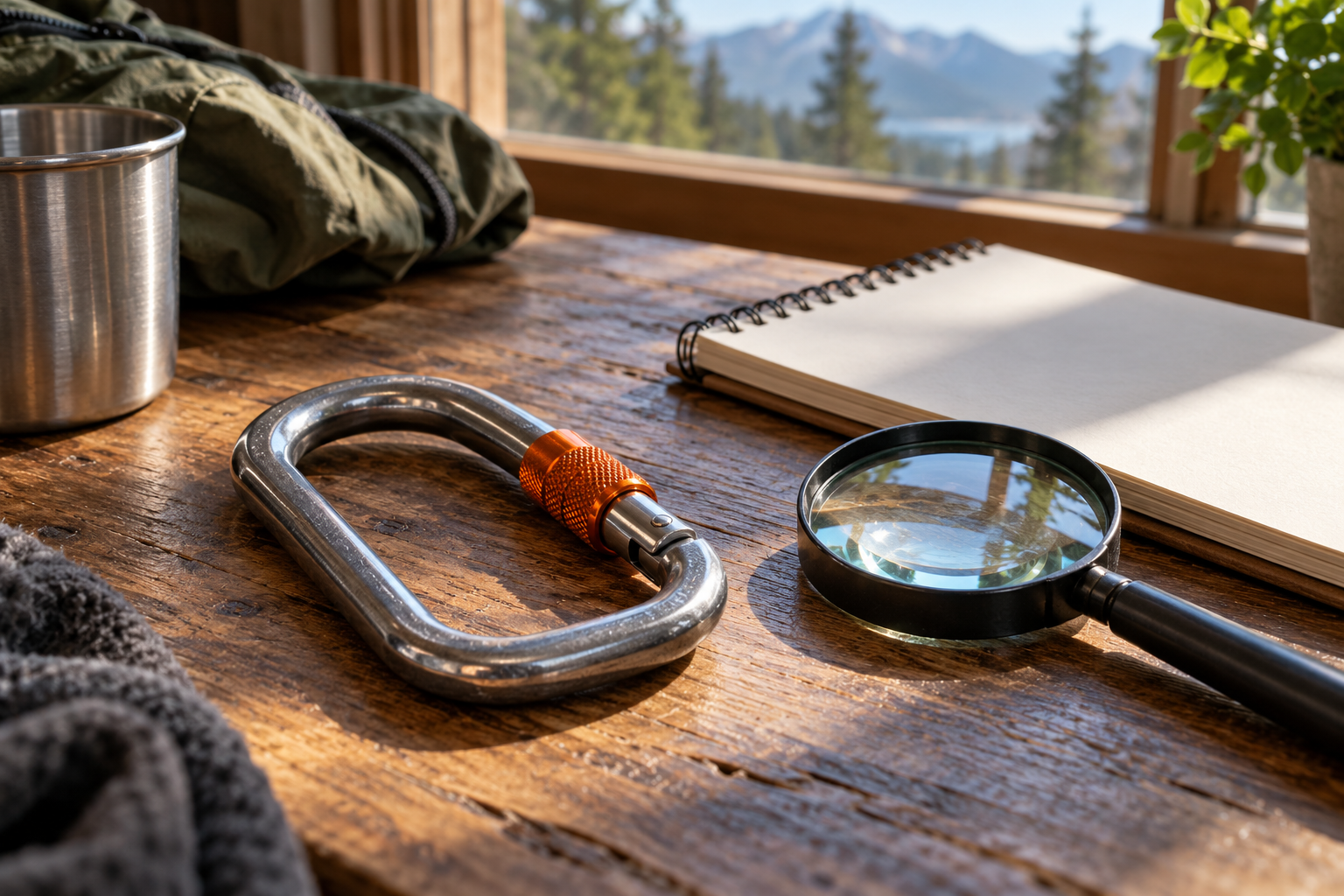
Start with the model reference rather than a seller’s headline. Compare photographs with manufacturer documentation, check whether the item is described as climbing equipment or an accessory clip, and confirm the return arrangements before buying. A generic title such as “heavy duty” does not answer those questions.
For more outdoor coverage, browse our sports articles and travel guides. Choosing equipment and planning a trip are related tasks, but neither replaces practical training.
Frequently asked questions
Is pearabiner a real equipment name?
Yes. It appears in documented historical carabiner names, including the Chouinard and Black Diamond history discussed above.
Is a pearabiner always the best connector?
No. The appropriate shape and locking system depend on the equipment, application and manufacturer instructions.
Can an accessory clip be used for climbing?
Do not treat a clip as climbing equipment merely because it has the same shape. Verify the exact model and its intended use.
Can I identify an old connector from a photograph?
A photograph may help with identification, but it cannot establish condition, loading history or suitability for use.
Key point: the name helps identify a shape or historical product; the exact model, condition and compatibility determine whether the equipment belongs in your system.
