


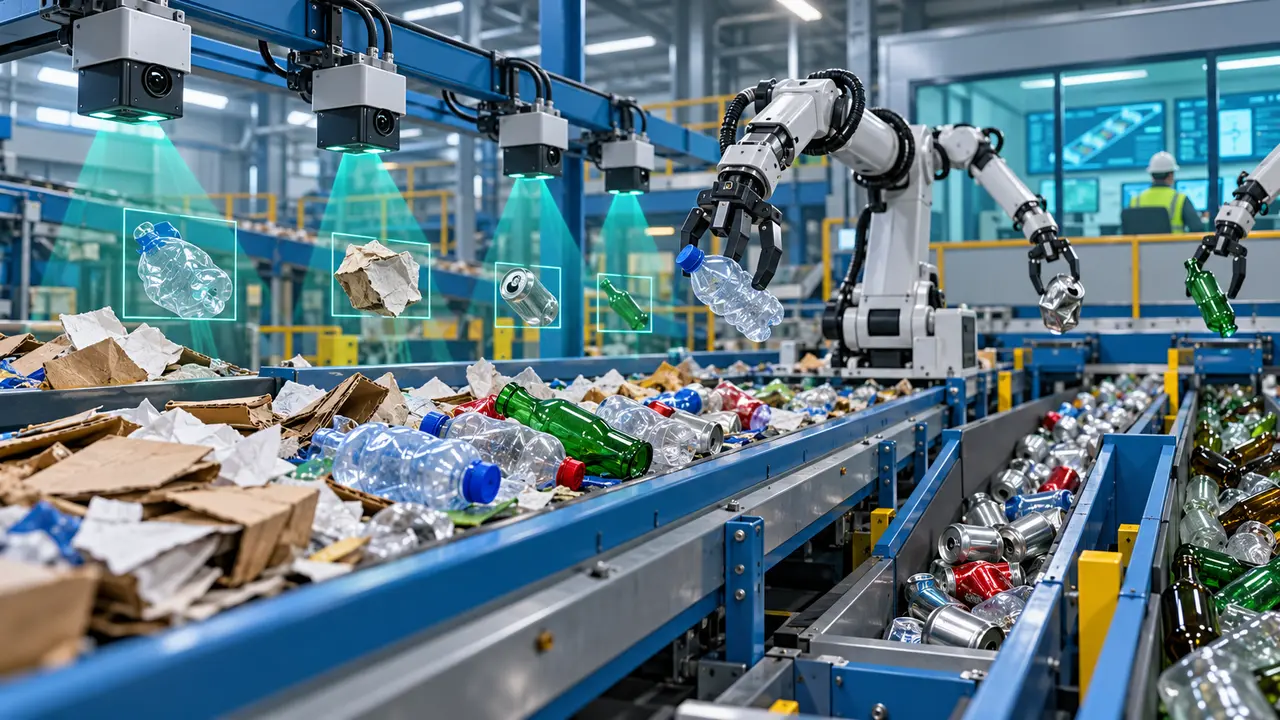
MataRecycler appears across recent web pages as a name connected with smart recycling, artificial intelligence, sensors and automated waste sorting. The important fact, however, is that the public descriptions are not supported by a clearly identifiable manufacturer, technical manual, independent test report or consistent product specification. Some pages describe a smart bin, others a facility-scale sorting system, and others an educational platform.
That does not make the underlying technology imaginary. Computer vision, near-infrared sensing and robotic sorting are already used or studied in real recycling facilities. It means readers should separate established recycling technology from claims attached specifically to MataRecycler. This guide shows what can be verified, what remains unresolved and how to evaluate similar names safely.
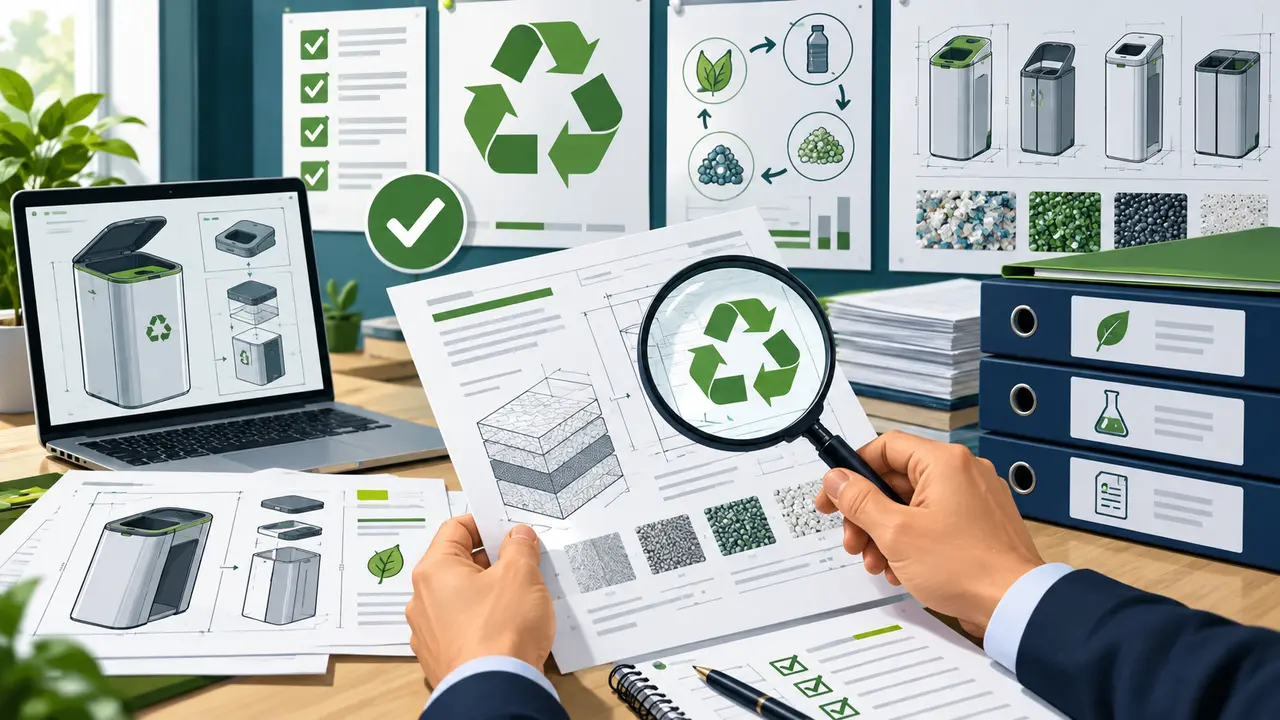
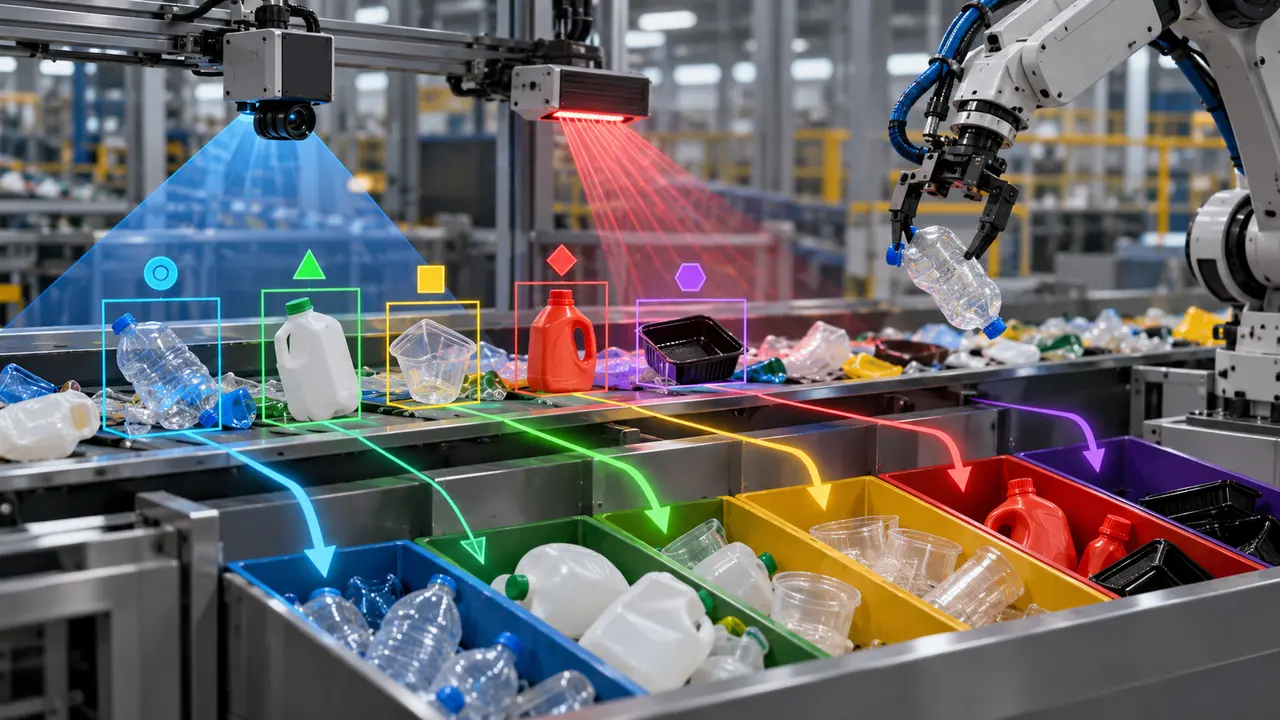
The images in this article are AI-generated educational illustrations, not photographs of a verified MataRecycler product or facility.
MataRecycler at a glance
| Question | Evidence-based answer |
|---|---|
| What is MataRecycler? | An online term associated with smart recycling; one definitive product identity is not established. |
| Is it a confirmed company? | No clear ownership, corporate record or official technical documentation was identified in reliable sources. |
| Are AI recycling systems real? | Yes. Computer vision, spectroscopy and robotics are used and researched for material sorting. |
| Are quoted MataRecycler accuracy figures verified? | No independent test method or report was found for specific performance claims. |
| Best next step | Check the supplier, deployment site, accepted materials, test conditions and after-sales support. |
What is actually verified about MataRecycler?
The name MataRecycler is used by a cluster of websites that repeat similar descriptions: cameras identify discarded items, sensors classify materials, software tracks waste and automation directs objects into different streams. Those descriptions are plausible at a general level, but they do not establish that every feature belongs to one commercially available system.
A trustworthy product profile should normally provide a legal operator, physical address, model numbers, installation documents, safety information, measurable capacity, accepted material classes and named customer deployments. Those details allow buyers and researchers to distinguish a real system from recycled marketing copy. Without them, MataRecycler should be described as an unverified online label, not a proven machine with guaranteed results.
This is the same evidence-first approach used in our guides to Nerwey, Pantagonar and Supermaked: identify what the available pages say, then refuse to convert repetition into proof.
How real recycling facilities sort material
The US Environmental Protection Agency’s recycling-system overview explains that collected recyclables travel to processors such as materials recovery facilities. There they are sorted, contaminants are removed, and materials are prepared for mills or manufacturing plants. Different commodities may need further separation and cleaning.
A modern line can combine conveyors, screens, magnets for ferrous metals, eddy-current separators for aluminium, optical sorters, air jets and manual quality control. Equipment depends on the incoming stream and the products a facility is trying to sell. A household smart bin and an industrial recovery facility therefore solve different problems; calling both “MataRecycler” would not make them technically equivalent.

Where AI and sensors genuinely fit
The strongest part of the MataRecycler story is the broader technology. A NIST study of robotic sorting and AI in material recovery facilities notes growing interest in systems that combine AI detection with robotic action. Cameras can capture objects on a belt, models can classify visual features, and a robotic arm or air jet can separate selected items.
Plastic identification is more difficult than recognizing a bottle shape. The NIST explanation of plastic sorting describes near-infrared spectroscopy and visible-light instruments, while also noting research into AI-assisted identification. Labels, dirt, dark colours, multilayer packaging and chemically similar polymers can complicate classification.
These limitations matter when a MataRecycler page promises extremely high accuracy without publishing the material mix, conveyor speed, confidence threshold, contamination level or definition of a correct sort. An accuracy percentage is meaningful only when the test set and operating conditions are disclosed.
Why recycling claims need local context
Technology cannot decide what a council or waste company accepts. Collection rules, local markets, contracts and facility equipment vary. An item that is recyclable in theory may not belong in a particular household bin. Users should follow the instructions supplied by their local authority or collector rather than a generic app or an unlabeled website.
Recycling is also not the first step in responsible material use. The European Union waste hierarchy prioritises prevention, followed by preparation for reuse, recycling, other recovery and disposal. A credible MataRecycler-style service should therefore help avoid waste and support reuse, not imply that automated sorting makes unlimited consumption harmless.
How to evaluate a MataRecycler offer
- Confirm the seller. Look for a registered business name, working address, accountable staff and verifiable contact details.
- Request a specification. Ask which materials, sizes and contamination levels the system accepts.
- Demand test conditions. Performance figures should state throughput, sample composition, error definition and independent verifier.
- Check a real deployment. Speak directly with a named facility, school, council or business using the equipment.
- Review data practices. A camera-equipped bin or app may collect images, locations or user records; ask how data is stored and deleted.
- Calculate total cost. Include installation, power, cleaning, software, replacement parts, training and rejected material.
- Test support. Confirm warranties, spare parts, maintenance response and what happens if the supplier disappears.
Frequently asked questions
Is MataRecycler a verified AI recycling company?
Not from the reliable evidence currently available. The name is described online, but a single confirmed company identity and authoritative product documentation are not clear. Treat specific claims as unverified until the operator supplies proof.
Can AI really sort recycling?
Yes. AI-assisted cameras and robotic or pneumatic sorting systems are genuine technologies. Their results vary with equipment, training data, material stream, speed and maintenance, so a general capability does not validate every MataRecycler claim.
Does a 95% accuracy claim prove performance?
No. Readers need the test method, materials, sample size, operating speed and definition of accuracy. Without those details, a percentage cannot be compared responsibly.
Should households follow MataRecycler advice?
Only when it matches the current rules of their local collector. Accepted items differ by area, and putting the wrong material in a recycling container can create contamination.
The useful answer is the verified one
MataRecycler connects to a real and important field, but its online identity remains less certain than the technologies associated with it. AI, sensors and robots can improve sorting when they are engineered for a defined stream and tested transparently. Until a clear operator, specification and independent performance record are available, readers should treat MataRecycler as an unverified term and evaluate each claim separately. That careful distinction protects buyers without dismissing genuine progress in recycling automation.
