



Beliktal appears in search results as if it might be a destination, fashion style or cultural idea, yet reliable primary sources do not confirm any one of those meanings. The safest description is narrower: Beliktal is an uncommon online term surrounded by conflicting, mostly unsupported explanations.
This guide explains what the available evidence can and cannot establish. It also compares similar-looking words and shows how to check place, brand and trend claims without turning search repetition into a fact.
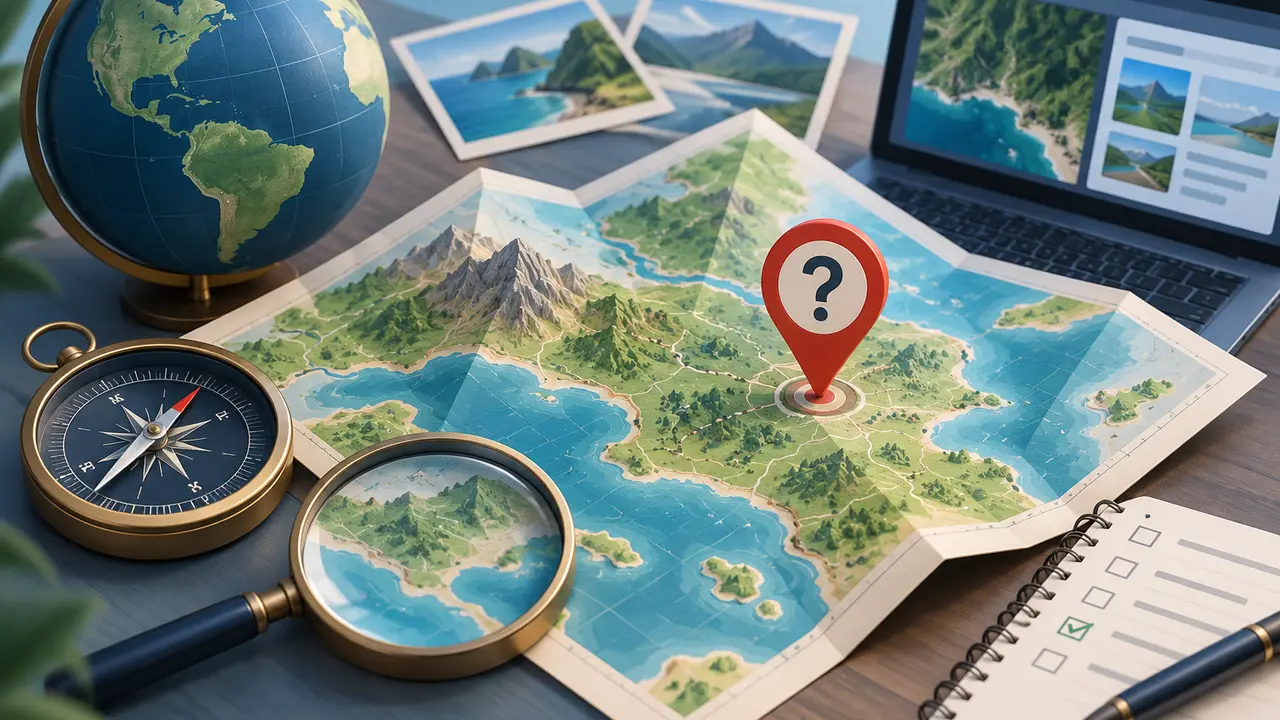
Image note: the visuals are AI-generated editorial illustrations. They do not depict a verified Beliktal destination, brand, community or historical artefact.
What does Beliktal mean?
No established dictionary definition or official organisation reviewed for this article defines Beliktal. Several recent web pages describe it with broad language about hidden places, natural beauty, culture, fashion or personal potential. Those descriptions vary so widely that they cannot all serve as evidence for a single recognised meaning.
An unfamiliar word can still be used creatively by an individual writer, business or community. That does not make the usage universal. Until an identifiable original source explains the name, readers should preserve the uncertainty instead of choosing the most attractive story.
| Claim about Beliktal | Current evidence |
|---|---|
| Recognised dictionary word | Not confirmed |
| Verified travel destination | Not confirmed |
| Established fashion aesthetic | Not confirmed |
| Official cultural term | Not confirmed |
| Appears in web content | Yes, with conflicting explanations |
| Responsible summary | Ambiguous online term |

Beliktal and similar spellings are not interchangeable
Search engines often suggest more familiar spellings when a rare query is entered. That can be useful, but a visual resemblance does not prove that one word came from another. Beliktal should not automatically be corrected to a particular term unless the original sentence, language or source supports the change.
For example, Merriam-Webster defines “belittle” as speaking slightingly of something or making it seem less important. The Cambridge English Dictionary gives the same general sense. Beliktal has different letters and no verified evidence currently makes it an alternative spelling of “belittle.”
The same caution applies to proper names. A search may surface Beşiktaş, but the official Beşiktaş JK website identifies a Turkish sports club with its own documented name and organisation. Beliktal should not be presented as that club, district or a translated form without a reliable linguistic source.
Is Beliktal a real travel destination?
Some pages use destination-style language, mentioning landscapes, culture, discovery and a hidden gem. Those phrases sound like travel writing, but they do not supply the evidence normally expected for a real place: a country, administrative region, coordinates, local authority, recognised map entry or transport information.
To verify a place claim, search official geographic databases and government tourism sources for the exact spelling. Check whether independent maps agree on the location. Look for local-language forms, nearby settlements and a traceable administrative area. Photographs alone are weak proof because generic scenery can be reused or generated.
If the page describes Beliktal metaphorically or as a fictional setting, it should say so. Creative geography is legitimate in stories and art, but readers need a clear distinction between a fictional concept and practical travel information.
Fashion and cultural claims need origins
Other results frame Beliktal as a new fashion aesthetic. A genuine style can emerge informally, but a useful explanation should identify observable features: garments, silhouettes, materials, designers, communities, dates and examples. Vague statements about “timeless modern expression” are promotional language, not a documented history.
Cultural labels deserve even more care. Calling a term ancient, regional or traditional requires evidence from speakers, institutions, archives or scholarship connected to that culture. Without those sources, an article risks inventing heritage and attaching it to people who never used the word.
Our Pantagonar claims guide uses a similar rule: state what is visibly published, then keep ownership, product and meaning claims separate until they have independent support. The Nerwey reader-checking guide also shows why a polished page is not automatically an authoritative source.
How to investigate a Beliktal page
Begin with the page itself. Record its title, publication date, author, domain and exact claims. Then search for the earliest traceable use rather than counting how many recent pages repeat it. Several nearly identical articles may reflect copying or shared prompts, not independent confirmation.
If a domain is central to the claim, use the ICANN registration-data lookup to inspect publicly available registration details. Privacy protection is common and is not proof of a problem. Registration date, registrar and name-server history can still help you understand whether a site is new and whether its claimed history needs closer scrutiny.
Follow citations back to original material. An article that cites only another summary has not added verification. Our Supermaked website guide provides a practical model for checking visible authorship, topic consistency and contact information without guessing at credentials.

A quick evidence checklist
- Keep the exact spelling and original sentence together.
- Ask whether the claim concerns a word, place, brand or fictional idea.
- Find the earliest identifiable source and publication date.
- Prefer dictionaries, official registries, local authorities and primary documents.
- Check whether repeated articles provide independent evidence.
- Label attractive but unsupported stories as unverified.
- Do not infer language, culture or geography from sound alone.
This approach may leave the meaning unresolved, but that is a valid research outcome. Accuracy sometimes means explaining the limits of the available record rather than forcing a neat definition.
Frequently asked questions
Is Beliktal a country or city?
No reliable geographic source reviewed here establishes it as a recognised country, city or administrative region.
Does Beliktal mean “belittle”?
That connection is not established. “Belittle” is a documented English verb, while Beliktal remains an unverified term with a different spelling.
Is Beliktal a fashion trend?
Some pages call it an aesthetic, but this review did not find an authoritative origin, defined characteristics or verifiable movement under that name.
Could Beliktal be fictional?
Yes. It may be used creatively by an author or site, but the creator should identify that context rather than present fiction as geography or history.
Let evidence set the boundaries
Beliktal is best treated as an ambiguous online term, not a confirmed destination, fashion movement or inherited cultural concept. Similar spellings can provide leads, but they are not definitions. Keep each claim tied to its source, look for primary evidence, and allow the answer to remain open until an accountable origin appears.
